
|
Subscribe to our Newsletter
In Iranian culture, motifs are more than decoration, they are a language. Among these, Diba, the luxurious patterned silk, stands out as a visual code intertwining craftsmanship, identity, and symbolism. This article explores Diba’s history and its motifs, revealing how Persian textile design communicates cultural meaning across centuries.
By Gisoo Tayebi
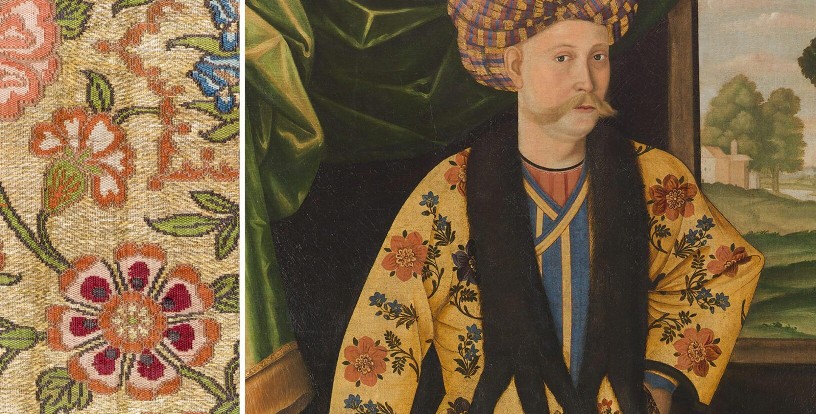
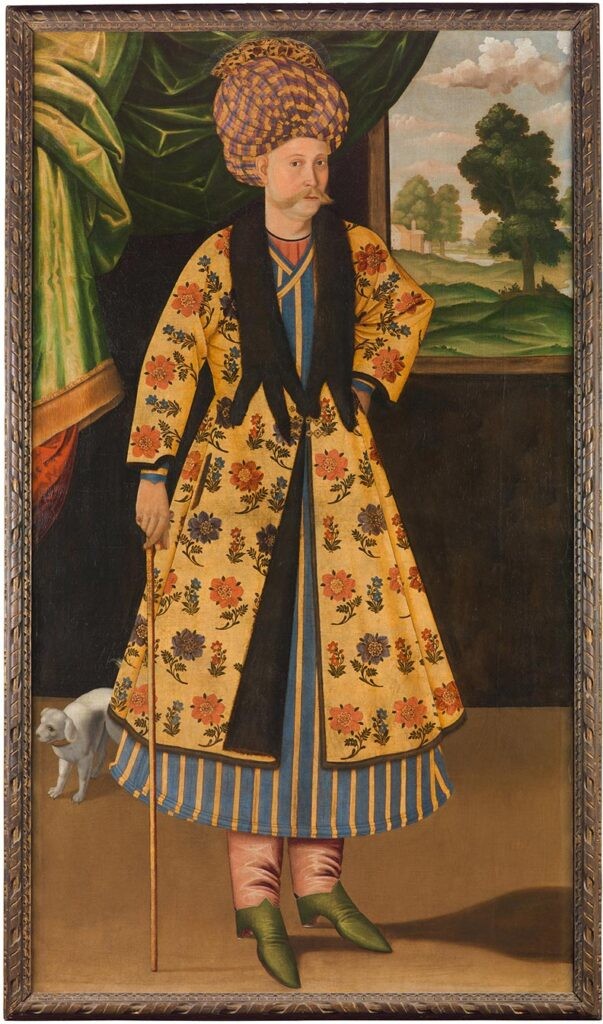
Portrait of a Gentleman, Iran, Isfahan, Safavid period, ca. 1650–1675, Museum of Islamic Art, Doha
Textile, Iran, Safavid period, 1700–1722, Silk brocade with metal-wrapped threads, Museum of Islamic Art, Doha
Photo: National Museum of Asian Art
In the visual history of Iran, pattern is rarely just decoration. Motifs woven into textiles, carved into architecture, or painted in manuscripts function as a sophisticated visual language. Among the many artistic concepts embedded in Persian material culture, the notion of Diba holds a unique place. Historically associated with luxurious silk brocades, the word gradually evolved into something more symbolic: a surface where pattern, craftsmanship, and cultural meaning intersect.
The Persian term Diba refers to a form of figured silk or silk brocade fabric traditionally associated with luxury and court culture. According to the entry on Diba textile definition, the word is commonly used to describe richly decorated silk textiles, often woven with complex patterns and ornamental designs. These textiles were not merely garments; they were cultural objects that communicated identity, hierarchy, and aesthetic values.
Within this context, motifs become the true language of Diba. Patterns embedded in the fabric act as visual codes, reflecting cosmology, political power, spirituality, and artistic philosophy. To understand Diba, therefore, is to understand how Iranian culture historically encoded meaning through ornament.
The word Diba appears frequently in Persian historical and literary sources. Linguistically, it is closely associated with luxurious textiles and figured silk fabrics produced in royal workshops. In many historical descriptions, Diba referred specifically to silk brocades woven with elaborate patterns using colored silk and occasionally metallic threads.
According to research on Persian silk textiles in Encyclopaedia Iranica – Silk and textile terminology, the related term dībāǰ historically referred to figured silk or brocade fabrics. Over time, the word became a broader reference to patterned silk textiles used in ceremonial garments and decorative coverings.
These textiles were not ordinary cloth. They represented the highest level of craftsmanship in weaving traditions and were often produced in royal textile workshops. Their complexity required highly skilled artisans capable of manipulating silk threads to create repeating motifs, symbolic figures, and elaborate ornamental compositions.
Diba fabrics were therefore more than materials. They were artistic surfaces that embodied technical mastery, cultural symbolism, and social prestige.
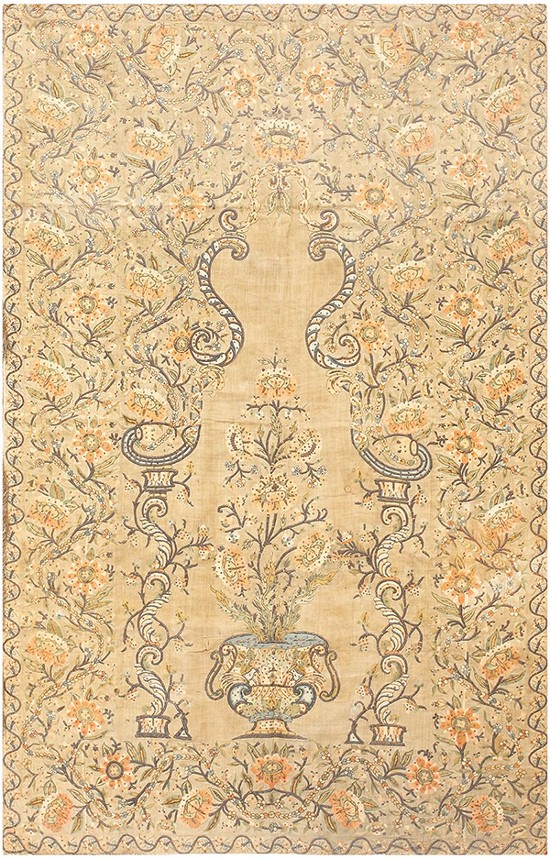
Antique Persian Silk Textile, Circa Mid 19th Century
Photo: nazmiyalantiquerugs.com
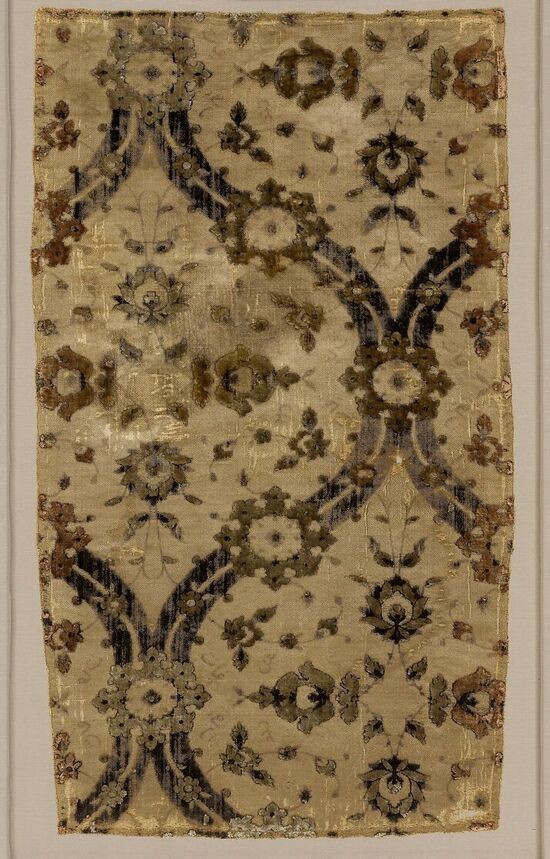
Silk Velvet Designed by 'Ghiyath, second half 16th century, Safavid period
Photo: metmuseum.org
The story of Diba cannot be separated from the long history of silk production in Iran. Silk weaving in Persian territories dates back at least to the Sasanian Empire, when Iranian textiles became highly valued across Eurasia. Iranian silk workshops developed distinctive weaving techniques and decorative styles that would later influence Byzantine, Islamic, and Central Asian textile traditions.
Silk was a powerful symbol of status and wealth. In Persian societies, luxurious fabrics were closely associated with royal authority and court ceremony. Many silk textiles were produced specifically for aristocratic use or diplomatic exchange.
The prestige of silk textiles in Iran is discussed in the historical overview An Iranian Silk Story, which highlights how silk production became a defining element of Persian cultural identity. Cities across the Persian world developed their own distinctive weaving traditions, each recognizable through patterns and color schemes.
In this environment, Diba textiles represented the highest expression of silk artistry. Their motifs reflected a synthesis of cultural influences, including Persian mythology, natural symbolism, and geometric abstraction.
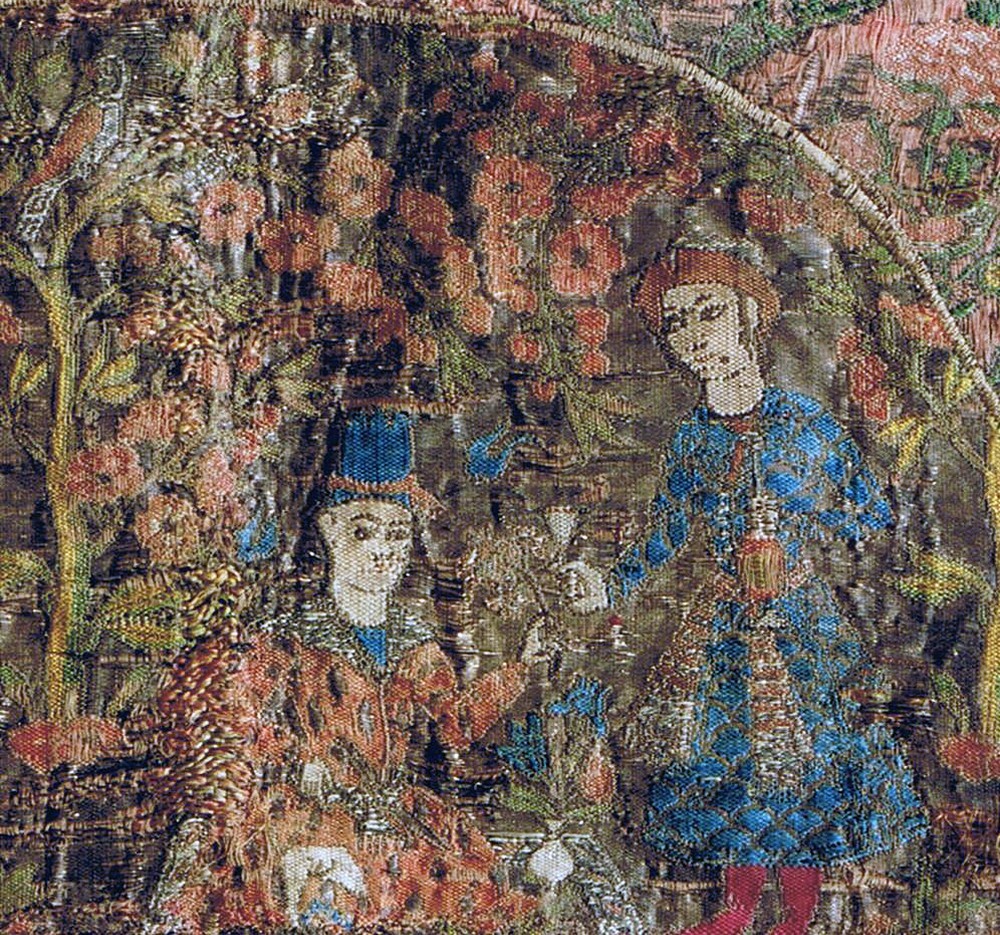
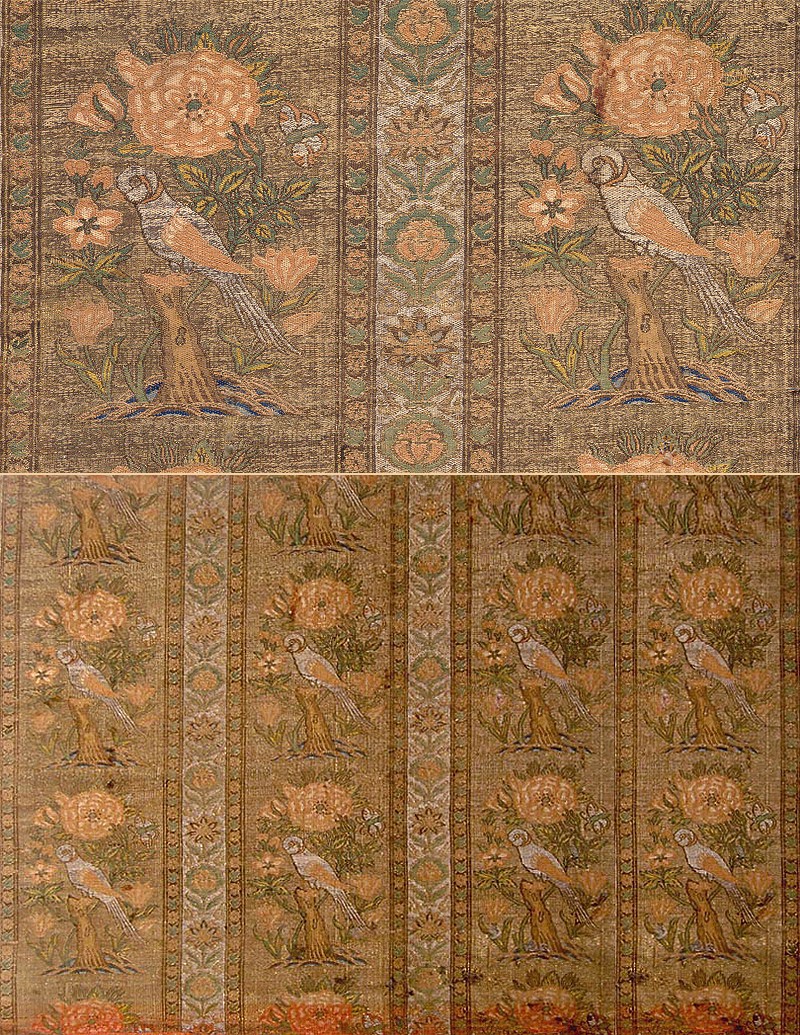
Antique Persian Textile, Silk Brocade with Silver thread, Safavi Dynasty, 1501-1722
At the heart of Diba lies the motif. Unlike purely decorative patterns, motifs in Persian textiles often function as symbolic elements within a broader visual system.
Historical research on Diba fabrics shows that these textiles were woven with repeating motifs such as floral patterns, animals, and geometric shapes. Surviving examples include designs featuring birds, trees, mythological creatures, and stylized plant forms. These motifs were arranged in symmetrical compositions, often repeating across the surface of the fabric in carefully engineered patterns.
This structural approach to pattern reflects a fundamental principle of Iranian aesthetics: order through repetition. Persian ornament rarely relies on random decoration. Instead, motifs are arranged in systematic sequences that create visual rhythm and harmony.
In Diba textiles, this principle transforms cloth into a visual architecture. The surface becomes a structured field where meaning emerges through repetition, symmetry, and variation.
Persian motifs carry deep cultural symbolism. Many of the patterns woven into Diba fabrics represent elements drawn from nature, mythology, and spiritual philosophy.
Common motifs included:
Floral motifs
Flowers symbolize life, beauty, and divine creation. In Persian visual culture, stylized floral patterns often represent the idea of the garden as paradise, a recurring concept in Iranian art and literature.
Animal motifs
Animals appearing in Diba fabrics frequently come from Persian mythology. Birds, lions, and mythical creatures symbolize power, protection, and spiritual transformation.
Geometric patterns
Geometry plays a crucial role in Islamic and Persian art. Repeating geometric motifs represent order, infinity, and cosmic harmony.
These motifs transform Diba into a symbolic surface where visual elements convey philosophical and cultural meanings.
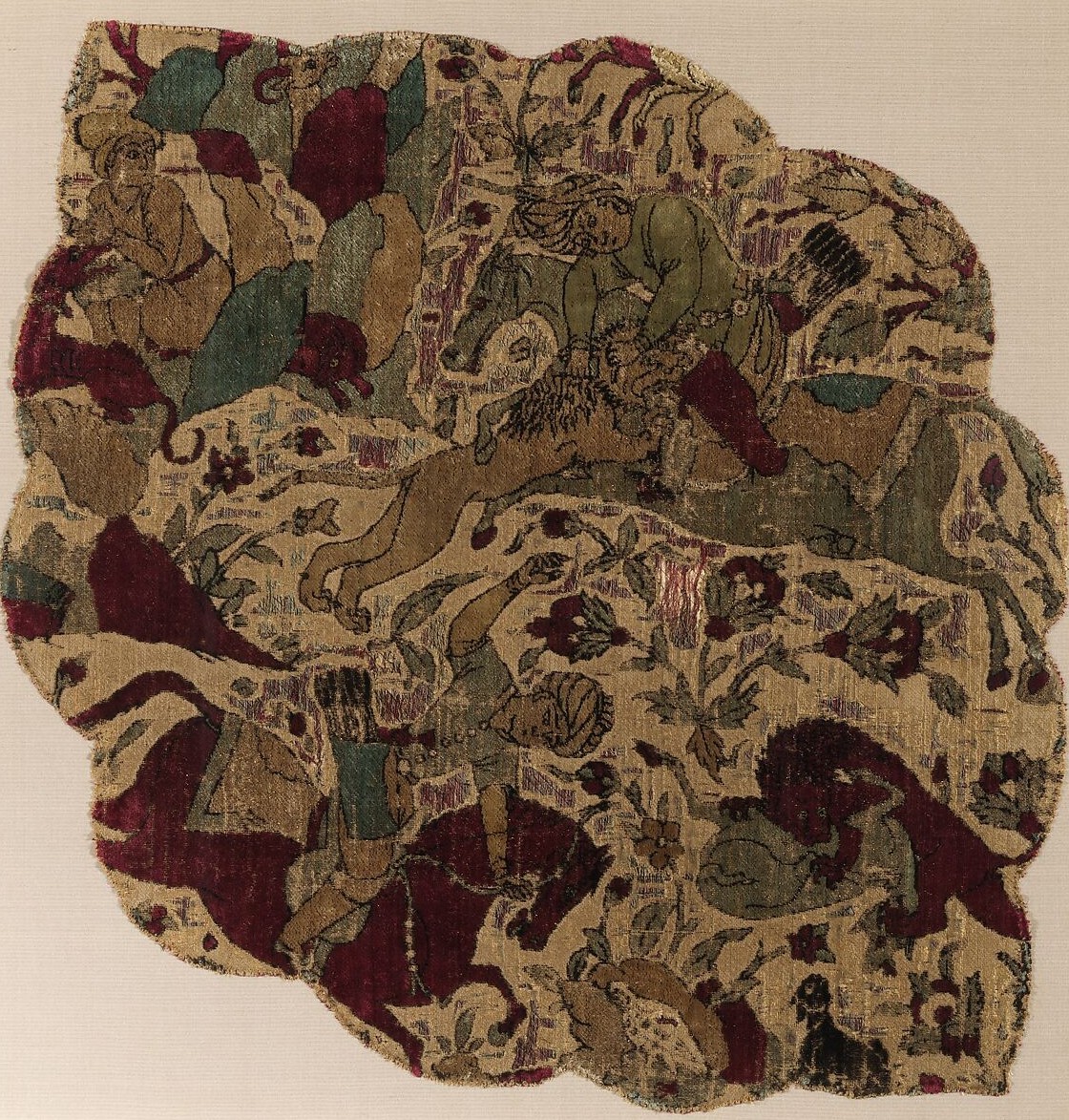
Velvet Panel with Hunting Scene, Silk, flat metal thread; cut and voided velvet
A richly woven Safavid velvet panel, depicting a hunting scene, originally part of Ottoman leader Kara Mustapha Pasha’s tent, showcasing the royal workshop’s mastery and the complex weave that gives the fabric its supple texture.
Historically, Diba textiles were intimately tied to the culture of the royal court in Iran. These luxurious silks were far more than ornamental fabrics; they functioned as symbols of political authority, social status, and refined taste. In Persian society, as in much of the Islamic world, textiles were among the most prized cultural artifacts, sometimes even surpassing the value of precious metals and gemstones. Their material opulence and intricate designs reflected both economic wealth and the aesthetic sophistication of the elite.
Garments made from Diba were commonly reserved for rulers, aristocrats, and court officials, forming an essential component of ceremonial dress. The intricate patterns, metallic threads, and rich colors signaled rank and prestige, functioning as a visual language of hierarchy. In this way, the fabric itself communicated messages about social order and cultural authority without a single word being spoken.
A close comparison can be drawn with the Tiraz textile tradition, which flourished in medieval Islamic courts. In Tiraz textiles, embroidered bands, inscriptions, and woven motifs were used to indicate loyalty, office, or royal favor. Diba fulfilled a similar function in Persian culture: beyond mere decoration, it was a coded marker of allegiance, refinement, and social positioning.
In addition to daily and ceremonial use, Diba fabrics were ritually significant. They were often employed as ceremonial coverings, religious textiles, and ornamental elements in courtly rituals. For example, in certain religious or festive contexts, Diba might adorn altars, thrones, or sacred spaces, enhancing their symbolic resonance with its visual richness and luxurious quality.
The significance of Diba extended beyond domestic use. These textiles were highly prized diplomatic gifts, traveling along extensive trade networks that linked Persia with Byzantium, Central Asia, and the broader Islamic world. A Diba fabric presented to a foreign ruler or ambassador signified not only wealth and sophistication but also the cultural and political authority of the Persian court. The ability to produce such elaborate textiles thus reinforced Iran’s reputation for artistic mastery and cosmopolitan refinement.
Technically, Diba fabrics required exceptional skill from highly trained artisans. Weavers had to control tension, color contrasts, and metallic threads to achieve the intricate repeating motifs for which Diba was famous. These motifs often combined floral arabesques, geometric patterns, and symbolic iconography, making each piece not only luxurious but intellectually and visually complex. As a result, Diba textiles were simultaneously artworks, status symbols, and cultural instruments, objects through which Persian elites communicated identity, power, and taste both within their own society and across international borders.
By combining artistry, material value, and cultural symbolism, Diba demonstrates how textiles in Persian court culture were never mere decoration. They were active participants in political discourse, social hierarchy, and cultural diplomacy. In studying Diba, we can better understand how material culture functioned as a language of power, capable of transmitting nuanced messages across space, time, and even across societies with differing linguistic and cultural frameworks.
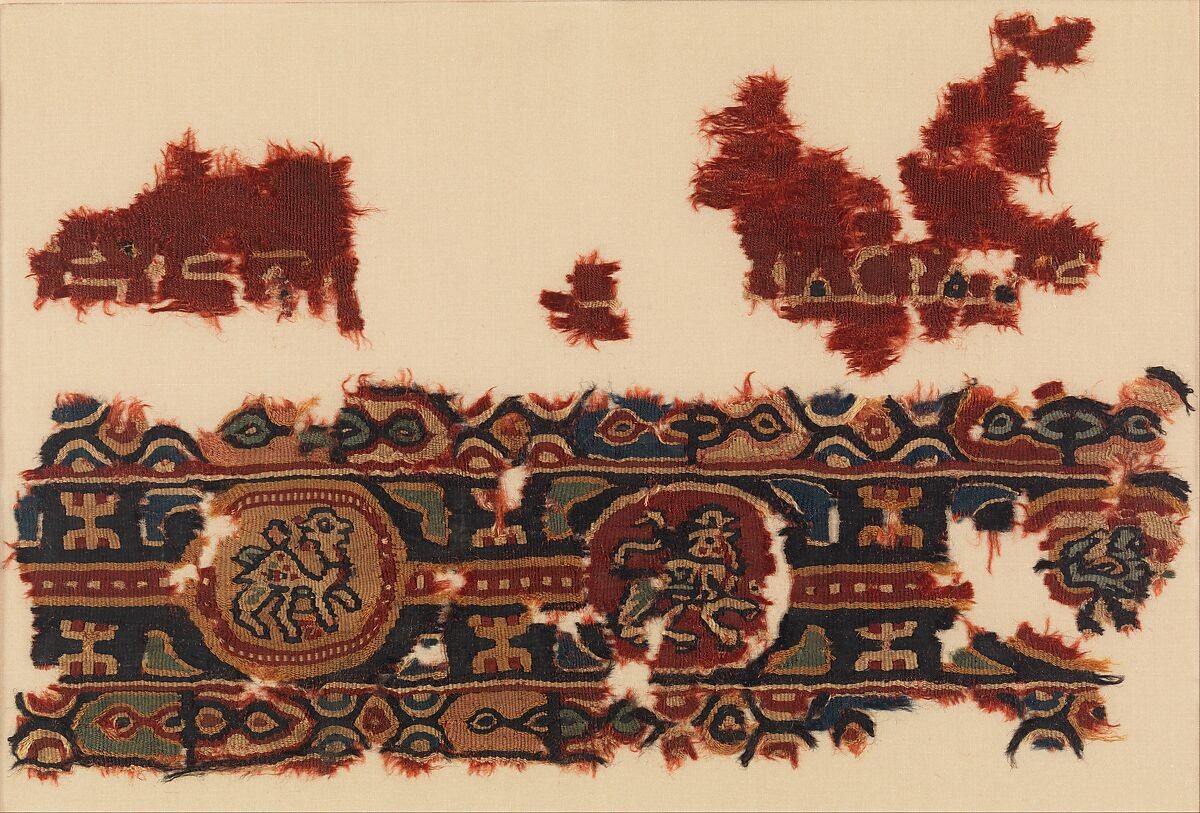
An 8th–9th century Tiraz textile with medallions, featuring Kufic inscriptions and abstract motifs, blending Sasanian and early Islamic styles, likely used as a sleeve-band.
The cultural significance of Diba extends far beyond its material presence as luxurious silk. In Persian literary tradition, Diba often functions as a metaphor for beauty, refinement, and artistic perfection, appearing in the works of some of the most celebrated poets, including Hafez, Saadi, and Ferdowsi. These poets frequently drew upon textile imagery to evoke luxury, elegance, and visual sophistication. The very texture and richness of Diba, its intricate patterns, metallic threads, and shimmering surfaces, offered a ready-made symbol for poetic imagination, allowing writers to convey the refinement of both material culture and aesthetic ideals.
In poetry, Diba is rarely mentioned as a mere fabric; it becomes a conceptual vehicle for expressing artistic and moral sophistication. For instance, a description of the sky as “a robe of Diba” transforms the natural world into a tapestry rich with color, texture, and visual depth, reflecting a worldview in which art, nature, and culture are inseparable. Through such metaphors, we see how textile culture informed the Persian aesthetic imagination, creating a symbiotic relationship between material art and literary expression. Diba’s representation in poetry demonstrates that in Iranian culture, ornamentation is not superficial, it is imbued with symbolic, intellectual, and even spiritual meaning.
Yet, despite its enduring literary and cultural significance, the production of traditional Diba textiles declined over time. Historical disruptions, including the Mongol invasions of the 13th century and subsequent periods of political instability, interrupted many Persian craft traditions, especially the highly specialized art of silk weaving. Scholarly research indicates that by the late medieval period, many types of Diba fabrics were gradually produced less frequently, as economic conditions, patronage patterns, and technological constraints shifted.
However, the aesthetic and conceptual principles of Diba did not vanish. Rather than disappearing, the motifs, compositional logic, and visual vocabulary of Diba migrated into other artistic forms. Persian carpets, miniature painting, architectural ornament, and manuscript illumination absorbed these patterns and adapted them to new media, ensuring that the language of Diba motifs continued to influence Iranian visual culture. In this way, Diba survives not only as a material textile but also as a conceptual model of patterning, symmetry, and symbolic representation, informing both historical and contemporary design practices.
Ultimately, this synthesis of literature, craft, and artistic transmission illustrates that Diba is more than a luxury fabric; it is a cultural and aesthetic system. Its decline in production does not signify the end of its influence. Rather, Diba’s poetic and visual legacy endures, shaping how Persian culture conceives beauty, pattern, and the symbolic potential of ornament across multiple artistic domains. Through the interweaving of material craft and literary imagination, Diba remains a testament to the Iranian ability to transform the decorative into a living cultural language.
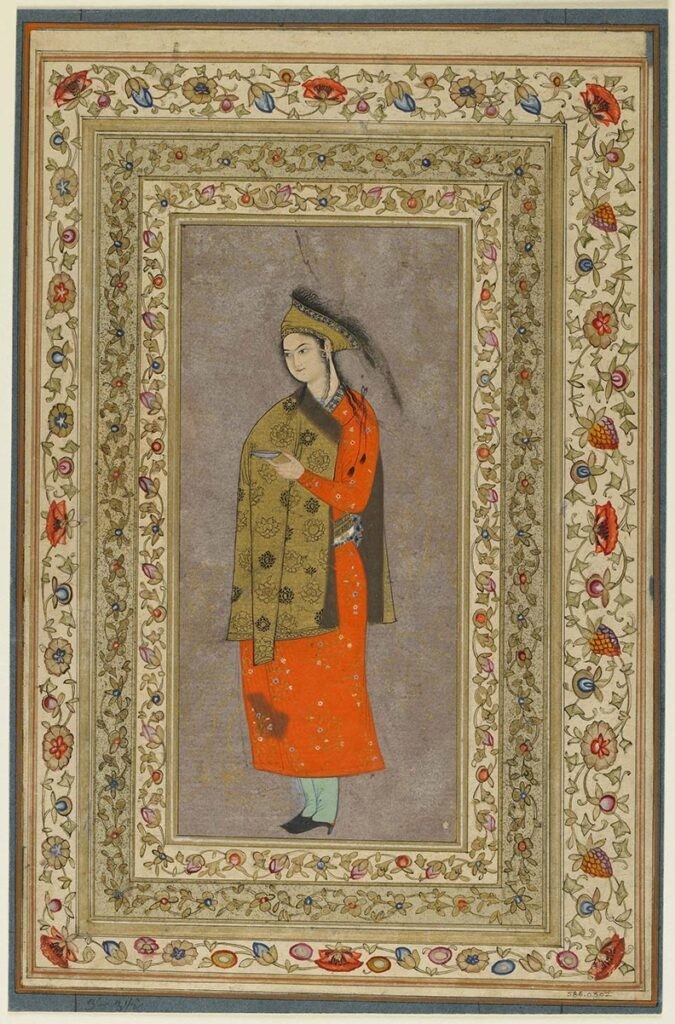
Beyond its function as a luxurious silk textile, Diba represents a philosophy of design and a model of Persian visual intelligence. The structure of Diba textiles embodies key principles of Iranian aesthetics: patterns are not mere decoration, they organize visual space and guide the viewer’s eye; repetition generates rhythm, harmony, and layered symbolic meaning; and the surface becomes a narrative medium, carrying cultural stories, moral ideas, and social values. In this sense, Diba functions as a living canvas of knowledge, where craft, art, and meaning intersect.
The motifs embedded in Diba also act as repositories of cultural memory. These visual forms have persisted across centuries, reappearing in carpets, ceramics, architecture, and modern design. Their recurrence illustrates how ornament in Persian culture is more than aesthetic embellishment, it is a tool for continuity, a mechanism for connecting present-day society with historical identity, and a method for preserving collective artistic memory.
Today, contemporary Iranian designers and artists draw inspiration from Diba, reinterpreting its motifs in fashion, graphic design, and architecture. By transforming historical patterns into modern contexts, they create a dialogue between past and present, merging tradition with contemporary creativity. In this process, Diba transcends its original material form, becoming a conceptual framework that guides visual storytelling, informs pattern design, and sustains a living language of Persian culture. Through its motifs, repetition, and narrative surface, Diba continues to shape both aesthetic practice and cultural imagination, proving that even centuries-old textiles remain relevant as sources of innovation and meaning.
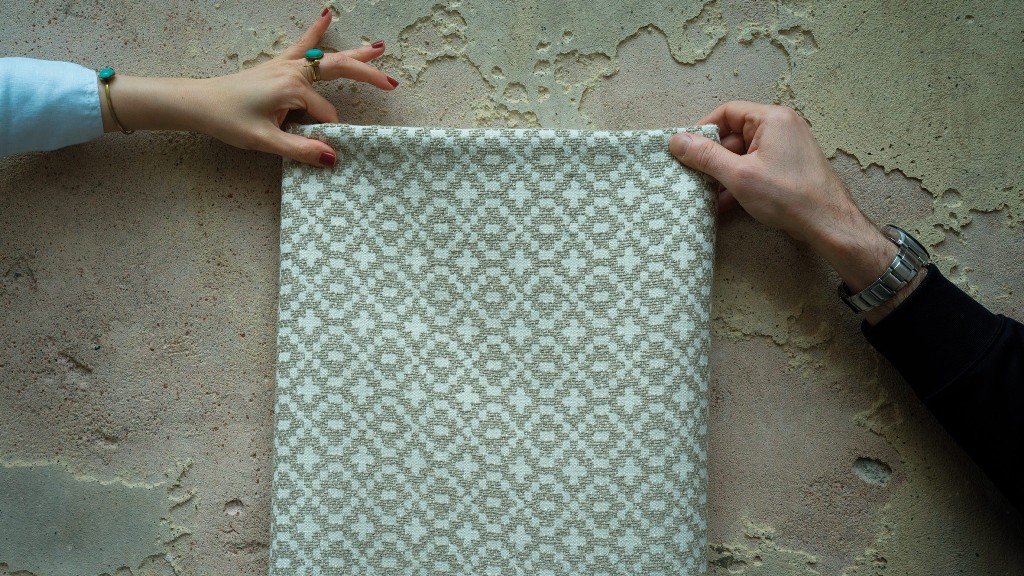
Christian Fischbacher and Hadi Teherani reveal Iran-inspired fabric collection
To view Diba merely as a luxurious silk textile is to overlook its profound cultural and artistic significance. Historically, Diba embodies the convergence of material mastery, symbolic imagery, and Iranian cultural identity. The motifs woven into these fabrics were never mere decoration; they were elements of a sophisticated visual language, capable of communicating ideas about nature, power, spirituality, and beauty through repetition, symmetry, and symbolic coding.
In this light, Diba emerges as a metaphor for Iranian artistic tradition: a surface where design is inseparable from meaning, and motifs act as carriers of cultural memory across centuries. Beyond its historical function, Diba continues to influence contemporary art, design, and fashion, demonstrating that the principles embedded in these textiles, pattern, symbolism, and narrative, remain vibrant and relevant today.
Ultimately, Diba reminds us that ornament in Iranian culture is never superficial. It is a profound method by which societies encode knowledge, express identity, and cultivate imagination. Through its enduring motifs and visual language, Diba stands as a testament to the timeless dialogue between craft, culture, and creativity in Iran.
This article is an original editorial analysis produced by Gisoo Tayebi.
Research and references are used for contextual accuracy.
