
|
Subscribe to our Newsletter
Annie Leibovitz, one of the most influential portrait photographers of the modern era, has redefined how we perceive identity, fame, and narrative through photography. From her early work at Rolling Stone to iconic images of cultural and political figures, her approach combines technical mastery, emotional depth, and storytelling. This article explores her life, career, visual philosophy, major achievements, exhibitions, and lasting influence on contemporary photography.
By the Editorial Staff
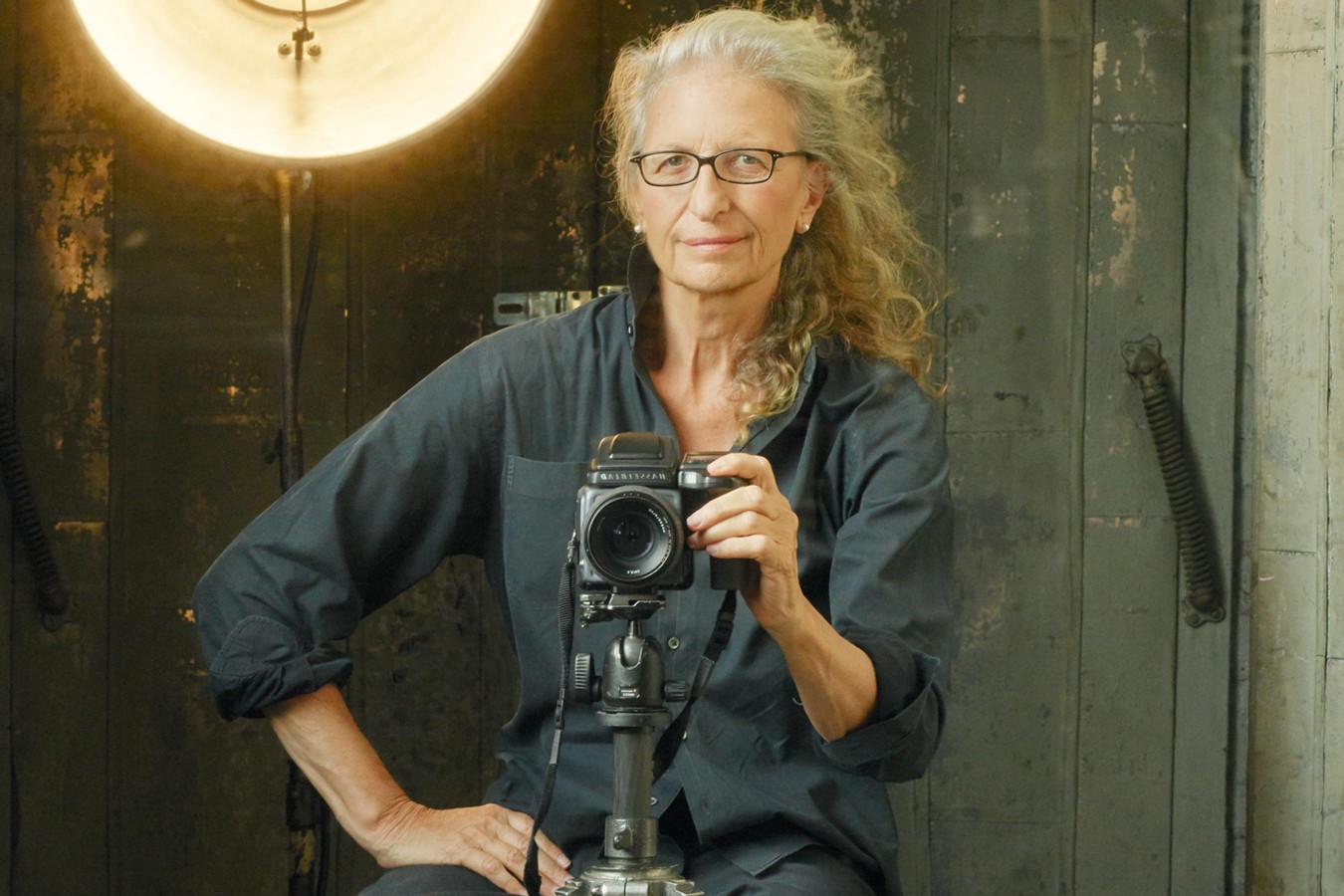
Annie Leibovitz
Anna‑Lou Leibovitz was born on October 2, 1949, in Waterbury, Connecticut, into a family shaped by movement, creativity, and discipline. Her father was a career Air Force officer and her mother a dance instructor, so from a young age she grew up between military bases across the United States, an itinerant childhood that cultivated both her observational skills and her emotional sensitivity.
It was at the San Francisco Art Institute in the late 1960s that she first encountered photography, a discovery that shifted her artistic ambitions from painting toward the photographic medium. While still a student in 1970, she landed her first assignment with Rolling Stone magazine, capturing images that would soon redefine the look and feel of music journalism. Within a few short years Leibovitz was named chief photographer of Rolling Stone, a position she held through most of the 1970s producing some of the most enduring and provocative images of the era, including her iconic portrait of John Lennon and Yoko Ono taken just hours before Lennon’s assassination.
The photographic practice of Annie Leibovitz represents a sustained investigation into how technical precision can function as a vehicle for psychological and narrative construction. Particularly in her early work for Rolling Stone, Leibovitz developed a visual language that balanced immediacy with formal control. Her portraits do not passively record presence; they construct identity through calibrated decisions involving lens choice, focal length compression, depth-of-field modulation, tonal range, and lighting architecture.
During the 1970s, Leibovitz frequently favored medium-format cameras, enabling exceptional detail rendition and tonal richness, especially across skin textures and fabric surfaces. The larger negative size allowed for expanded dynamic range and subtle gradation between highlights and shadows. She often employed shallow depth of field to isolate her subjects against softly defocused backgrounds, while still preserving contextual cues sufficient to communicate environment, status, and relational dynamics. This interplay between separation and context became central to her portrait strategy.
A defining example of this early technical and emotional synthesis appears in her 1980 portrait of John Lennon and Yoko Ono for Rolling Stone.
In this image, Leibovitz orchestrates a complex yet restrained lighting scenario using natural window light. The directional falloff produces a carefully balanced contrast ratio: highlights articulate the curvature of Lennon’s body, while shadows introduce sculptural depth without overwhelming tonal information. The dynamic range remains controlled, allowing detail retention even within darker zones.
Leibovitz manipulates chiaroscuro not for theatrical exaggeration but for relational emphasis. Lennon’s curled, fetal posture generates a compact compositional mass, visually dependent and emotionally exposed. In contrast, Ono’s upright, linear presence establishes vertical authority within the frame. This spatial hierarchy is reinforced through careful alignment of bodies along intersecting compositional axes. The shallow depth of field softens peripheral distraction, consolidating attention on gesture and physical proximity.
Here, intimacy is not incidental, it is engineered. The photograph transcends documentation by converting posture, light direction, and spatial compression into narrative structure. Emotional vulnerability becomes legible through optical control.
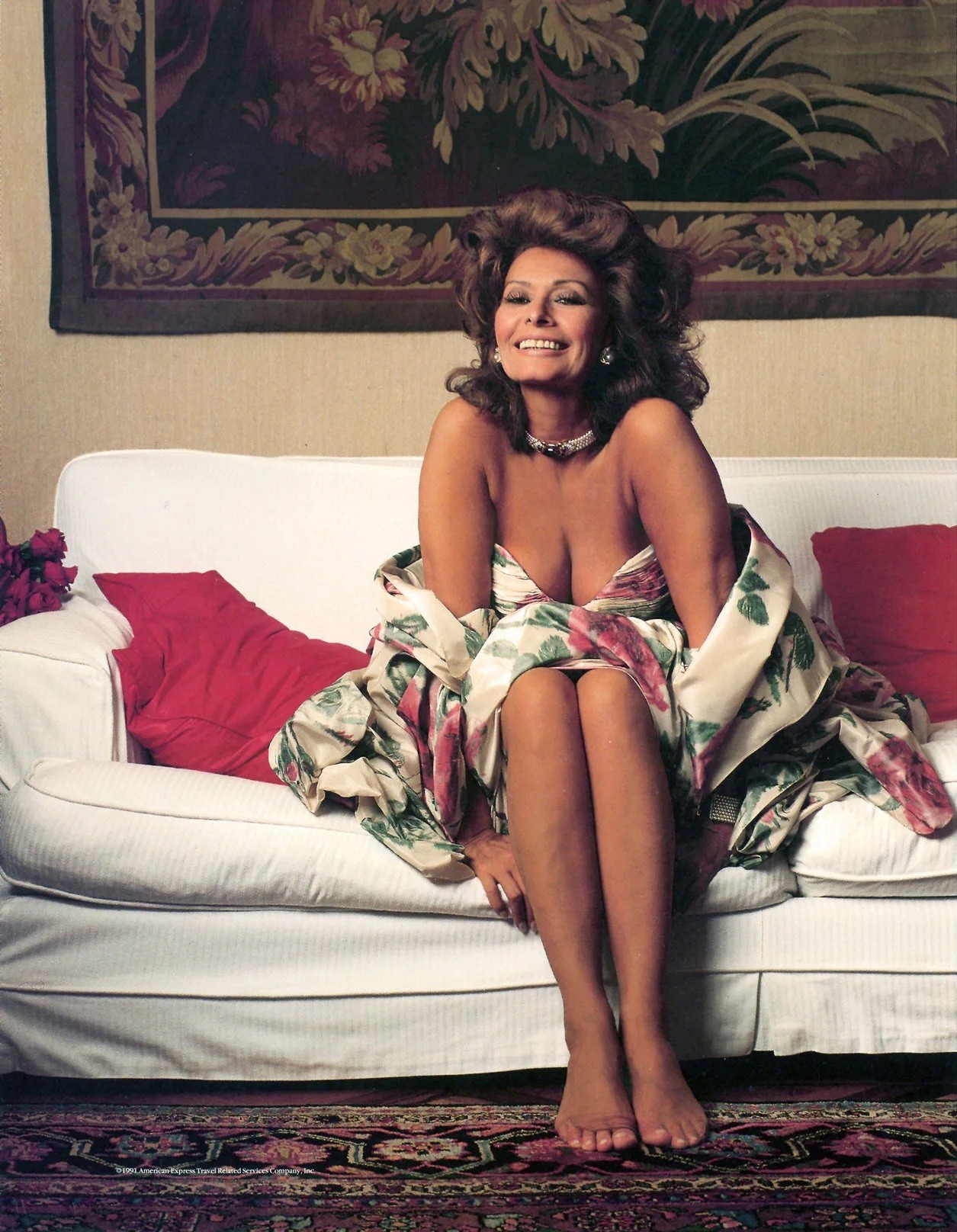
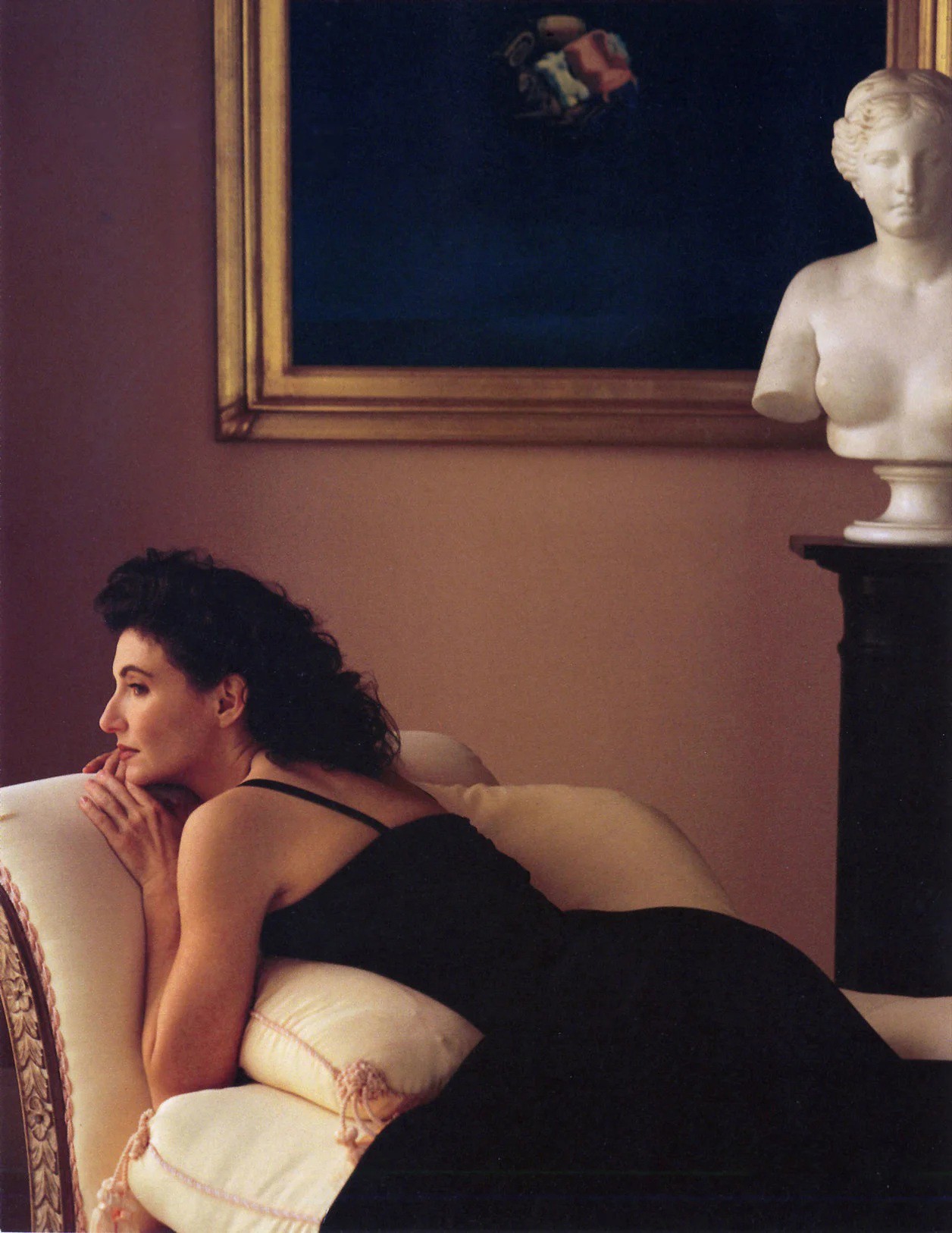
Annie Leibovitz for American Express
If the Lennon–Ono portrait exemplifies relational intimacy, Leibovitz’s 1983 cover image of Meryl Streep for Rolling Stone represents a conceptual pivot toward performative self-awareness.
Technically restrained yet psychologically radical, the portrait appears minimal: neutral backdrop, frontal orientation, tight crop. However, this reduction is deliberate. The probable use of a moderate telephoto focal length minimizes perspective distortion while preserving facial proportionality, ensuring that any visual deformation originates from the subject’s gesture rather than optical exaggeration. Subtle spatial compression stabilizes the image plane, heightening viewer confrontation.
Lighting is frontal and diffused, minimizing dramatic chiaroscuro modeling. Instead of sculpting volume through shadow, Leibovitz emphasizes surface articulation, micro-contrast across skin, fine lines, and textural elasticity become hyper-visible. The tonal neutrality eliminates romanticization, rendering the face almost diagrammatic.
Compositionally, the aggressive crop collapses spatial depth and eliminates environmental narrative. Streep occupies nearly the entire frame, producing perceptual immediacy. Her fingers pulling the skin outward introduce controlled distortion, disrupting the conventions of glamour portraiture that typically idealize symmetry and refinement. The deformation is self-authored; the subject becomes both performer and material.
Conceptually, the portrait interrogates identity as elastic construction. Known for her transformative acting range, Streep literalizes performance by physically manipulating her own physiognomy. Leibovitz reframes celebrity not as mythic surface, but as mutable architecture. The photograph becomes meta-performative, a performance about performance itself.
Across these works, Leibovitz demonstrates how technical discipline can generate conceptual depth. Whether through the sculptural naturalism of directional window light or the flattened neutrality of frontal illumination, her control over optics, tonal gradation, and compositional geometry enables portraits that oscillate between vulnerability and construction.
Rather than sanctifying celebrity, she exposes its mechanics. Through calibrated lens choice, dynamic range management, depth-of-field control, and spatial compression, she transforms the portrait into a site where identity is staged, negotiated, and revealed as inherently performative. In the broader evolution of magazine portraiture, her early Rolling Stone images mark a decisive shift: from documentation to authorship, from likeness to psychological architecture.
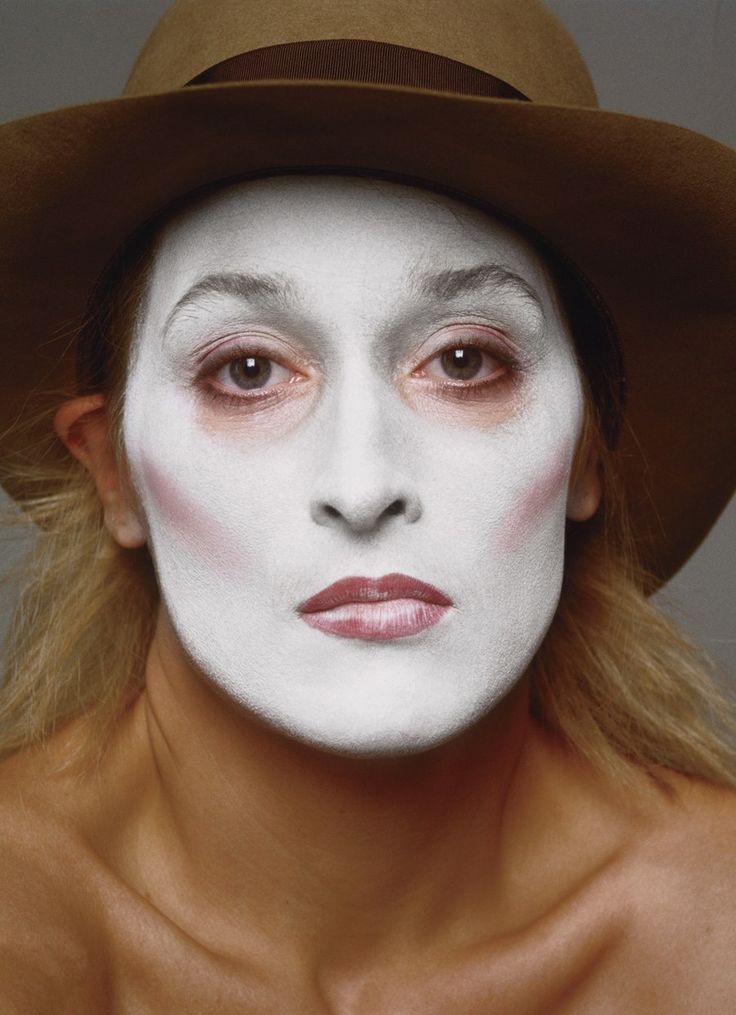
Meryl Strip for Rolling stone, 1983
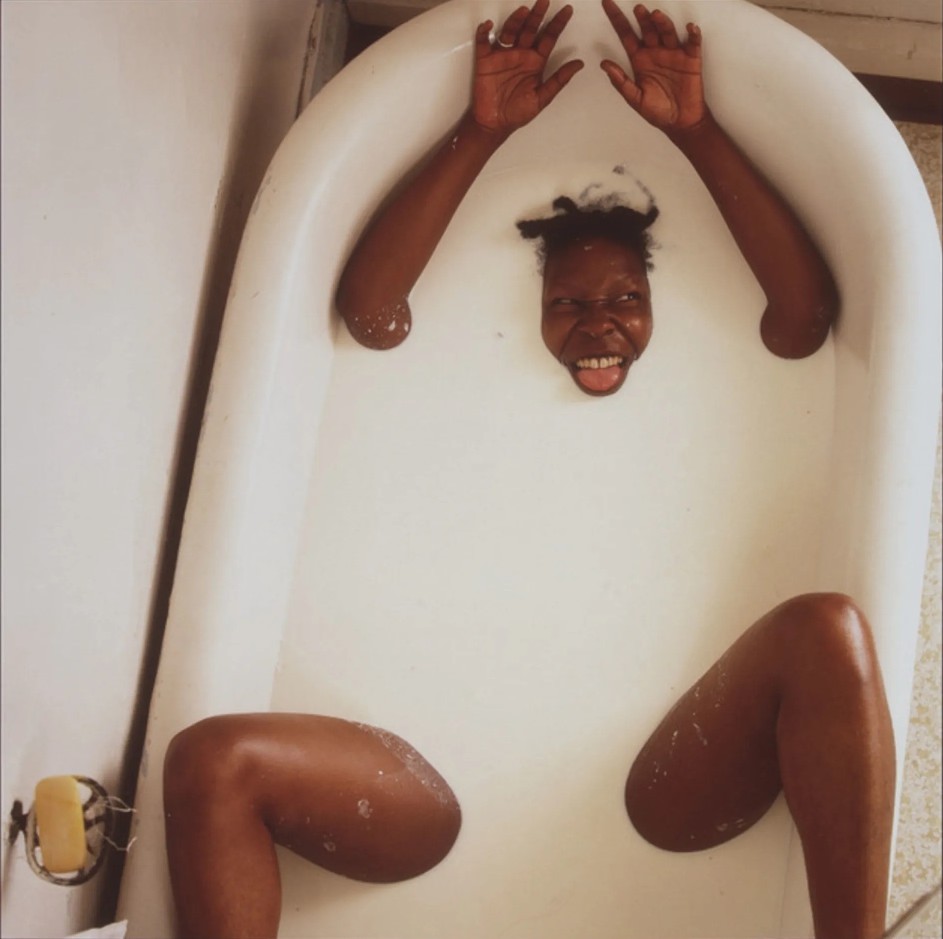
Upon joining Vanity Fair, her approach became more cinematic. She frequently staged scenes that incorporated elaborate sets, props, and costumes, functioning as visual metaphors for the subject’s persona. For instance, in her portrait of Whoopi Goldberg lying on a leopard-print rug surrounded by opulent furnishings, she combines butterfly lighting with subtle fill to highlight facial contours, while low-angle perspective emphasizes Goldberg’s presence and authority. Her use of color saturation, often achieved through gelled lighting and careful post-processing, transforms each image into a tableau reminiscent of Baroque painting, with balanced tension between light and shadow, foreground and background, and subject and environment.
Leibovitz’s work in commercial photography further demonstrates her capacity to integrate editorial narrative and advertising objectives. Campaigns for American Express, Nike, and Disney illustrate her application of advanced lighting schemes such as cross-lighting and rim lighting to sculpt three-dimensionality, while using soft diffusers and reflectors to create texture-rich yet flattering highlights. Color palettes are meticulously curated; in the American Express portraits, warm tones dominate to convey approachability, whereas cooler, desaturated palettes in other campaigns evoke sophistication and gravitas. Her meticulous previsualization of each shot considering lens choice, shutter speed, aperture, and light falloff ensures the narrative intention of the photograph aligns with its visual impact.
Whoopi Goldberg peers out from a bath of milk.
Annie Leibovitz, Random House, 2008
In projects such as her Women series, Leibovitz integrates documentary sensibilities with portraiture, employing environmental context to articulate professional and personal narratives. By selectively controlling depth of field and employing wide-angle lenses in some images, she situates her subjects within their workspaces or homes, embedding subtle narrative cues while maintaining aesthetic clarity. This careful manipulation of lens optics, combined with ambient and artificial lighting, allows her to balance realism and artistry, producing images that are psychologically resonant and compositionally sophisticated.
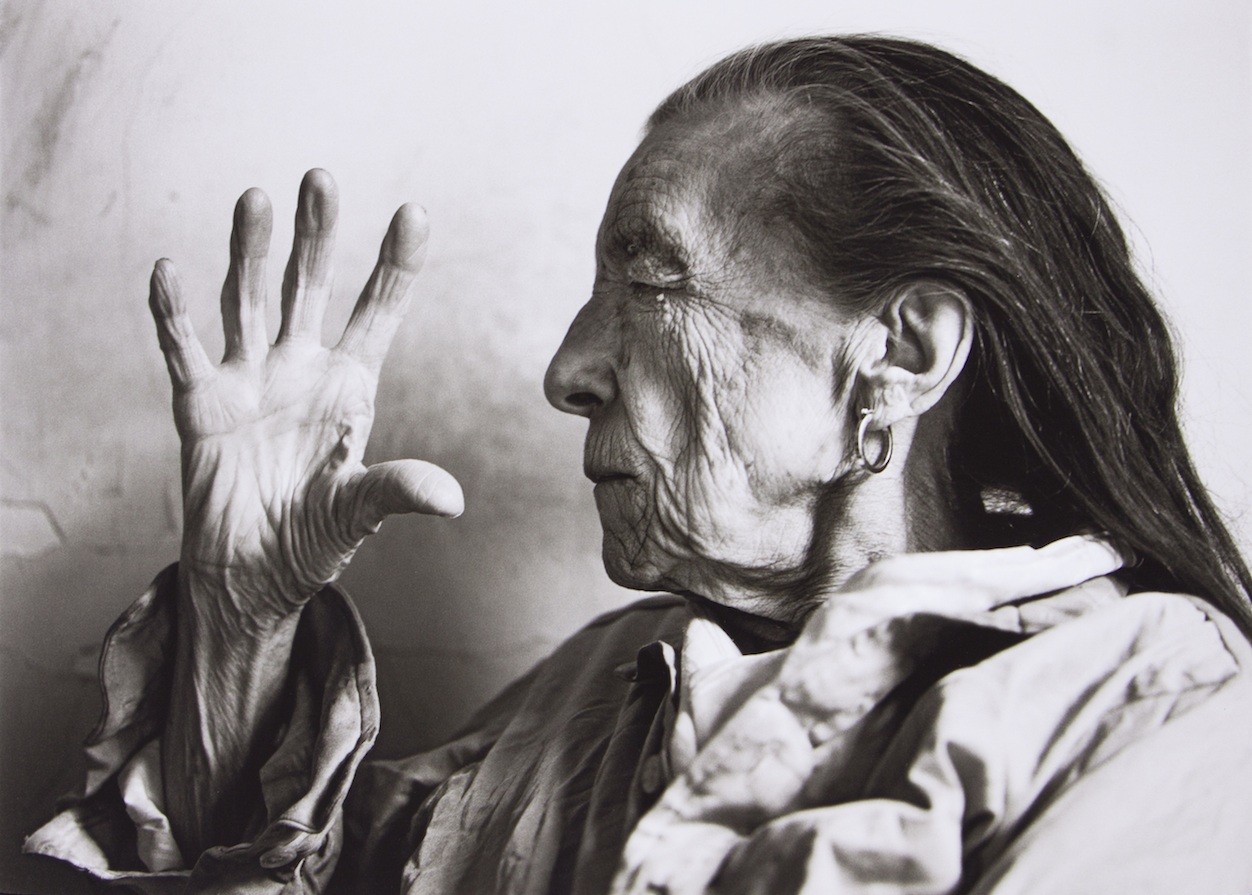
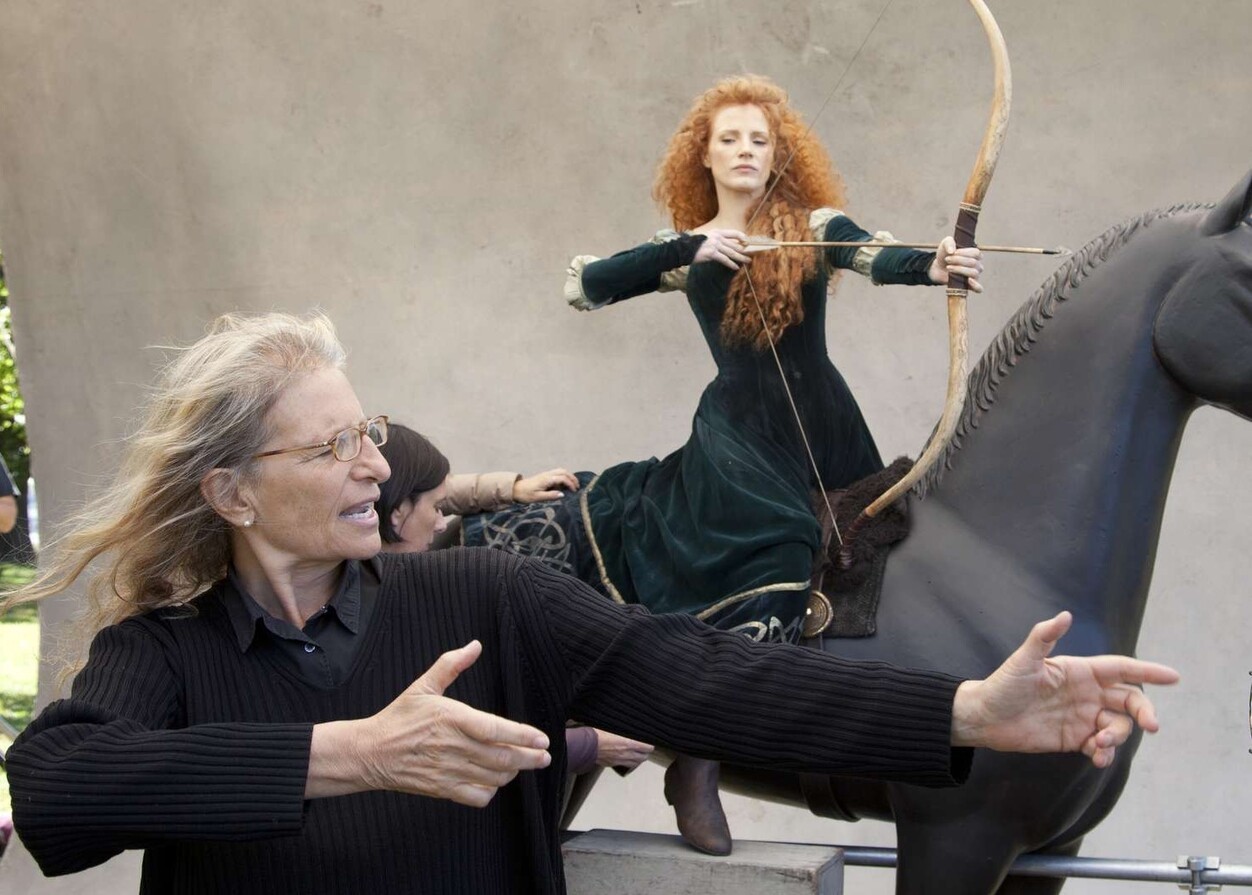
Women series, Annie Leibovitz
Leibovitz’s legacy lies not only in her catalog of iconic portraits but in her ability to continually expand the language of portraiture itself. Through her technical innovations, mastery of light and composition, and nuanced narrative sensibility, she transforms every portrait into a multidimensional work of art. Each image functions simultaneously as a document of identity, an exploration of cultural significance, and a study in photographic aesthetics. By bridging editorial, commercial, and fine art contexts, Annie Leibovitz has not merely photographed her era; she has shaped how it is visually understood, setting enduring standards for the integration of technical precision and narrative depth in portrait photography.
Annie Leibovitz’s contribution to the iconic “Got Milk?” The advertising campaign exemplifies her ability to merge editorial sophistication with commercial messaging. In these portraits, Leibovitz applied her signature cinematic approach to convey narrative through subtle visual cues rather than overt action. She often employed soft, directional lighting to sculpt facial features and emphasize expressions, creating a sense of intimacy that made the product, in this case, milk, feel integrated into the subject’s persona. By carefully positioning the subjects against neutral or minimally detailed backdrops, she ensured that the viewer’s attention was drawn to both the expressive nuance of the celebrity and the playful milk mustache, turning a simple concept into a psychologically engaging image.
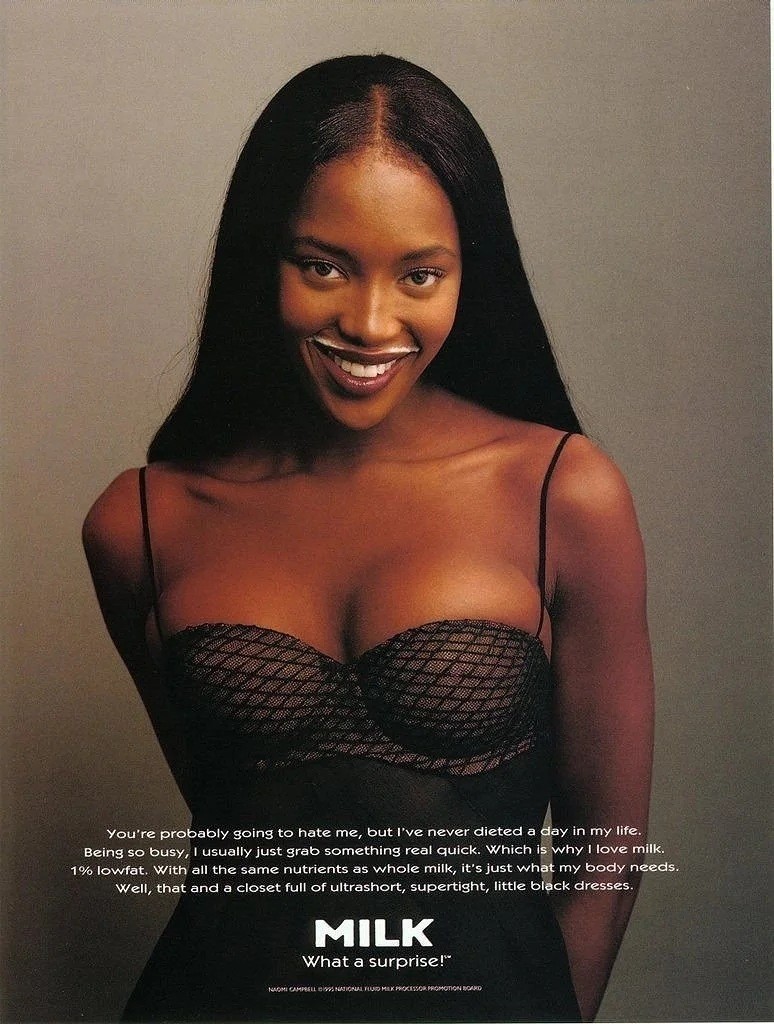
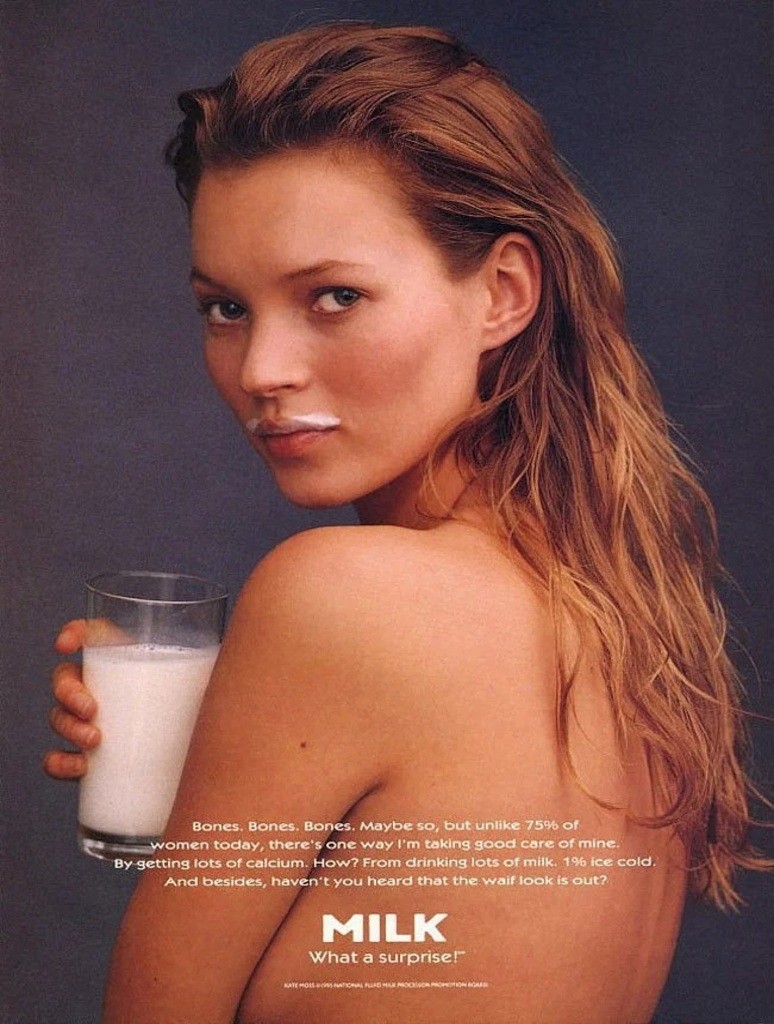
Got milk? Campaign-90s
Milk Mustache, Naomi Campbell & Kate Moss
In addition to lighting and composition, Leibovitz’s mastery of color theory and texture played a pivotal role. The milk’s stark whiteness contrasted against the warm tones of skin and clothing, creating a visual focal point while reinforcing the campaign’s messaging. Her meticulous planning extended to lens selection and depth of field: shallow focus isolated the subject while maintaining just enough environmental context to suggest personality and lifestyle. Through this integration of technical precision, narrative insight, and subtle humor, Leibovitz elevated the “Got Milk?” campaign from conventional advertising to a series of memorable visual narratives, demonstrating how her editorial sensibilities could seamlessly inform and enhance commercial photography.
Leibovitz’s contributions have been celebrated through major exhibitions, books, and honors that place her work at the core of contemporary visual history. In 1991 she became the first woman and only the second living photographer to have a solo exhibition at the National Portrait Gallery in Washington, D.C., accompanied by the influential volume Photographs: Annie Leibovitz 1970–1990. That same year, the French government awarded her the Commandeur in the Ordre des Arts et des Lettres , one of the highest honors for cultural contribution. Her monographs include landmark collections like Annie Leibovitz: Photographs, Olympic Portraits, American Music, and Annie Leibovitz at Work, plus touring shows such as “A Photographer’s Life, 1990‑2005” and Women: New Portraits, displayed in major cultural capitals around the world. Her photographs are housed in the permanent collections of institutions including the Art Institute of Chicago, The Museum of Modern Art in New York, and the Los Angeles County Museum of Art, underscoring her enduring impact across both popular and fine art contexts.
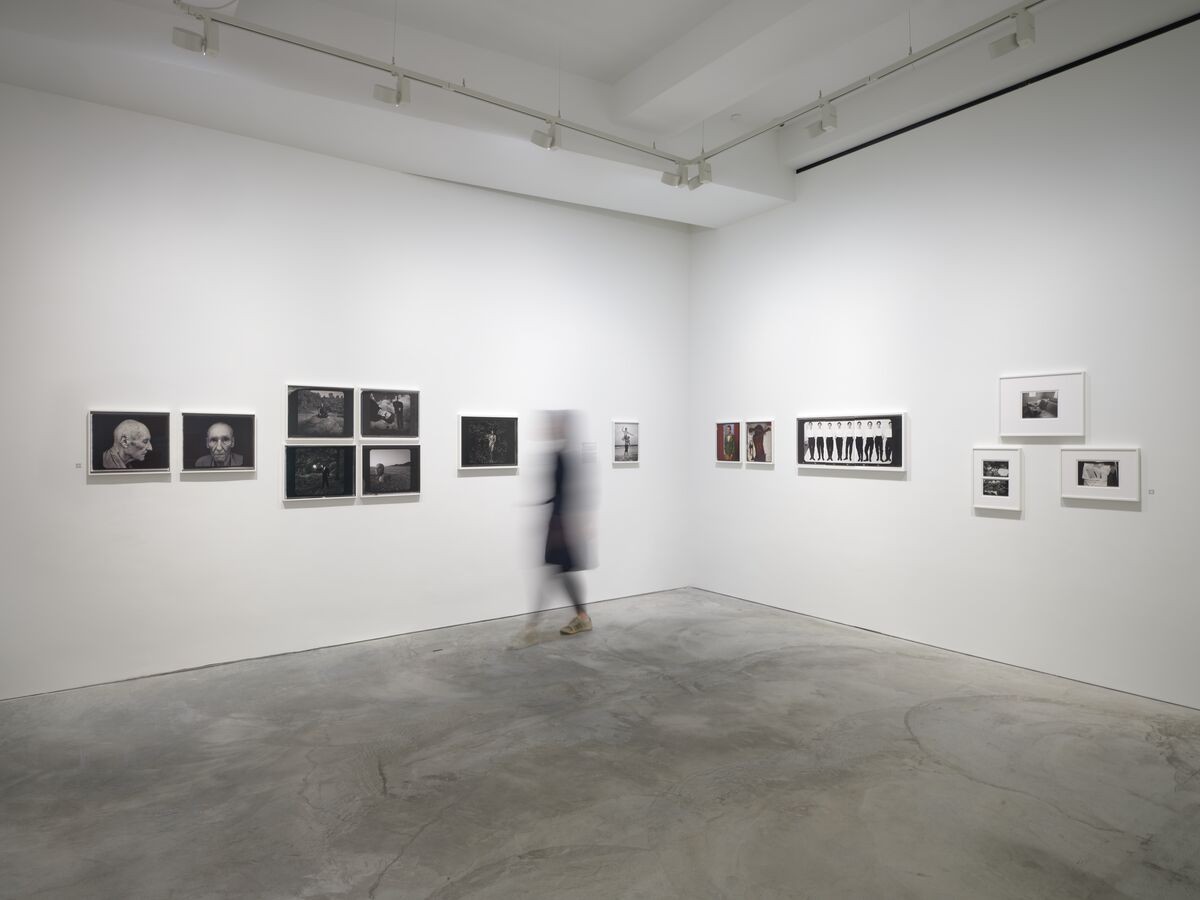
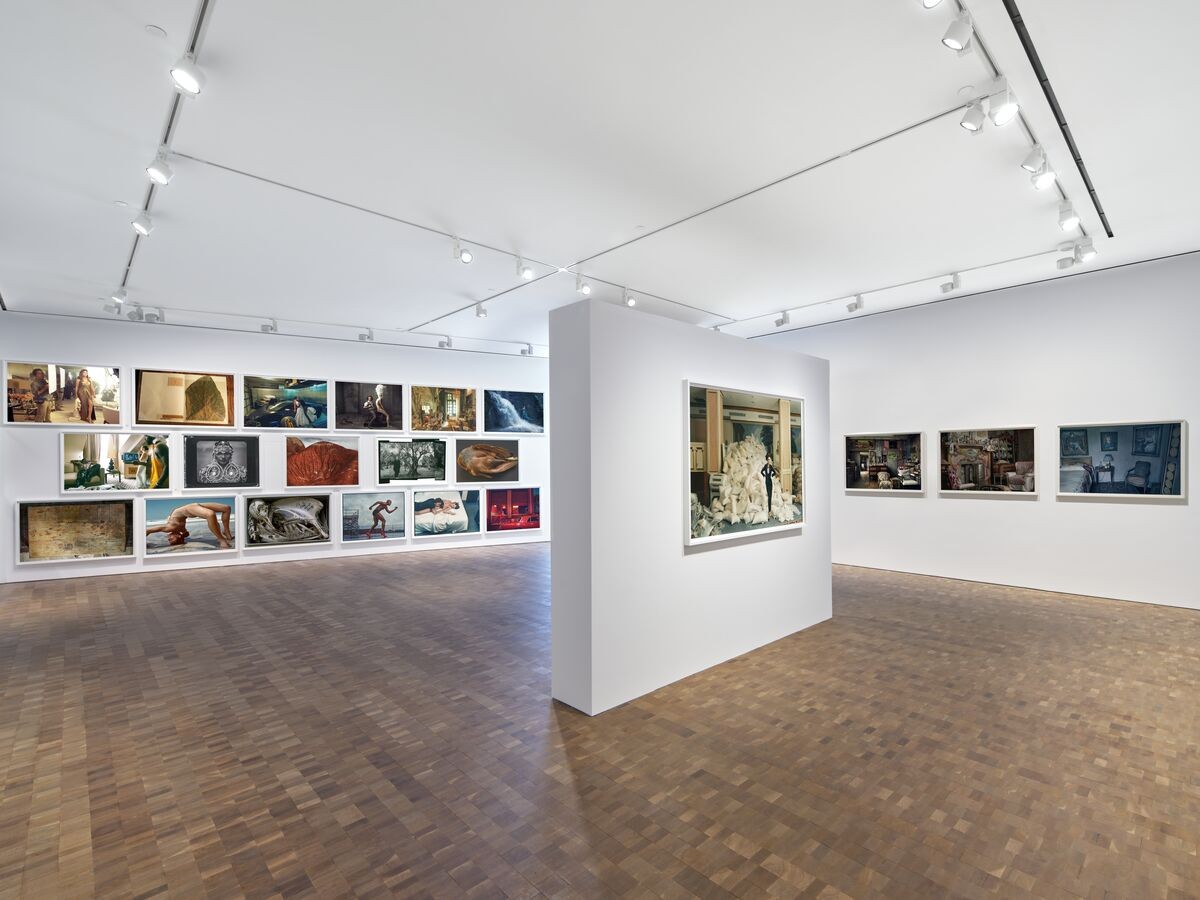
The exhibition is titled Annie Leibovitz
The Early Years, 1970 – 1983, Archive Project No. 1 and Wonderland
In recent years, Annie Leibovitz has continued to expand the boundaries of portrait photography, blending her signature cinematic sensibility with contemporary cultural narratives. She remains highly active in editorial and commercial work, collaborating with Vanity Fair, Vogue, and other international publications, while also producing photographic essays and personal projects that explore identity, celebrity, and social commentary. Notable recent projects include intimate portraits of world leaders, artists, and cultural icons, as well as thematic series that document social issues and human experiences across diverse communities. Through these works, she maintains her commitment to storytelling, meticulously designing each image with careful consideration of light, composition, environment, and psychological nuance.

Jonathan Anderson
Photo: Annie Leibovitz
Among her most celebrated contemporary pieces are her portraits of athletes and musicians in dynamic environments, her staged narratives for high-profile advertising campaigns, and her continued exploration of gender, power, and presence in the Women: New Portraits series. Leibovitz’s work today reflects a dialogue between fine art and popular culture, demonstrating her enduring capacity to create images that are both visually striking and emotionally resonant. Her photographs continue to be displayed in major museums, galleries, and private collections worldwide, reaffirming her role as a leading figure in visual storytelling.
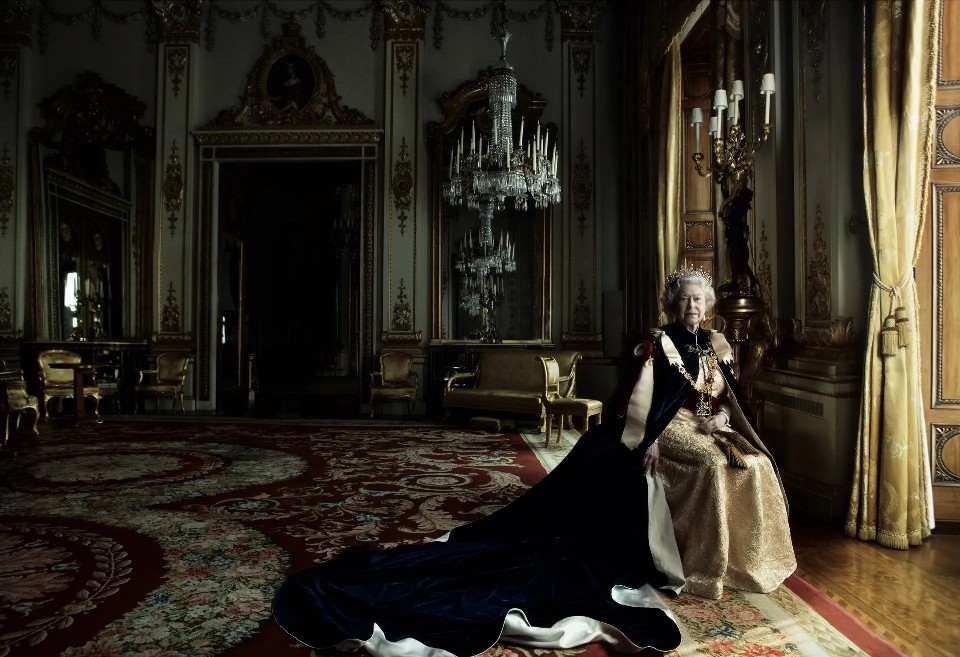
A portrait of Queen Elizabeth II
Photo: Annie Leibovitz in 2007 at Buckingham Palace
Annie Leibovitz’s career, spanning over five decades, exemplifies the power of photography to capture not just appearances, but the essence of identity and culture. Her work merges technical mastery from sophisticated lighting setups and precise depth-of-field control to complex compositional strategies with a profound understanding of human psychology.
By balancing narrative, symbolism, and visual aesthetics, she transforms portraiture into a multidimensional art form, where every frame tells a story. From her iconic Rolling Stone and Vanity Fair portraits to advertising campaigns like Got Milk?, her images have become cultural touchstones, shaping how we perceive fame, personality, and social identity.
Today, Leibovitz continues to innovate, using her lens as both a mirror and a stage, capturing moments that resonate long after the shutter closes, and solidifying her legacy as one of the most influential photographers of contemporary history.
This article is an original editorial analysis produced by [DIBA magazine]
Research and references are used for contextual accuracy.
