
|
EN
Subscribe to our Newsletter
For years, Victoria Beckham was highly visible but rarely taken seriously, seen more as a pop icon and tabloid figure than a fashion authority. Rather than pursuing a fast or performative reinvention, she committed to a slow, disciplined transformation. As shown in the Beckham documentary, her shift was shaped by restraint, consistency, and years of quiet work, gradually replacing visibility with credibility and spectacle with substance.
By the Editorial Staff
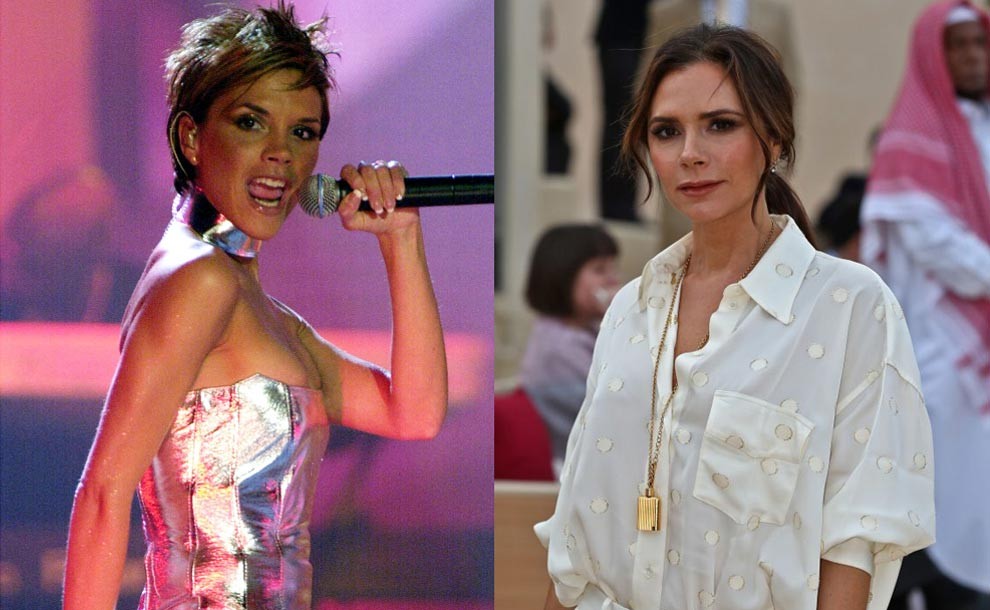
Photo: Getty Images
For years, Victoria Beckham was visible long before she was taken seriously.
A global pop icon, a tabloid constant, a fashion curiosity, her image was everywhere, yet rarely framed as authoritative. What followed, however, was not a rebrand engineered for speed or approval, but a long, disciplined recalibration, one that unfolded quietly, over time, and largely out of the spotlight.
The recent Netflix documentary, Beckham, does not attempt to reinvent Victoria Beckham. Instead, it reveals how carefully she has spent years doing that herself: not through spectacle, but through restraint; not by amplifying visibility, but by slowly earning credibility.
From Visibility to Authority
Victoria Beckham’s early fame as a member of the Spice Girls placed her at the extreme end of cultural visibility. Yet in fashion, visibility without substance often functions as a liability rather than an asset. Celebrity entrants into the industry are frequently seen, rarely trusted, positioned as consumers of fashion rather than its authors.
In Beckham’s case, fame became an obstacle to overcome. The fashion industry, particularly its critical and institutional layers, remains deeply suspicious of instant legitimacy. Excess exposure can dilute authority; omnipresence can flatten perception. To be taken seriously, one must often disappear long enough to be missed, or at least to be re-evaluated.
Her trajectory reflects a counterintuitive truth within fashion: credibility is not built through attention, but through absence, patience, and repetition of effort.

Photo: Getty Images
Entering Fashion: Not Fast, Not Loud
When Victoria Beckham launched her eponymous brand, she did so without the theatrics typical of celebrity fashion ventures. There was no reliance on logos, no overt trend-chasing, no aggressive narrative of reinvention. Instead, the brand began with an emphasis on silhouette, proportion, and restraint.
This was a strategic choice. Beckham did not enter fashion through its most forgiving categories. She began with tailoring, arguably the most scrutinized and least forgiving domain in womenswear. Tailoring exposes weakness. It demands precision. It leaves little room for distraction.
By focusing on structure and fit, she positioned herself not as a stylist or muse, but as a designer engaged with the mechanics of clothing. Over time, embellishment receded. Logos disappeared. What remained was control.
This was not fashion as self-expression; it was fashion as discipline.
Shoes as a Statement of Control
Her expansion into footwear marks one of the most telling chapters in this journey. Shoes, unlike garments, confront the body directly. They negotiate weight, balance, endurance. In design terms, they are a true test of authorship.
Beckham’s shoes are not decorative afterthoughts. They are deliberate, architectural, and often uncompromising. The irony is well documented: a designer known for enduring physical discomfort in heels choosing to design shoes that privilege form and authority over comfort.
Yet this contradiction is precisely the point. Footwear, here, becomes symbolic. Shoes are the interface between the body and the ground, the literal mechanism of standing one’s ground. In Beckham’s work, they read as assertions of control, stability, and intent.
They do not soften the image. They anchor it.

Photo: Getty Images
The Netflix Documentary: Narrative as Design
The Beckham documentary on Netflix functions less as a confessional and more as an extension of brand design. Its treatment of Victoria Beckham is notably restrained. There is no emotional excess, no melodrama-driven arc of validation.
Instead, the documentary emphasizes work: fittings, criticism, uncertainty, repetition. Failures are acknowledged, but never aestheticized. Success is contextualized, not celebrated.
This is not a documentary about feelings. It is a documentary about labor.
From a media perspective, this is a controlled narrative, one that aligns seamlessly with the brand she has built. The message is clear: credibility is not performed; it is accumulated.
Style as Discipline, Not Expression
Victoria Beckham’s personal style mirrors this philosophy. Her wardrobe is minimal, repetitive, controlled. Silhouettes recur. Colors remain disciplined. There is little interest in surprise.
This stands in stark contrast to celebrity fashion cultures driven by novelty, virality, and constant reinvention. Where others use fashion to be seen, Beckham uses it to maintain distance. Clothing, in her case, functions as a language of restraint.
It does not shout. It signals.
What Her Journey Represents Today
Victoria Beckham’s trajectory reflects a broader shift within the fashion industry’s relationship to celebrity. Authority is no longer granted by recognition alone. It is earned through time, consistency, and strategic withdrawal.
Her journey should not be read as an exception, but as a case study in recalibrated legitimacy. In an era obsessed with speed, her credibility was built slowly. In a culture of overexposure, she chose limitation.
Victoria Beckham did not enter fashion to be loved.
She entered it to be taken seriously, and waited long enough for that to happen.
This article is an original editorial analysis produced by [DIBA magazine].
Research and references are used for contextual accuracy.