
|
EN
Subscribe to our Newsletter
For centuries, pregnancy was treated not as a visible condition, but as a disruption, something to be hidden, managed, or erased. Clothing became the first tool of negotiation.
By the Editorial Staff
Pregnancy has never been merely a biological condition; it has always been a cultural, social, and—most critically, visual issue. A changing body disrupts the established order of clothing, and throughout history, that disruption has provoked reactions rooted in fear, shame, and control.
Until the late twentieth century, the pregnant body was considered inappropriate in public space. Not because it did not exist, but because its visibility challenged a social order built on regulating the female body. Clothing functioned as a mediator: concealing, managing, restraining.
In Western societies from the late nineteenth century through the mid-twentieth century, pregnancy was relegated to the private sphere. Once a woman began to “show,” she was expected to withdraw from public life. The home, the house dress, and social disappearance formed a familiar pattern. Within this framework, maternity fashion was never about beauty, it was about invisibility.
Early maternity garments were not truly new designs, but adjustable versions of existing clothes. Ties, pleats, hidden buttons, excess fabric at the back, everything was engineered so the body could change without being seen. This is where material politics emerge: fabric, cut, and silhouette become instruments of bodily control.
Even representation avoided the pregnant form. In catalogs, sewing patterns, and advertisements, women never appeared visibly pregnant. The bump existed, but it was erased. This visual omission amounted to a collective denial: pregnancy was real, but not permissible to look at.
This logic extended far beyond fashion. Cinema, television, and mass media followed the same rules. In classical Hollywood films, pregnancy was either omitted or narratively bypassed, marriage, then suddenly a child. The pregnant body remained off-screen.
And yet, clothing becomes a historical document precisely because of what it attempts to hide. What is concealed most carefully often reveals what society fears seeing.
The mid-twentieth century marked a turning point in the relationship between pregnancy and clothing. After World War II, the Western world experienced what would later be called the baby boom, a dramatic and sustained rise in fertility rates. This demographic shift reshaped not only family structures, but also the visibility of the female body in public space. Pregnancy was no longer an exception; it became common. And with that visibility came a new demand for maternity wear.
Before the 1950s, maternity garments were often little more than adjustable versions of regular clothing. Dresses with ties, pleats, or multiple button closures could be worn at their smallest setting after pregnancy. This approach reflected a deeper social logic: pregnancy was considered temporary, and therefore not worthy of permanent design solutions.
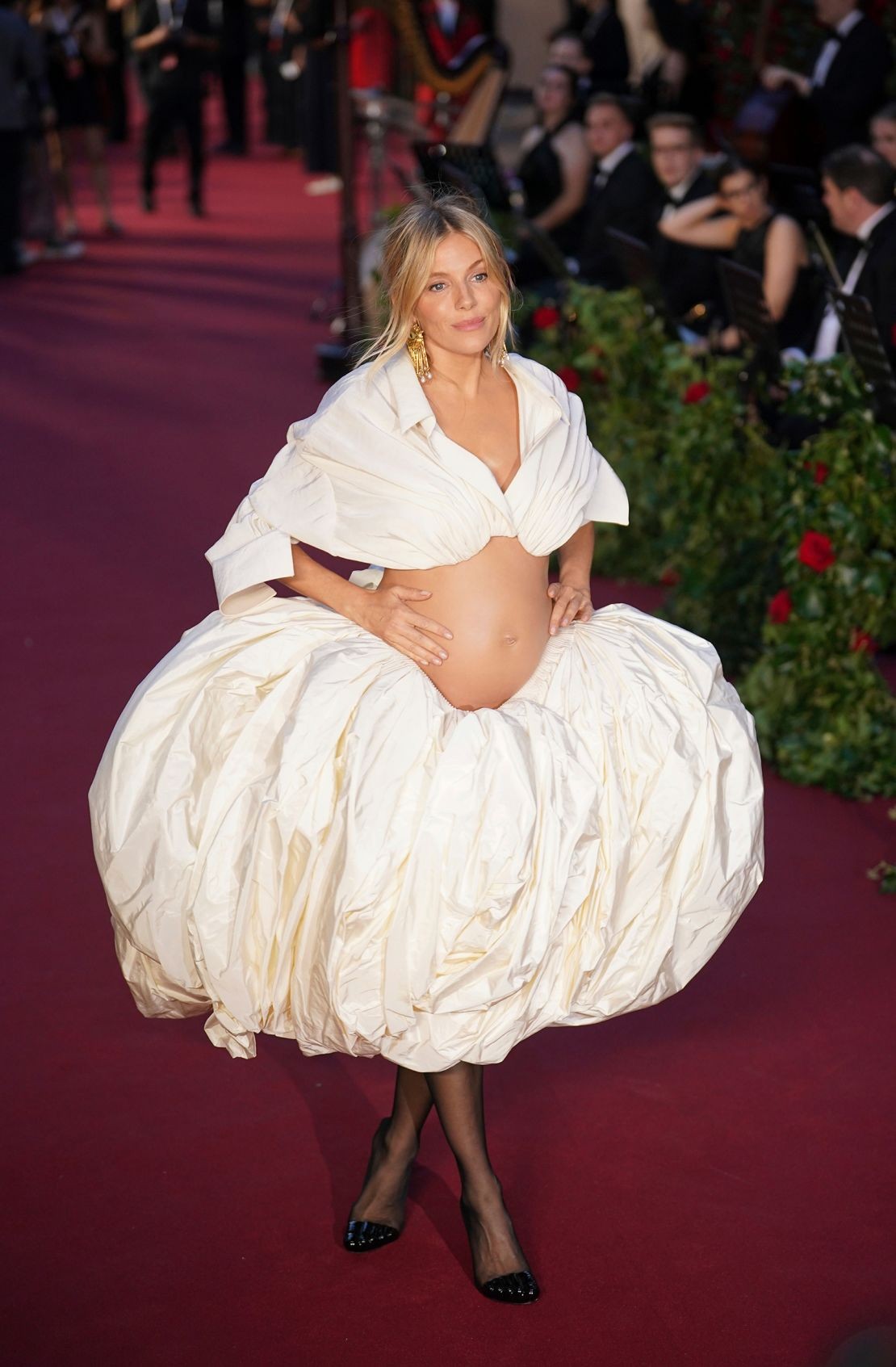
Sienna Miller
Photo: Yui Mok/AP
For working women, concealment was often a matter of survival. In many workplaces, pregnancy could lead to dismissal. Maternity clothing functioned as a strategic disguise. Advertisements emphasized how effectively a garment could hide the bump, promising women more time in public and professional life.
Even commercial imagery reinforced this invisibility. Sewing patterns and catalogs never depicted visibly pregnant bodies. Showing a pregnant form was considered crude. This absence mirrored a broader cultural discomfort: society was still unprepared to look directly at pregnancy.
Change arrived gradually, and the media played a decisive role.
Cinema, Television, and the Breaking of Silence
Classical Hollywood avoided depicting pregnancy explicitly. Narratives jumped from marriage to an instant family. Even in The Miracle of Morgan’s Creek (1944), a film centered on an unmarried pregnant teenager, the body itself is carefully concealed—shot from behind, above the waist, or obscured entirely.
This visual silence persisted into the early 1950s. It was still considered improper for pregnant women to be visible in public, let alone dressed in ways that acknowledged their changing bodies. The breakthrough came not from fashion, but from television.
In 1952, Lucille Ball became the first visibly pregnant woman on American television through her storyline on I Love Lucy. Although the word “pregnant” was never spoken, the image itself shifted public perception. Pregnancy began to move from private taboo to public reality.
This cultural shift had immediate consequences for fashion. Women were now seen in their second and third trimesters, on the street, in shops, in social life. Maternity wear could no longer exist solely to conceal; it had to accommodate presence.
The Birth of a Maternity Fashion Industry
Within this new context, maternity clothing evolved from a marginal necessity into a distinct fashion category. Designers began to treat pregnancy not as a flaw, but as a legitimate bodily form.
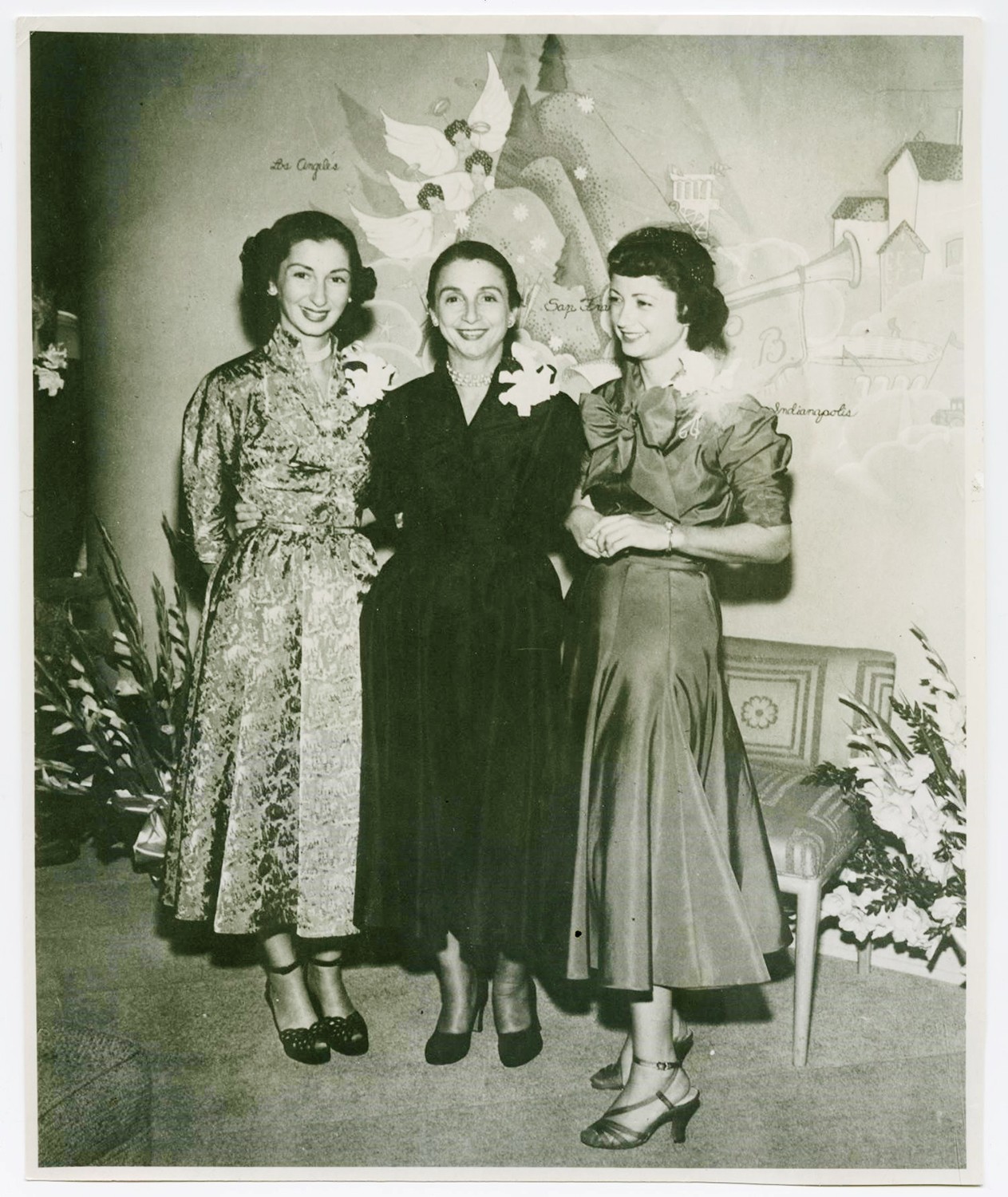
The Frankfurt sisters of Dallas, founders of Page Boy in 1938, were among the earliest innovators. Their patented skirt design, featuring a scooped-out front panel covered by a long jacket, allowed room for growth without sacrificing silhouette.
It was a pivotal moment: maternity wear that acknowledged the body while maintaining elegance.
As Page Boy gained success, the industry recognized the commercial potential of maternity fashion. Two-piece sets replaced shapeless dresses. Swing tops, inverted pleat skirts, slightly longer front hems, and adjustable waistbands formed a new design language, one that negotiated with the changing body rather than denying it.
In 1958, the Mennen company launched a maternity collection designed by leading couturiers of the era, including Givenchy, Lanvin-Castillo, and Miguel Ferreras.
For the first time, maternity eveningwear entered the realm of luxury. Pregnancy had crossed a threshold, it was now allowed to be beautiful.
The entry of pregnancy into public visibility in the mid-twentieth century was only the beginning. What followed was something more profound: agency.
The pregnant body gradually shifted from something that had to be concealed into a body capable of producing meaning, taking a stance, and challenging aesthetic systems.
Photo: Pinterest
The 1960s: Liberation of the Body, Simplification of Dress
The 1960s, shaped by feminism, sexual liberation, and cultural upheaval, introduced a new phase for maternity fashion. Garments relied less on adjustability and more on silhouette. A-line dresses, shift dresses, and loose tops defined a modern idea of comfort.
The pregnant body no longer had to disappear—but it still wasn’t meant to be emphasized. Fashion adopted neutrality. This hesitation mirrored a society in transition: redefining womanhood, yet unsure how fully to confront the pregnant form.
From Function to Image: Late 20th Century
The true rupture occurred not in everyday clothing, but in representation.
In 1991, Demi Moore’s nude pregnancy cover for Vanity Fair radically altered the visual language of maternity. The image was not maternal, not private, not hidden, but powerful, confrontational, and direct. Pregnancy became a cultural statement.
From this point forward, maternity wear was no longer just about dressing the body. The body itself became the message.
The 21st Century: Pregnancy as Aesthetic Position
This trajectory reached a radical apex in recent years. Rihanna’s 2022 pregnancy announcement, featuring deliberately exposed bellies, marked a historic shift in fashion culture.
Rejecting centuries of concealment, Rihanna refused to manage or soften the pregnant body. Clothing became an instrument of emphasis, not adaptation. The belly became the compositional center. Pregnancy transformed from a temporary condition into a visual identity.
Pregnancy as Material Shift
Pregnancy is not merely a change of form, it is a material shift. A transformation of bodily matter, garment matter, and visual perception.
In the presence of the pregnant body, clothing must redefine itself. Cuts become responses. Fabric mediates pressure, tension, and weight. The body is no longer passive, it acts.
Within this framework, pregnancy is not a design problem but a design laboratory. A site where fashion is forced to confront physical, social, and political reality.
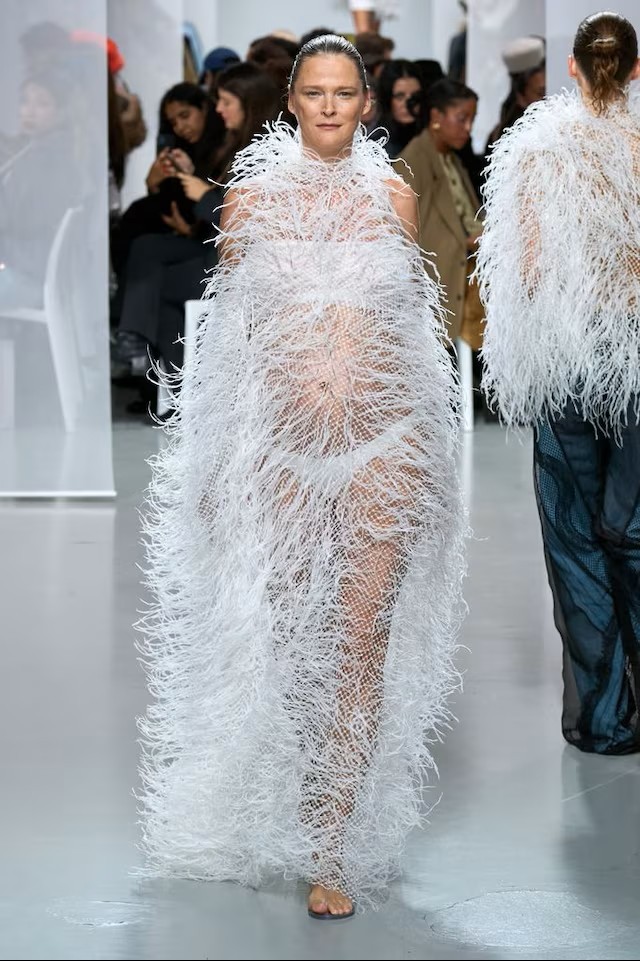
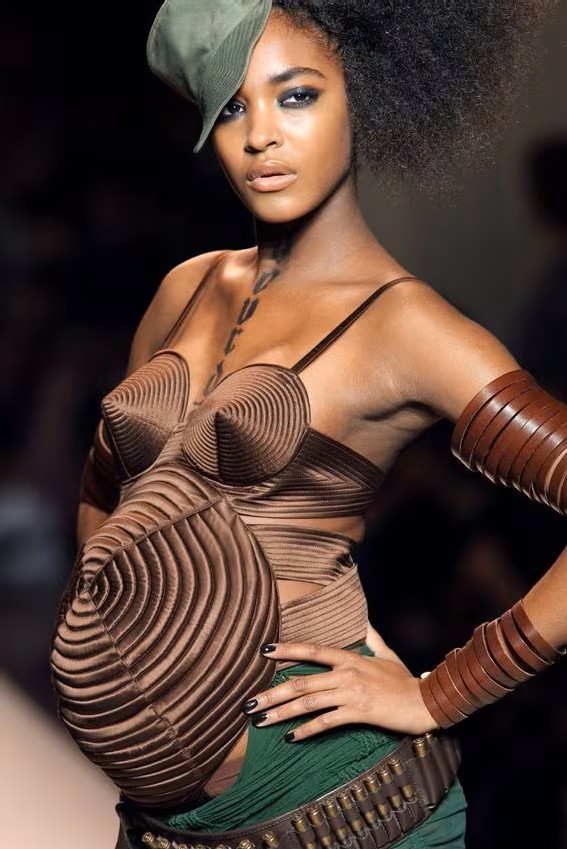
Carmen Kass and Jourdan Dunn
Photo: Getty Image
Conclusion: Why Pregnancy Matters to Fashion
In an era where fashion is increasingly flattened into image, the pregnant body resists. It carries time, weight, and change. If fashion is to remain honest, it must coexist with transformation.
Pregnancy forces fashion beyond decoration and into meaning. This is where fashion becomes thoughtful again.
This article is an original editorial analysis produced by [DIBA magazine].
Research and references are used for contextual accuracy.