
|
EN
Subscribe to our Newsletter
Iris van Herpen redefines fashion through science, technology, and speculative design. Positioned between couture and cultural research, her work challenges the limits of the body, materiality, and beauty in the contemporary world.
By the Editorial Staff
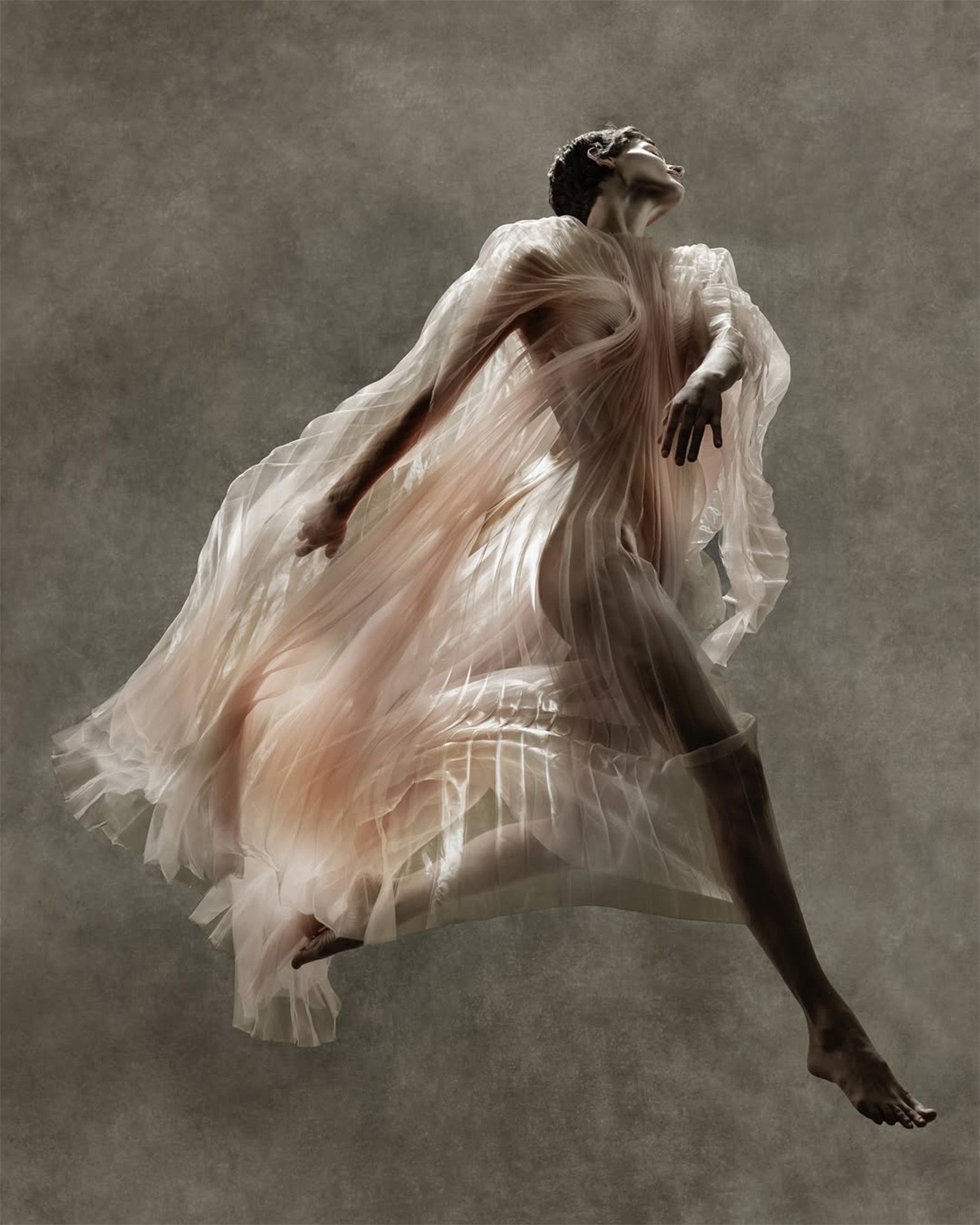
Photo: Iris van Herpen
If clothing is understood merely as a covering for the body, then Iris van Herpen is not, in essence, a fashion designer. She is an architect of perception. In her universe, garments function as intermediaries, between body and space, matter and imagination, what is seen and what is felt. Her creations are not designed for everyday consumption, but to be experienced; experiences that hover at the edge of science, ritual, and dream.
From the very beginning of her career, van Herpen made it clear that she had no interest in operating within conventional fashion frameworks. Rather than following seasons or trends, she has consistently returned to fundamental questions: What is the body? How can movement be made visible? Can the invisible be worn?
Iris van Herpen grew up in a small town in the Netherlands, where long before discovering the transformative nature of fashion, she expressed herself through classical ballet, painting, and playing the violin. This early immersion in movement, rhythm, and form later became the backbone of her design language, one that understands clothing as an extension of the body rather than an object imposed upon it.
Her studies in fashion design at ArtEZ University of the Arts, followed by formative experiences working with Alexander McQueen and Dutch artist Claudy Jongstra, exposed her to two complementary worlds: the dramatic, narrative-driven language of fashion and a deeply material, organic approach rooted in craft. The synthesis of these influences led, in 2007, to the founding of her eponymous label, a brand that from its inception refused to conform to established norms.
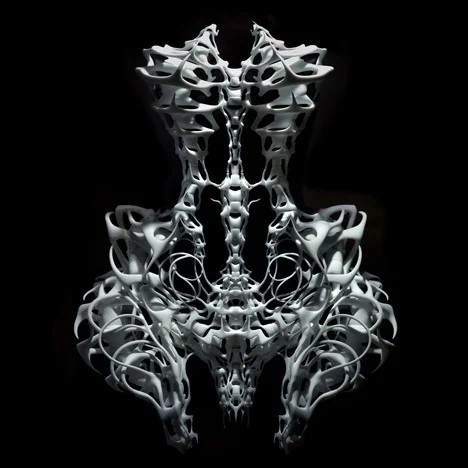
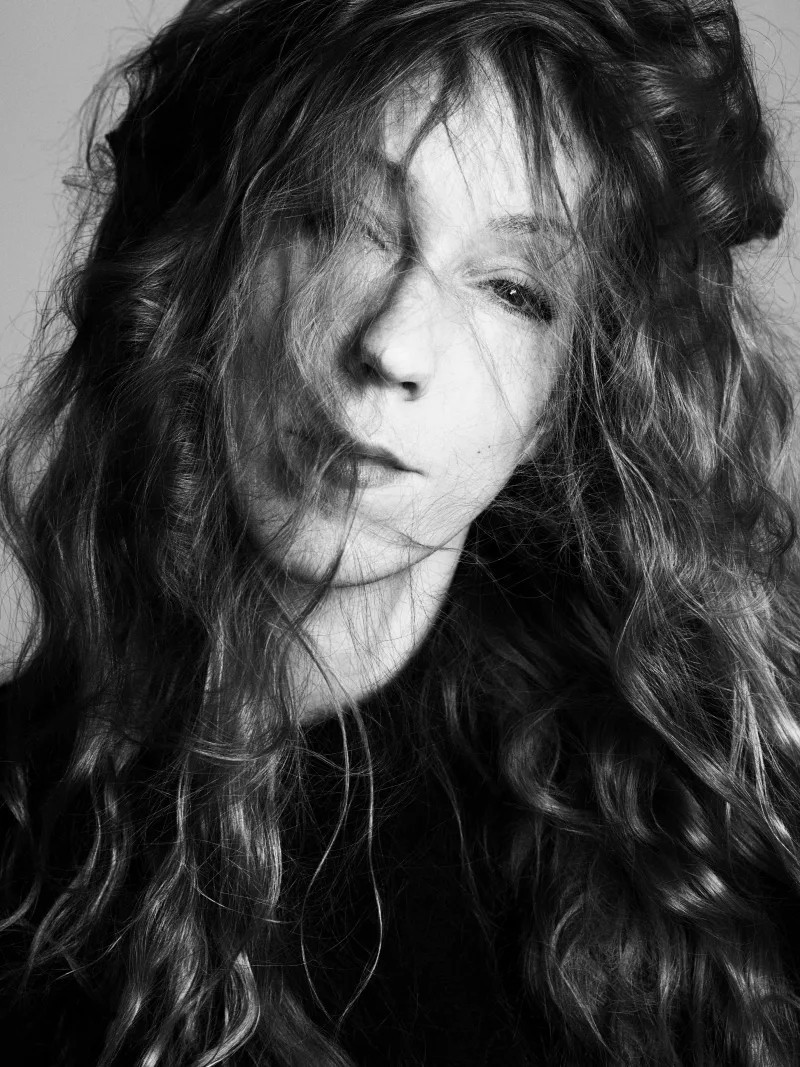
Photo: Iris van Herpen, 2014
When Time Magazine named her 3D-printed dresses among the “50 Best Innovations of 2020,” it underscored van Herpen’s role as a pioneer. Yet for the designer herself, technology has never been the goal. 3D printing, laser cutting, silicone, and resin function as languages rather than spectacles, no different from pigment to a painter. Technology does not replace the human hand in her practice; instead, it enters into an ongoing dialogue with the body and material. This is why her creations feel simultaneously futuristic and ritualistic, as though newly born and ancient at once.
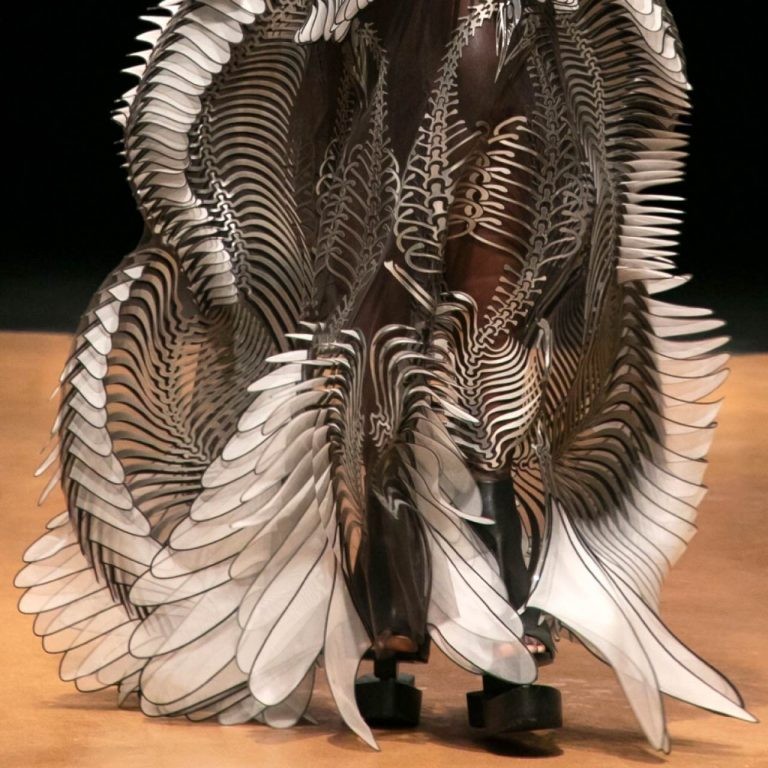
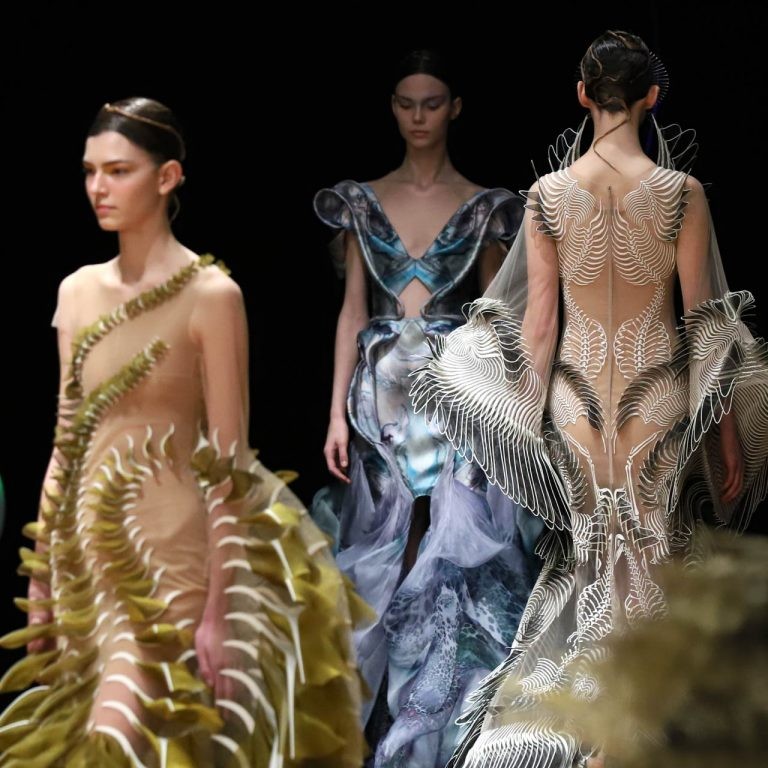
Photo: Iris van Herpen, 2020
In van Herpen’s world, the body is never fixed. It stretches, multiplies, fragments, and dissolves into the garment itself. Collections such as Synesthesia, Micro, and Wilderness Embodied present the body as a sensitive, unstable, and ever-evolving entity. Clothing ceases to be decorative and becomes something closer to a living organism, an object in a state of becoming rather than being.
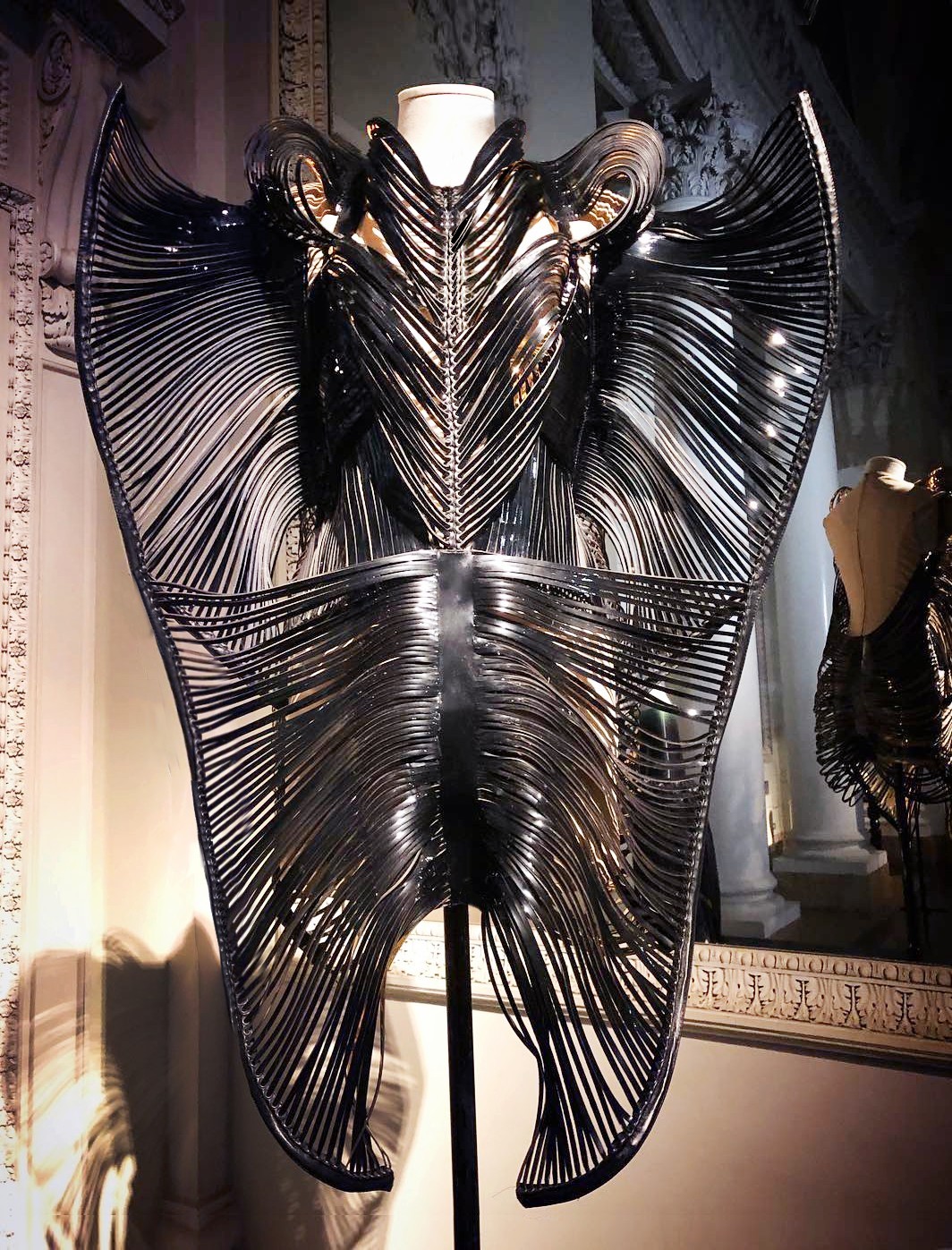
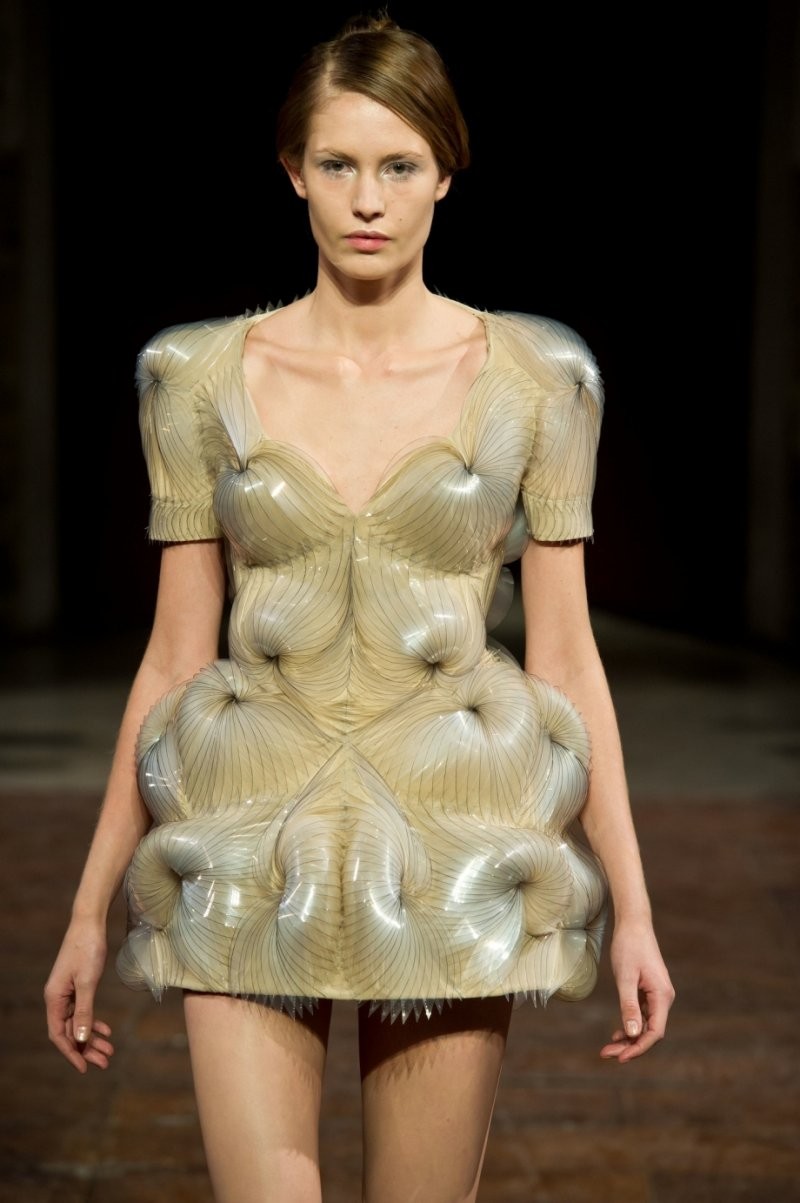
Iris van Herpen, The ‘Synesthesia’ dress, 2010
Photo: Iris van Herpen
Iris van Herpen. From ‘Micro’ collection
Photo: Iris van Herpen
For van Herpen, nature is not a visual reference but an intelligent system. Water, magnetic fields, cellular structures, feathers, bones, smoke, and crystals appear in her work not as imitation, but as logic. Rather than replicating natural forms, she translates natural behaviors, growth, absorption, erosion, transformation. As a result, many of her garments convey a sense of motion even in stillness.
Rejecting the logic of mass production, van Herpen produces only a limited number of pieces each year. She first envisions the outcome without regard for existing techniques or resources, and only then works with her team to realize the vision. Collaboration is therefore intrinsic to her process. From dance and music to science, physics, and architecture, her partnerships, with creatives such as Björk, Nick Knight, Jolan van der Wiel, Neri Oxman, and architects Philip Beesley and Benthem Crouwel, have repeatedly expanded the boundaries of fashion.
Van Herpen’s designs are encountered more often in museums than in wardrobes. Institutions such as the Metropolitan Museum of Art, the Victoria and Albert Museum, the Cooper Hewitt Smithsonian Design Museum, and the Palais de Tokyo have become custodians of her work. Since January 2011, her collections have also been presented regularly during Paris Haute Couture Week. This dual presence affirms a vision of fashion conceived not for seasonal turnover, but for endurance and critical reflection.
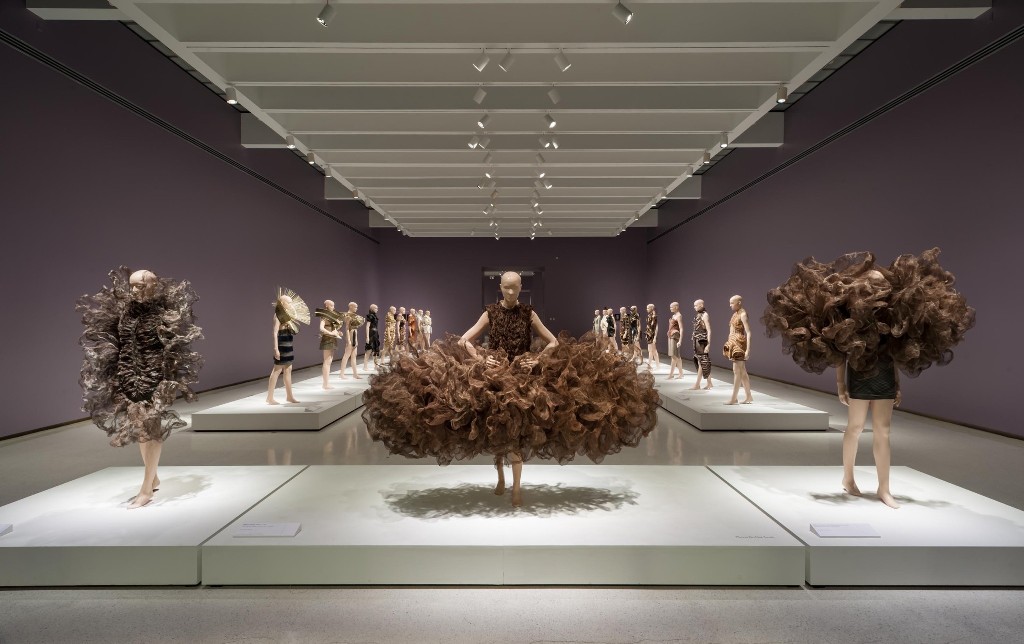
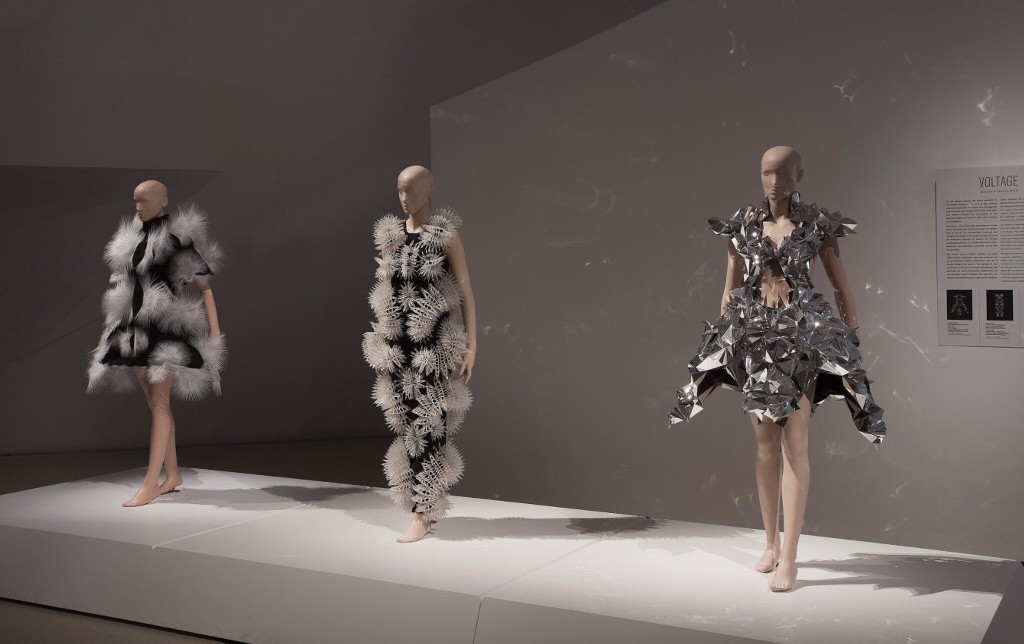
Installation view of Iris Van Herpen: Transforming Fashion, 2017, Carnegie Museum of Art
Photo: Bryan Conley
The Iris van Herpen 'Transforming Fashion' solo exhibition, Royal Ontario Museum in Toronto
Photo: Getty Images
The exhibition Iris van Herpen: Sculpting the Senses serves as a cartography of the designer’s mind. Featuring over 140 works arranged across nine conceptual themes, from the origins of life to water, it explores the relationship between the body, movement, and metamorphosis. First presented in Paris and later in Singapore, the exhibition confirms that van Herpen is not merely designing garments, but crafting experiences that ask viewers to slow down, observe, and reconsider what they are seeing.
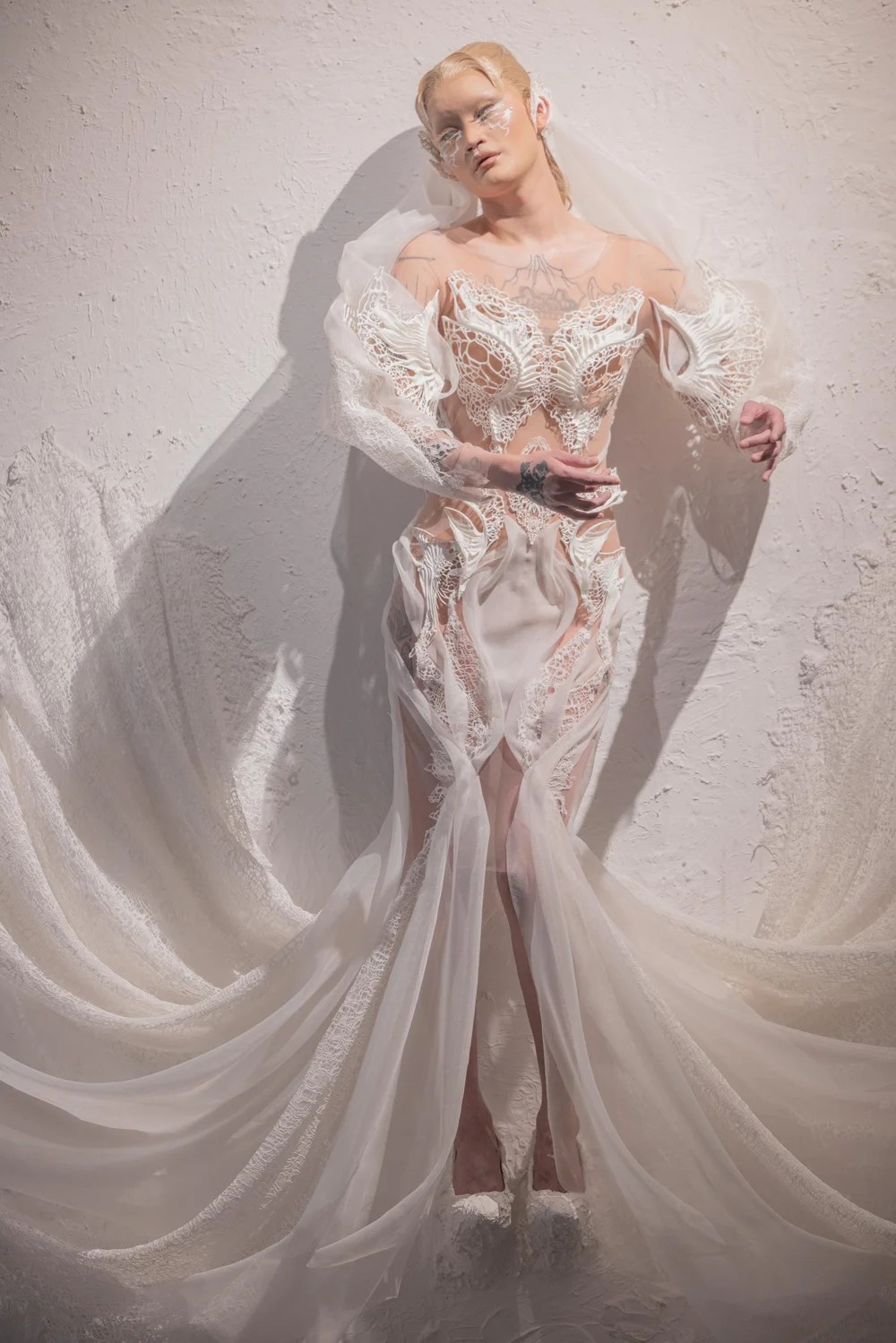
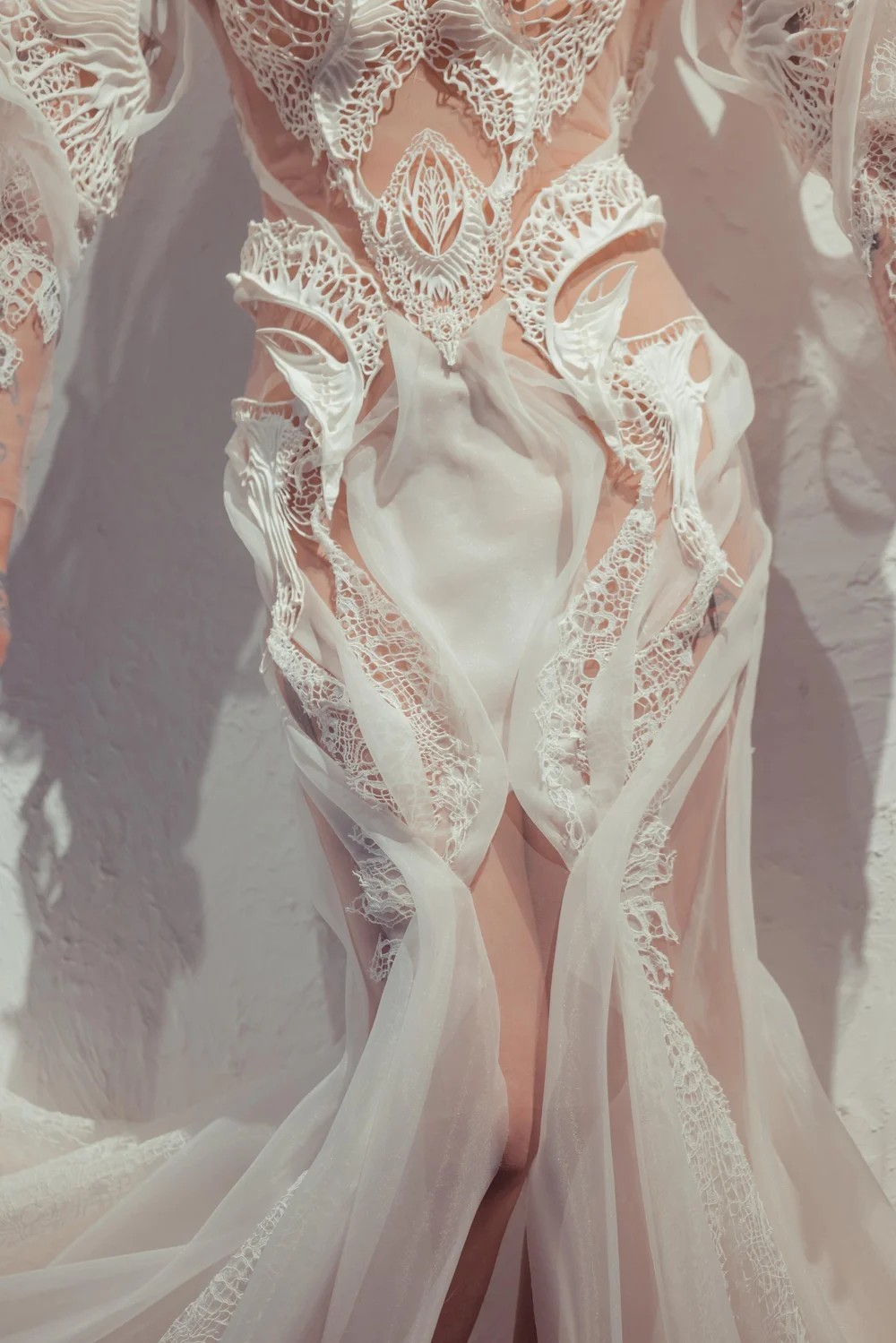
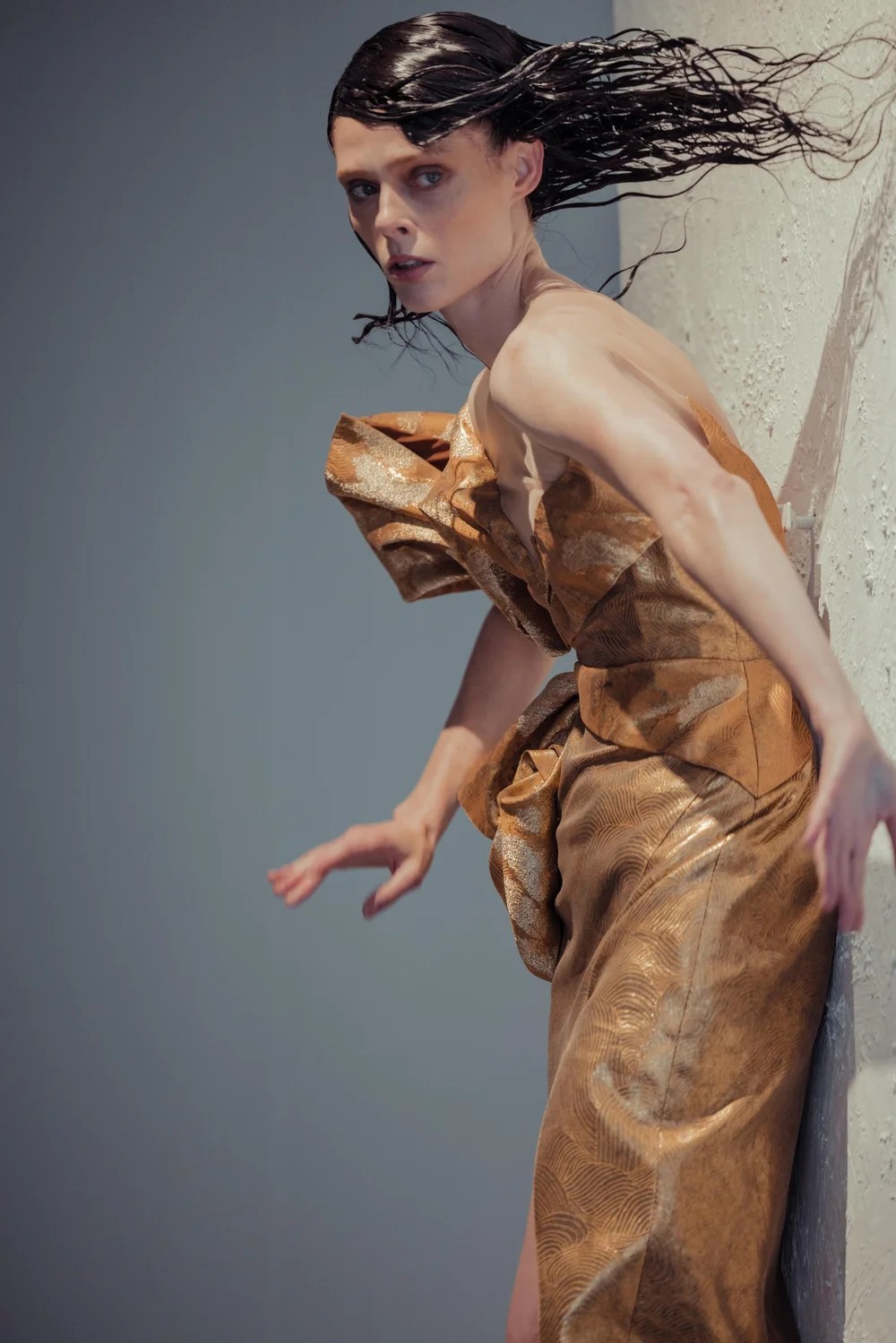
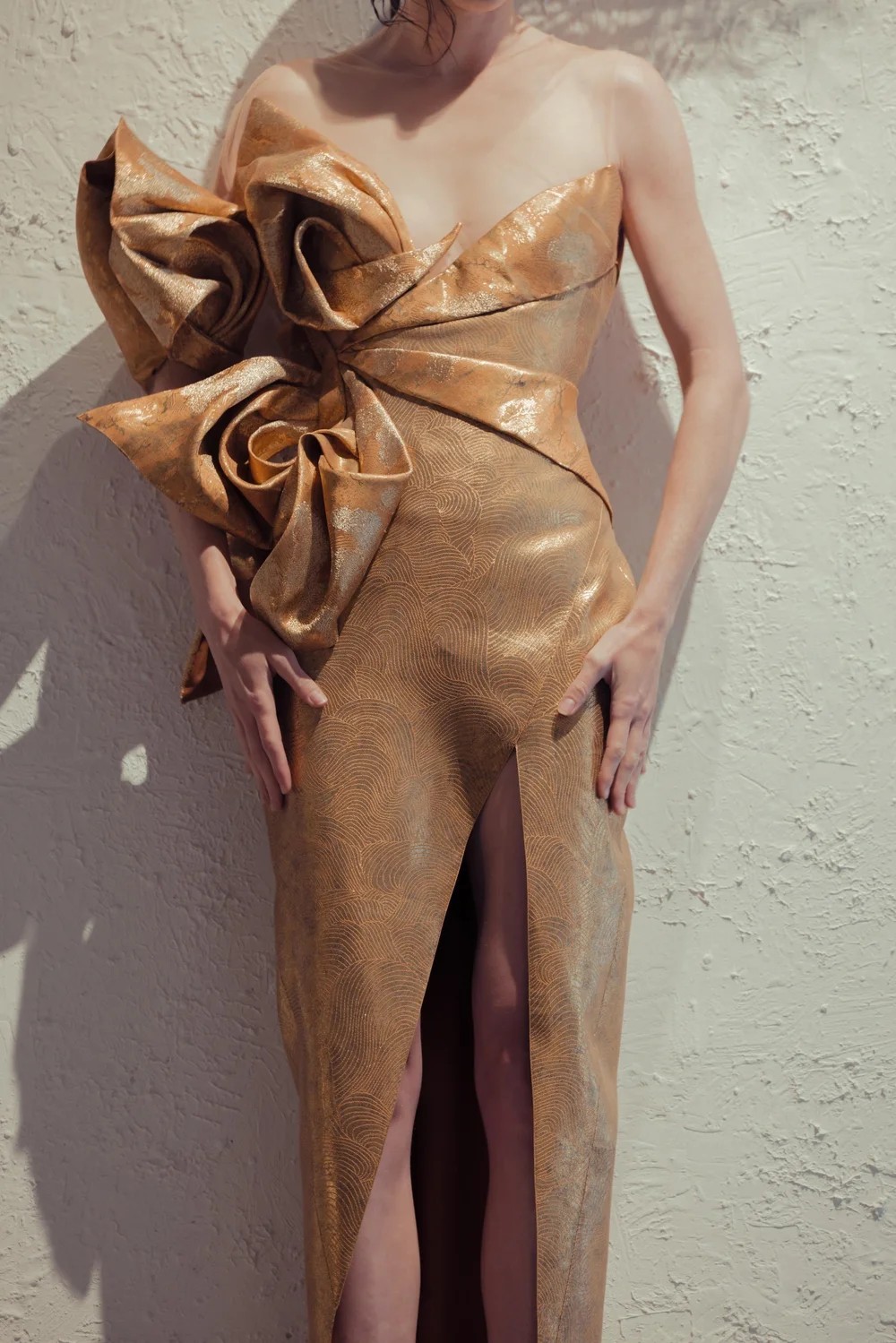
Fall 2024 Haute Couture: Iris van Herpen's Hybrid Show
Photo: Pinterest
One of the most formative memories in van Herpen’s life involves her 97-year-old grandmother, who amassed a collection of historical and contemporary garments. As a child, Iris would sneak into the attic, dress up, and transform. It was there that she first sensed the power of clothing to alter perception and identity, an intuition that now lies at the heart of her work. What we wear, she suggests, has the capacity to turn us into another version of ourselves.
She does not envision the future in terms of greater speed, but greater depth. In living materials, in garments that age, adapt, and repair themselves. At a time when fashion is becoming increasingly digital, van Herpen insists on the importance of physical, multisensory experience, using technology not to distance us from the body, but to return us to it.
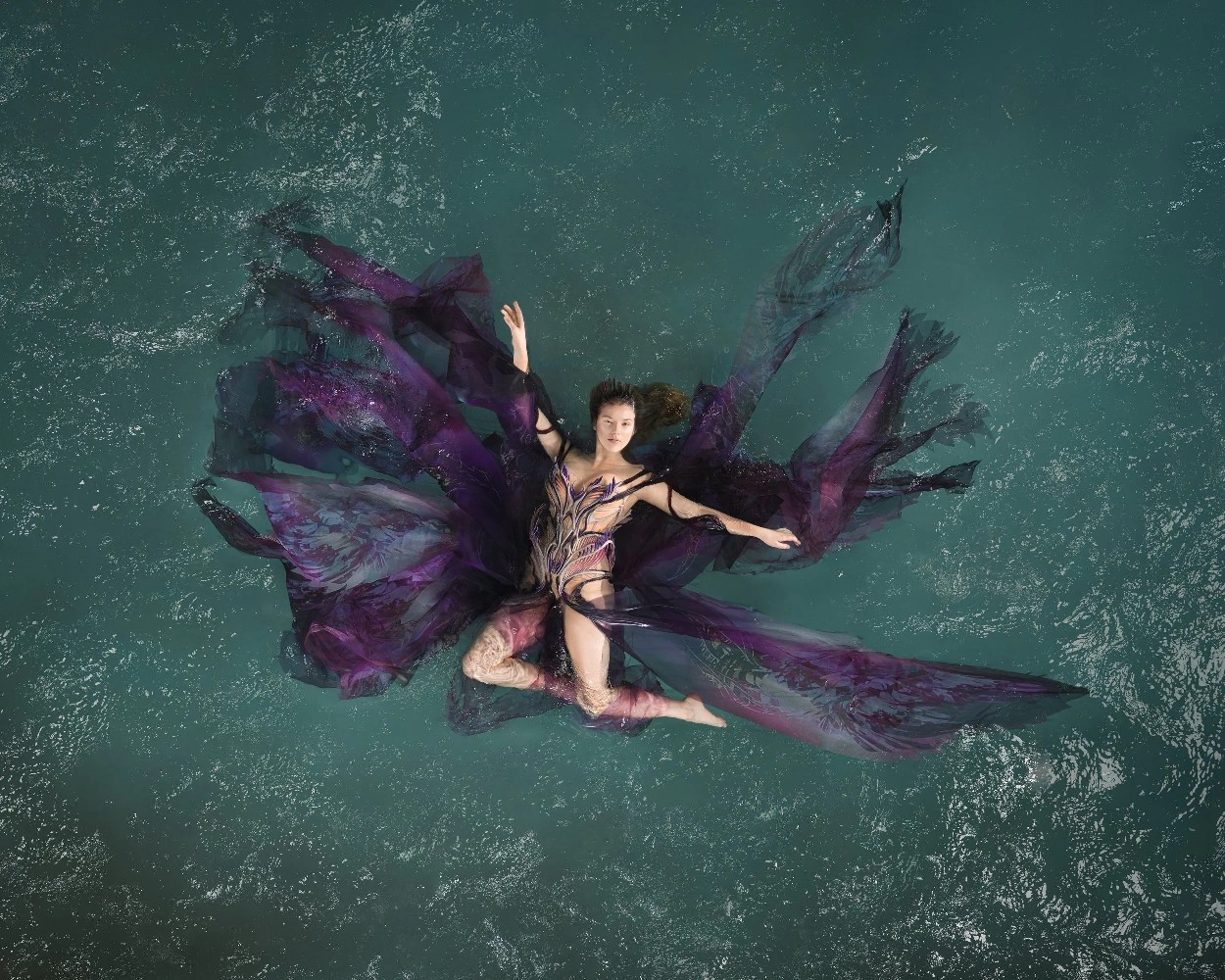
Iris Van Herpen's Carte Blanche, Spring 2023 Haute Couture
Photo: PInterest
Because she demonstrates that fashion can be both poetic and scientific, radical and deeply human. She proves that clothing still holds the power to transform us—not only in appearance, but in how we perceive, think, and feel.
Iris van Herpen is not a fashion designer. She is a designer of boundaries.
This article is an original editorial analysis produced by [DIBA magazine]
Research and references are used for contextual accuracy.