
|
EN
Subscribe to our Newsletter
Post-Human Hair reimagines hair as something beyond nature, part machine, part data, part living identity. No longer passive or decorative, it moves, reacts, and reshapes the body, blurring the boundary between human and technology. Like a contemporary Medusa, these hybrid strands challenge comfort, control, and conventional beauty, because unease is part of their power.
by The Editorial Staff
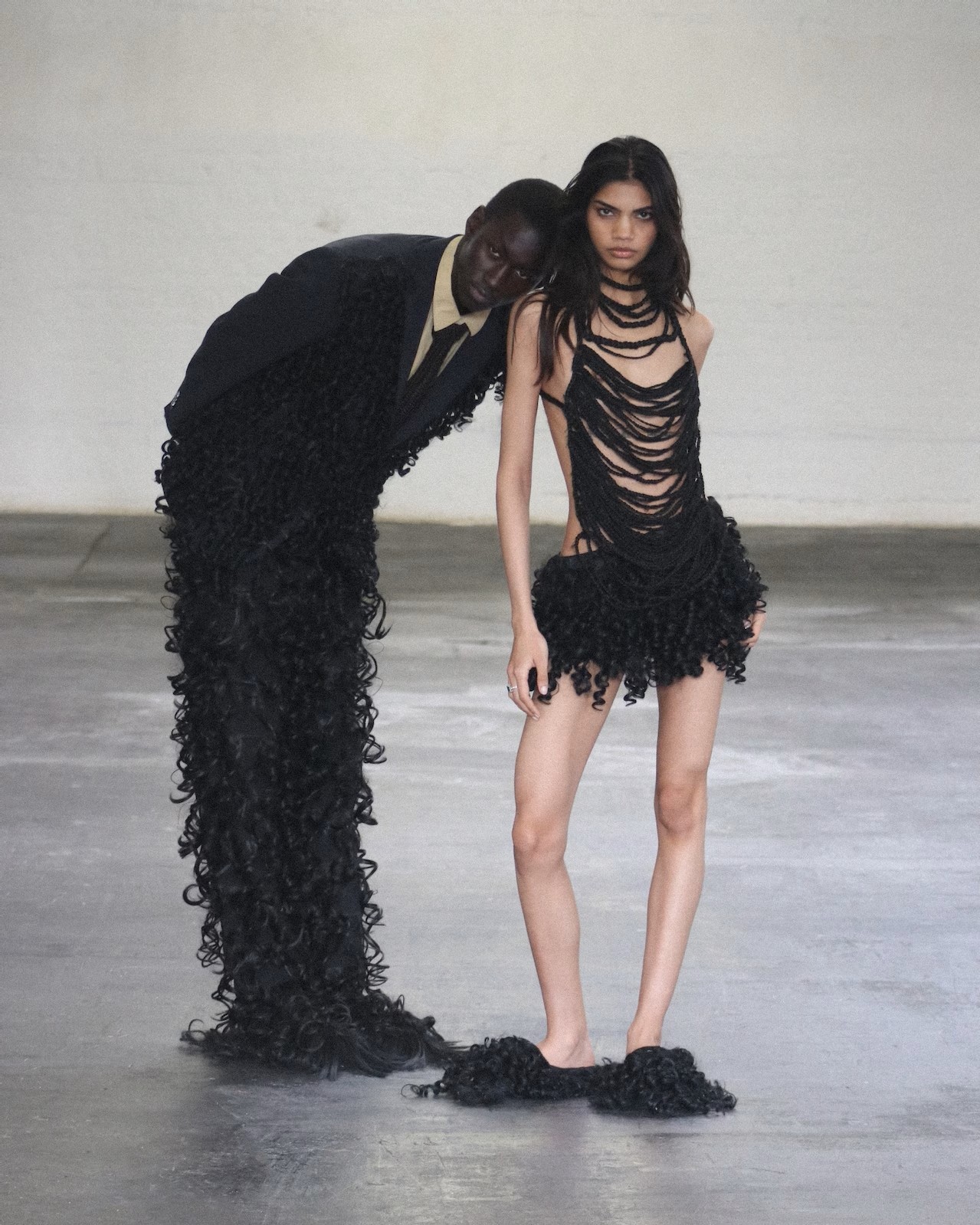
Taiba Akhuetie: The designer creating hair-raising fashion
Imagine hair that is no longer just natural strands, hair that is machine, synthetic matter, and flowing data. These strands shape your movement and personality in hybrid, unpredictable ways, blurring the lines between body and technology, natural and artificial. In the world of Post-Human Hair, beauty is no longer bound by human norms. Think of Medusa, whose writhing snake hair is both terrified and mesmerized, Post-Human Hair channels a similar power: alive, autonomous, and identity-shaping. With every wave and shimmer, these hybrid strands challenge aesthetics and make us rethink beauty, control, and humanity, and if that makes you uncomfortable, that is the point.
The contemporary discourse around hair is no longer confined to superficial notions of beauty or gendered norms. Hair has become a hybrid medium, an interface where biology, technology, and cultural narratives intersect, demanding reevaluation of traditional categories of identity and embodiment. In this sense, the project Ventriloquist Ontology exemplifies the complex ontological negotiations between human and non‑human forces: through a wearable AI entity that generates speech and movement using a GPT‑2 model, it explores how agency, control, and embodiment can emerge in the interstices between flesh and algorithmic systems. This work invokes posthuman theorization drawn from Posthumanism, Actor‑Network Theory, and Object‑Oriented Ontology to challenge the human‑centrism of identity and foreground the hybridized thresholds of subjectivity, technology, and materiality.
Unlike traditional ventriloquism, where voice is artificially projected through an inanimate dummy, Ventriloquist Ontology collapses the distinction between the performer and the wearable, producing an entity whose movement and linguistic output are conditioned by both human and machine contributions. his collapse undermines any simplistic notion of human control, presenting a soft control loop between machinic language and human physical response that problematizes authorship and autonomy.
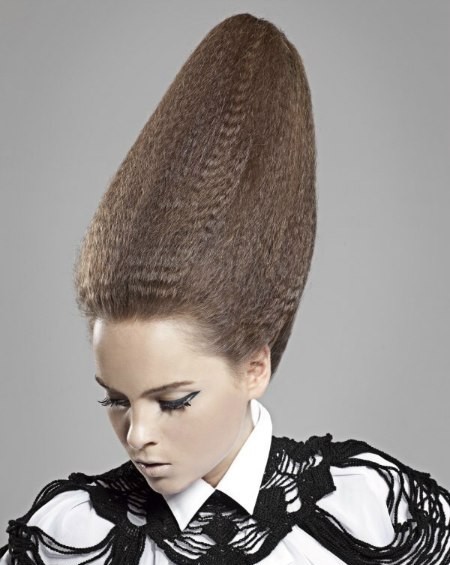
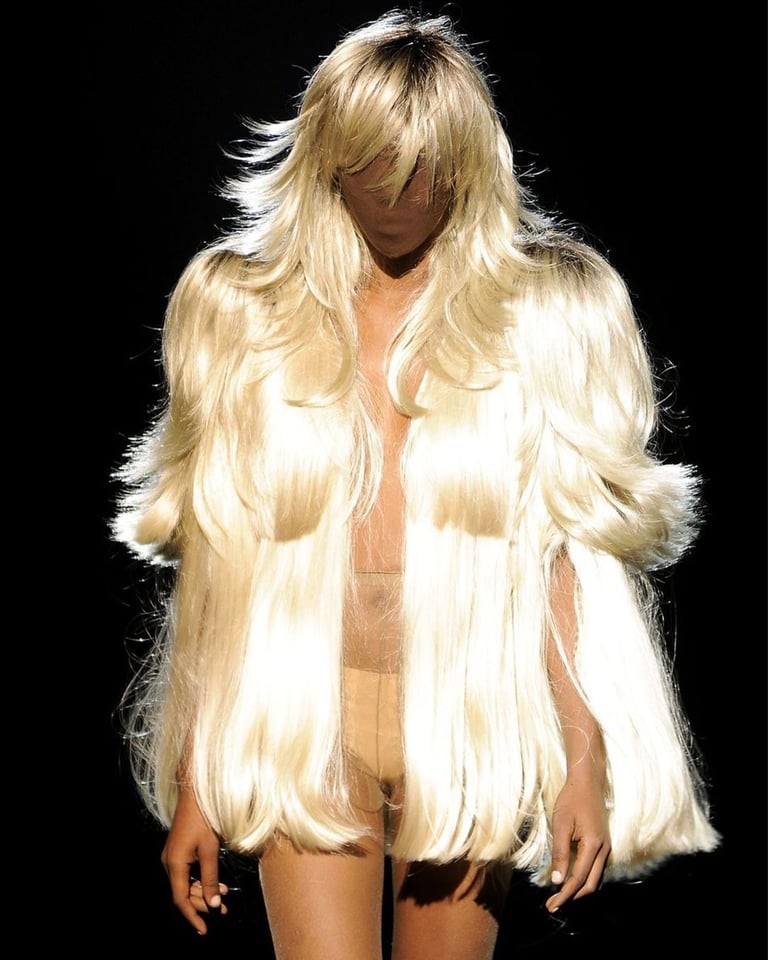
Photo: Fulvio Maiani, hairstyle by Matteo Susini and Loft Parrucchieri
Photo: www.nssgclub.com
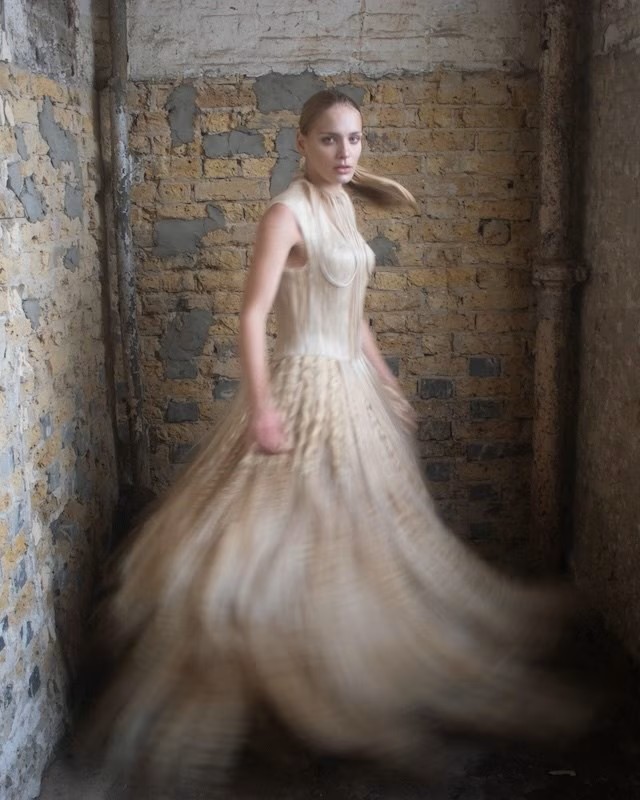
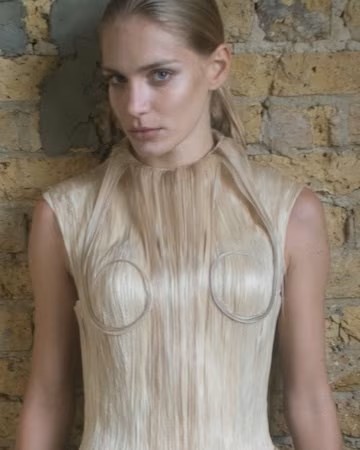
British artist Taiba Akhuetie embodies this transformation by turning hair into wearable post-human art that responds to movement and form. Her work demonstrates that post-human hair can be synthetic yet expressive, artificial yet alive, expanding the boundaries of our understanding of identity in an era where body and technology are increasingly intertwined.
By approaching hair as an innovative material, artists and designers showcase what hair is capable of: from sculptural installations to interactive wearables, post-human hair has become a tool for experimentation, personal expression, and technological exploration, proving that even the most intimate aspects of the body can be dynamically redefined.
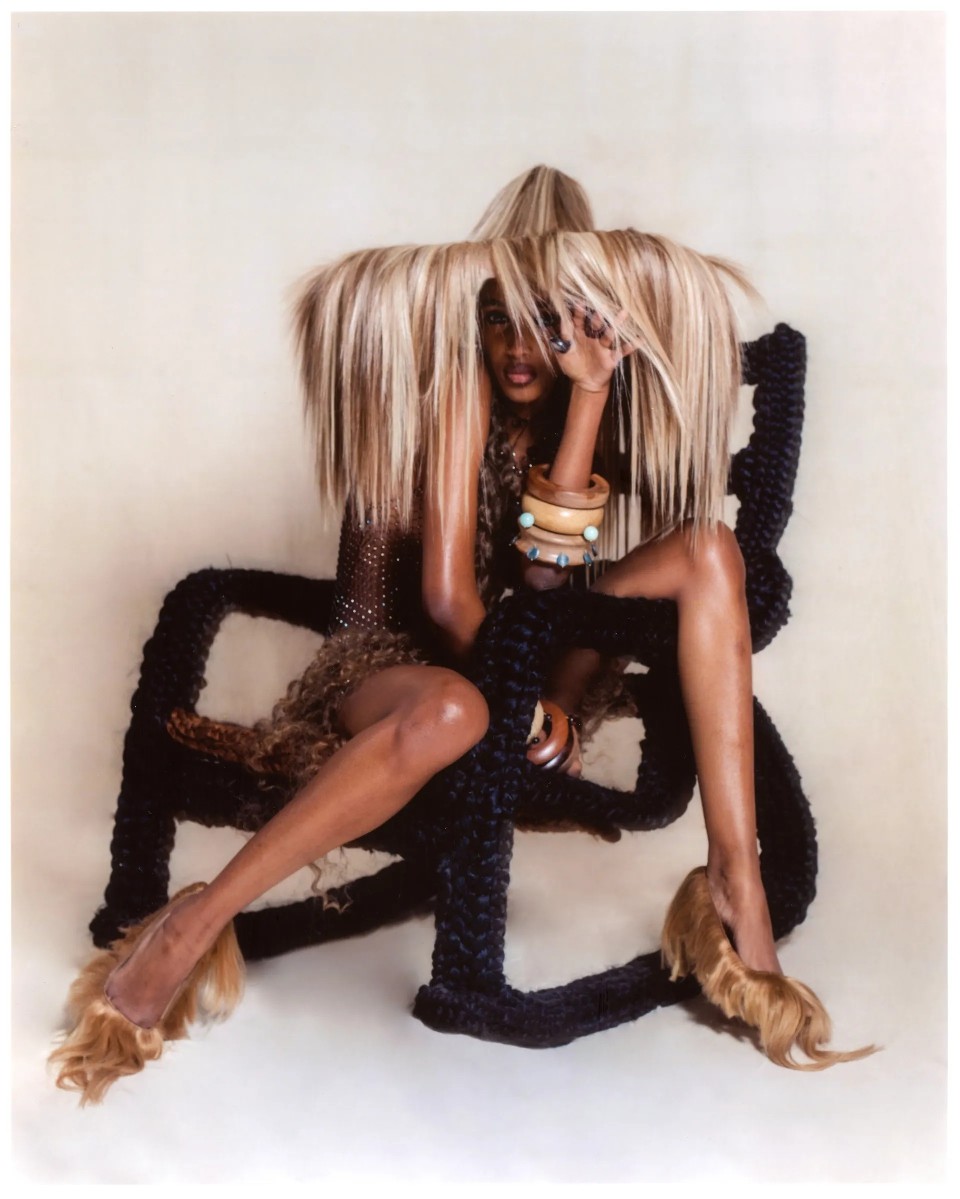
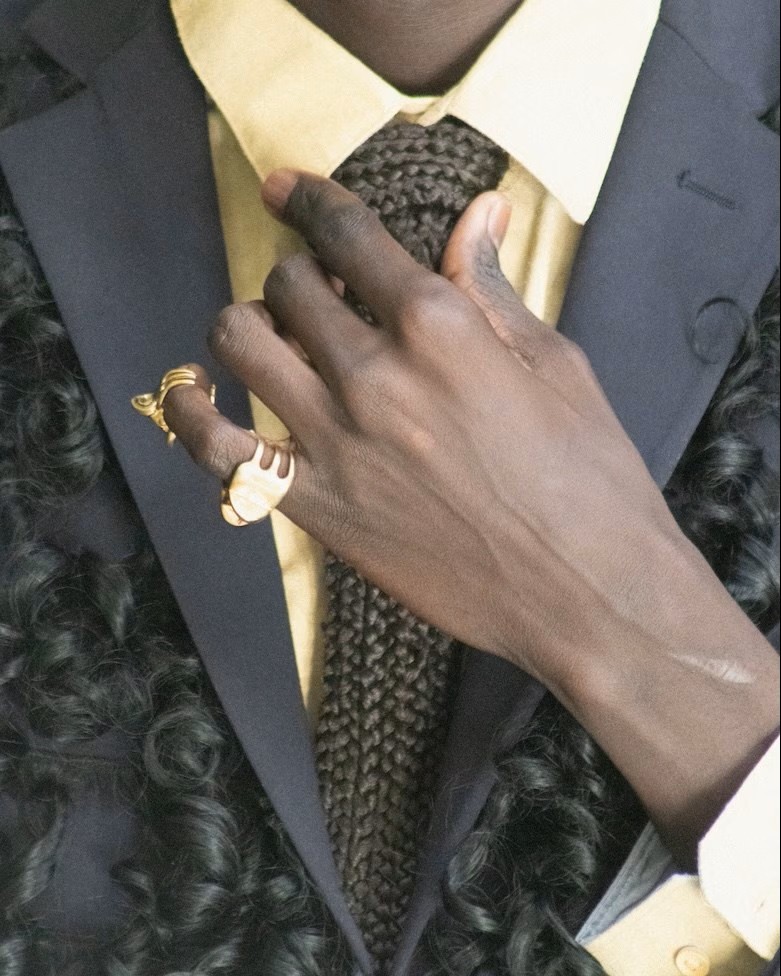
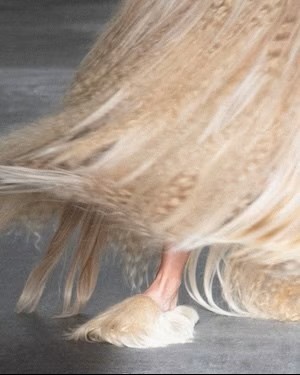
Synthetic hair by Taiba Akhuetie
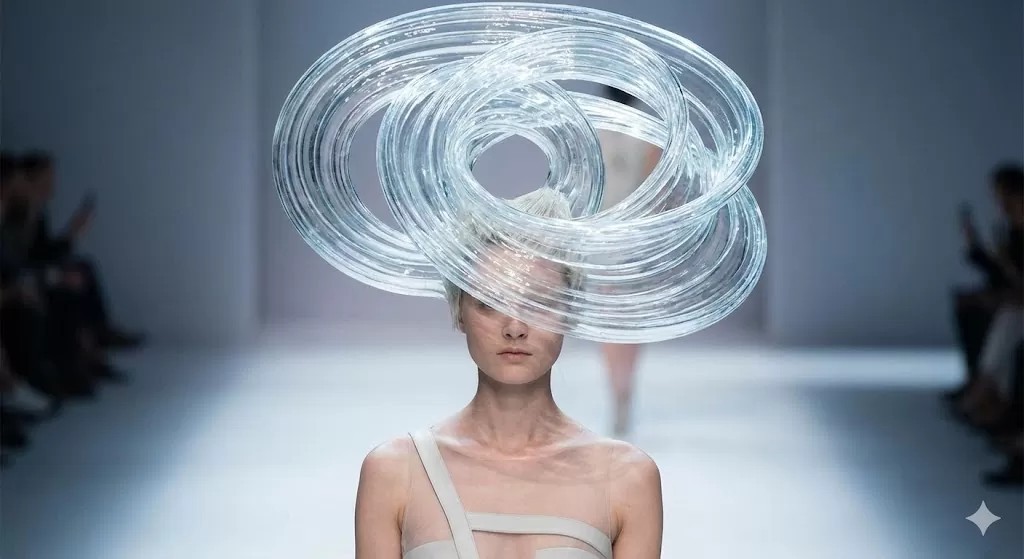
The technological dimension of post‑human hair is not speculative; it reflects real advancements in biotechnology that are reshaping how hair itself is produced and conceptualized. As The Post‑Human Ponytail article outlines, the future of hair lies increasingly in synthetic architectures and lab‑grown hair that transcend traditional donor‑based markets. Couture runways now showcase hair forms that resist mimicking natural biological textures and instead embrace structural innovation, signaling a transhuman aesthetic in which the body becomes customizable avatar rather than fixed biological object.
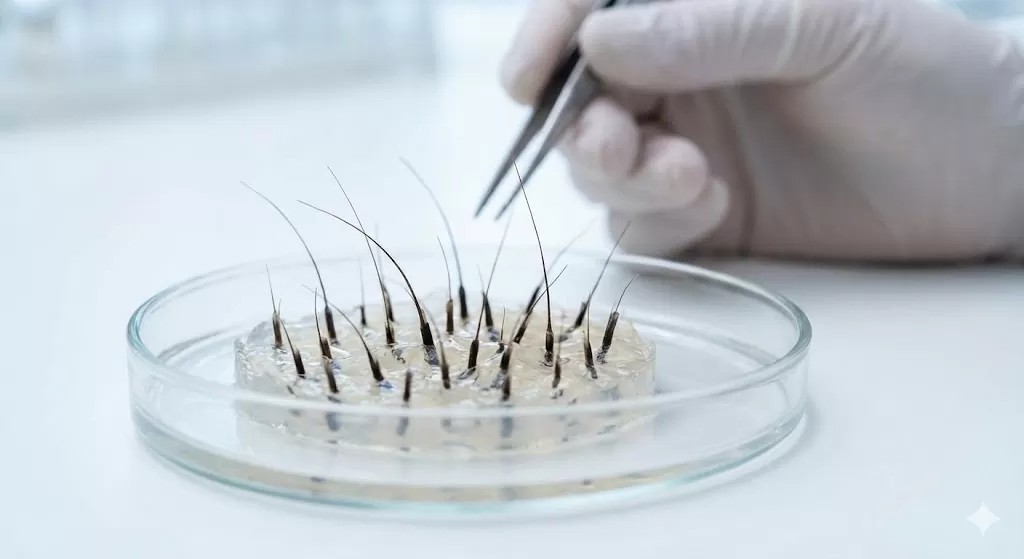
This shift is paralleled by emerging scientific advancements such as 3D‑printed hair follicles in lab‑grown skin tissue, demonstrating that what was once metaphorical in theory is becoming materially tangible. Such research shows that hair can be grown and manipulated in vitro, unlocking possibilities not only for medical treatments but for new regimes of personal design and self‑fabrication.
The move from sourcing human hair to synthesizing it via lab‑based technologies speaks to broader transformations in how bodies are imagined, no longer as bounded biological entities but as modifiable, programmable, engineered surfaces whose extensions and textures are chosen, designed, and produced. Post‑Human Hair thus aligns with a future in which identity and corporeality are engineered artifacts, not merely inherited conditions.
Bringing together the philosophical, cultural, and technological strands, Post‑Human Hair represents a critical reorientation of beauty and corporeal expression. It is not simply about defying aesthetics defined by mainstream paradigms; rather, it embodies a shift in how beauty itself is conceptualized, as a phenomenon emerging from the entanglement of organic bodies with synthetic, machinic, and data‑driven forces.
In this framework, hair becomes an active participant in the construction of selfhood: a surface that reflects, resists, and reconfigures normative gaze. It is an extension of identity, not just an adornment, a material through which the boundaries of human and non‑human, authentic and artificial, are interrogated, reconstituted, and explicated. This reframing allows Post‑Human Hair to function not only as a design language but as a philosophical proposition about the nature of embodiment in an age where bodies are increasingly technologized and hybridized.
Post-Human Hair goes beyond simple beauty or fashion; it serves as a practical and philosophical space to rethink identity, culture, and the relationship between humans and technology. Through wearable art and biotechnological innovations, these hairs demonstrate that bodies are no longer confined to biological limits and can become tools for self-expression, creativity, and reimagining identity. The significance of this narrative lies in its reminder that beauty, gender, and identity are not fixed nor defined by conventional norms; they are constantly evolving, shaped by culture, history, and technology.
This article is an original editorial analysis produced by [DIBA magazine]
Research and references are used for contextual accuracy.