
|
EN
Subscribe to our Newsletter
Mosaic design bridges history and modernity, transforming surfaces into stories of color, texture, and culture. From ancient palaces to contemporary interiors, mosaics add depth, personal expression, and sustainable beauty. Today, innovations like 3D printing and AI push this timeless craft into the future, making it both heritage and forward-looking art.
By the Editorial Staff
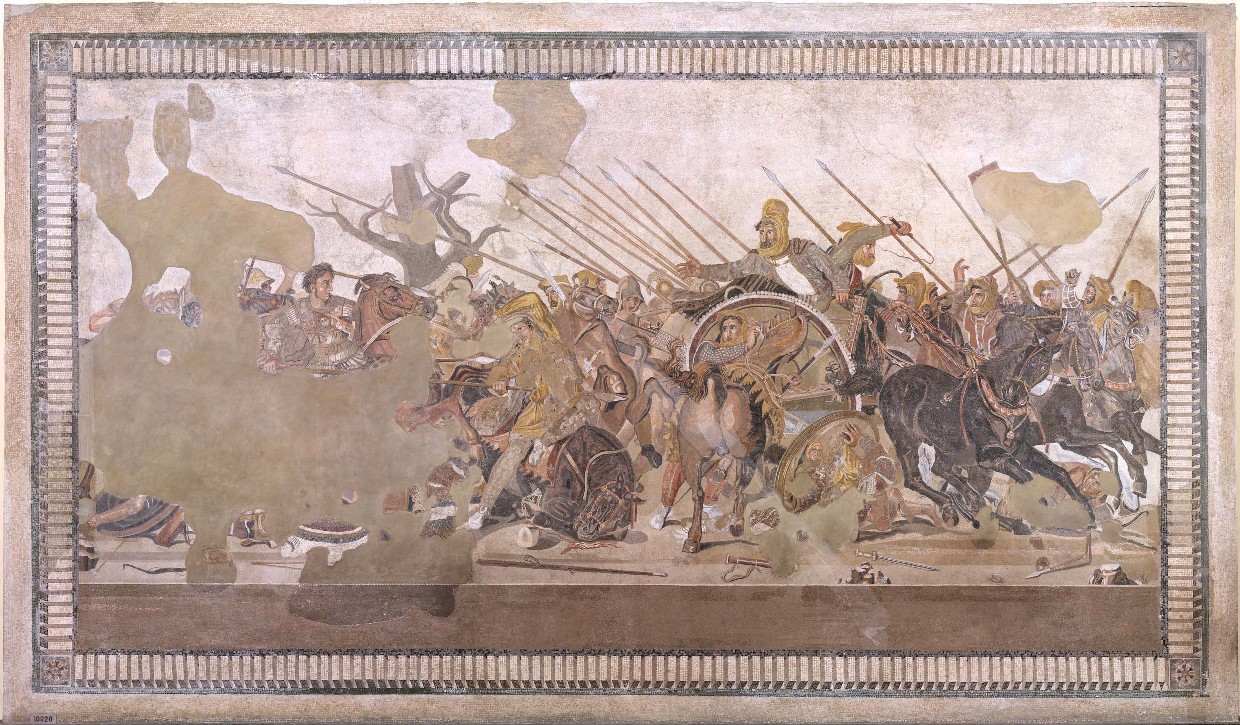
The Alexander Mosaic, also known as the Battle of Issus Mosaic
Photo: Museoarcheologiconapoli.it
From the sunlit floors of Roman villas to contemporary interiors shimmering with color and reflection, mosaics have endured as one of the most adaptable and narratively potent forms of design. They are much more than mere ornament; mosaics articulate a dialogue between material, space, and human perception, a visual language composed of myriad tiny tesserae (small pieces of stone, glass, or ceramic) laid meticulously together to form complex patterns and compositions. This interplay between microstructure and macro expression gives mosaic its enduring power, shaping aesthetic and experiential qualities across centuries and cultures. As both a decorative and symbolic art, mosaics trace human ingenuity, cultural identity, and the universal pursuit of meaning through form.
The history of mosaics extends deep into antiquity. Early examples, dating back as far as 3,000 BCE, were simple pebble arrangements on floors. By the Hellenistic period, artisans had begun to use uniform tesserae precisely cut cubes of stone, ceramic, and glass to construct detailed visual narratives. It was in the Roman world, however, that this technique was elevated to its infusing architecture with stories of myth, ritual, and daily life.
Roman mosaics were not superficial decoration; they functioned as visual narratives embedded into the very fabric of a space. Two principal techniques emerged: opus tessellatum, employing larger tesserae for broad geometric or figurative fields, and opus vermiculatum, which used very small tesserae to achieve pictorial detail much like a painter’s brushstroke. The mosaic floors of Pompeii and Herculaneum, for example, depict mythological tableaux, hunting scenes, and scenes of domestic life with remarkable precision, converting functional surfaces into immersive visual narratives. These compositions reflected not only aesthetic preferences but also the status, cultural literacy, and even philosophical values of Roman patrons (e.g., symbolic depictions of gods, feasts, and athletic contests).
One of the most remarkable surviving complexes is the Villa Romana del Casale in Sicily, a Late Roman palatial residence whose mosaic floors cover more than 3,500 square meters across over fifty rooms. These mosaics illustrate a vast range of themes from hunting scenes and mythological epics to representations of flora and fauna and are considered among the finest extant examples of Roman mosaic art due to their artistic quality and remarkable state of preservation. Scholars believe these floors were likely produced by skilled North African craftsmen, reflecting the cosmopolitan artistry of the late Empire.

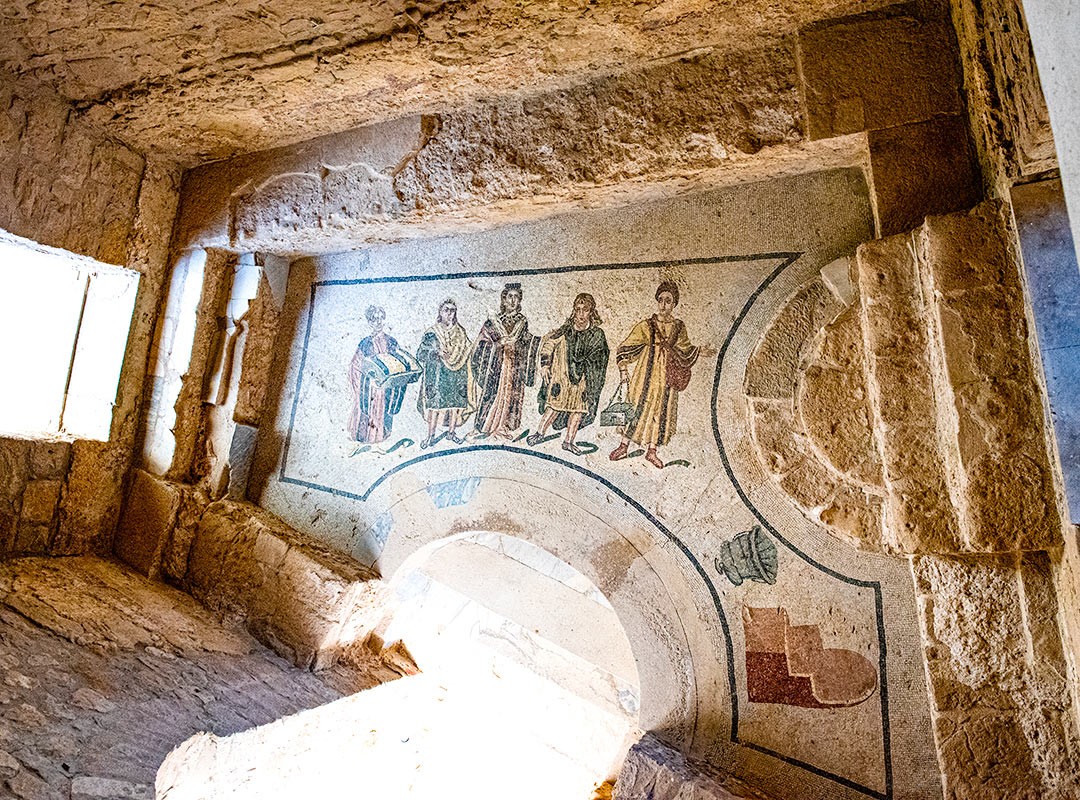
Detail of The Alexander Mosaic, Battle of Issus Mosaic
Photo: National Archaeological Museum, Naples
Mosaic art did not develop in isolation. As the Roman and Byzantine worlds engaged in trade, conquest, and cultural exchange, mosaic techniques spread across Europe, North Africa, and the Middle East.
In North Africa, for instance, mosaics were used to enliven public baths, villas, and civic buildings with geometric abstraction and vibrant compositions. In regions influenced by Islamic aesthetics, decorative tile work merged with mosaic principles to produce patterns of astounding symmetry and repetition, where abstract geometry became a central visual motif. In this context, mosaic and related techniques often intersected with the broader cultural emphasis on pattern, order, and spirituality.
The universality of mosaics lies in their capacity to translate geometric structure, narrative content, and light into tactile, spatial experience. Across centuries, artisans experimented with scale, color, and technique, establishing mosaics as an enduring medium capable of engaging viewers on both visual and emotional levels. The precise arrangement of tesserae, coupled with reflective and matte surfaces, creates rhythmic compositions that shape human perception of space and surface.
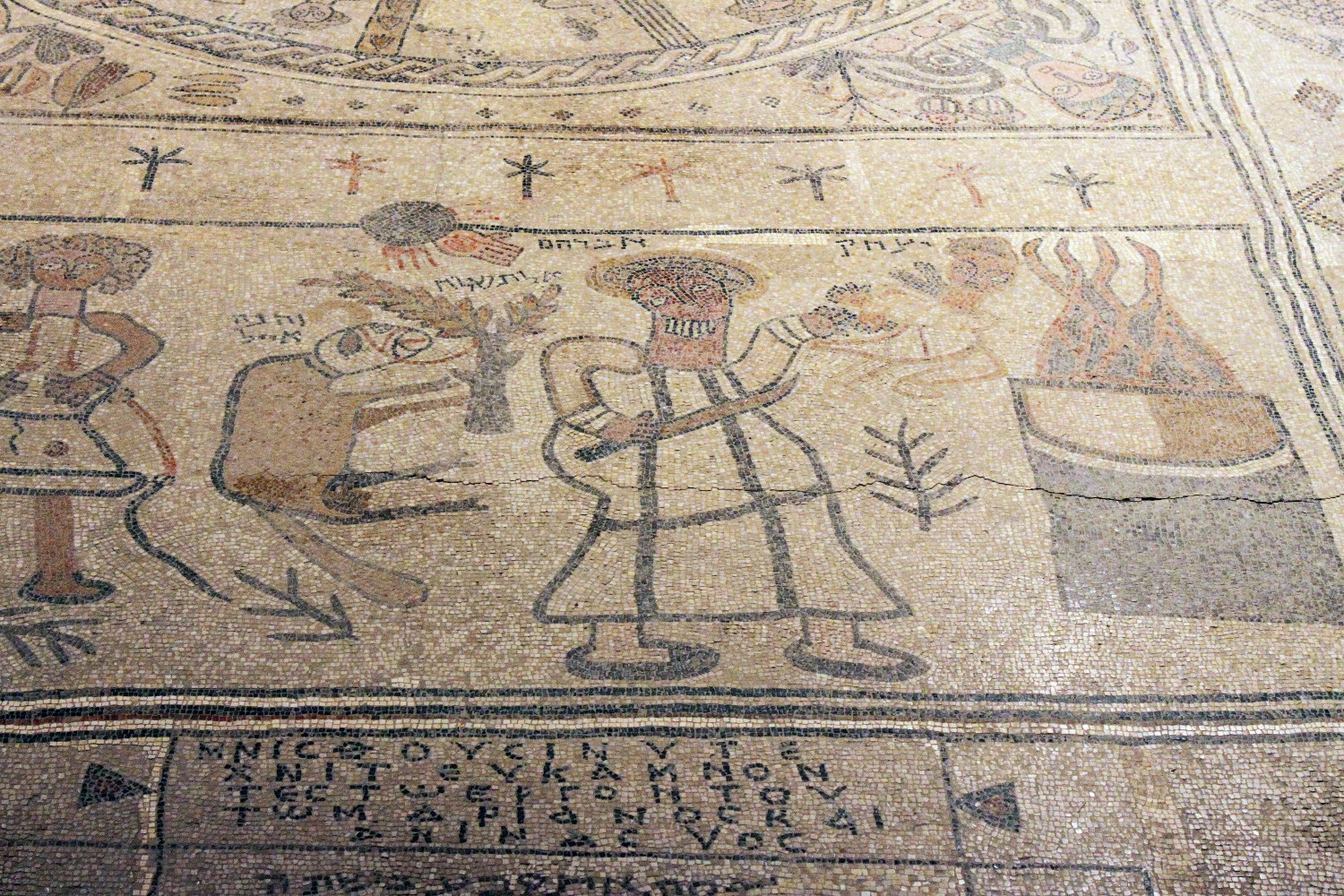
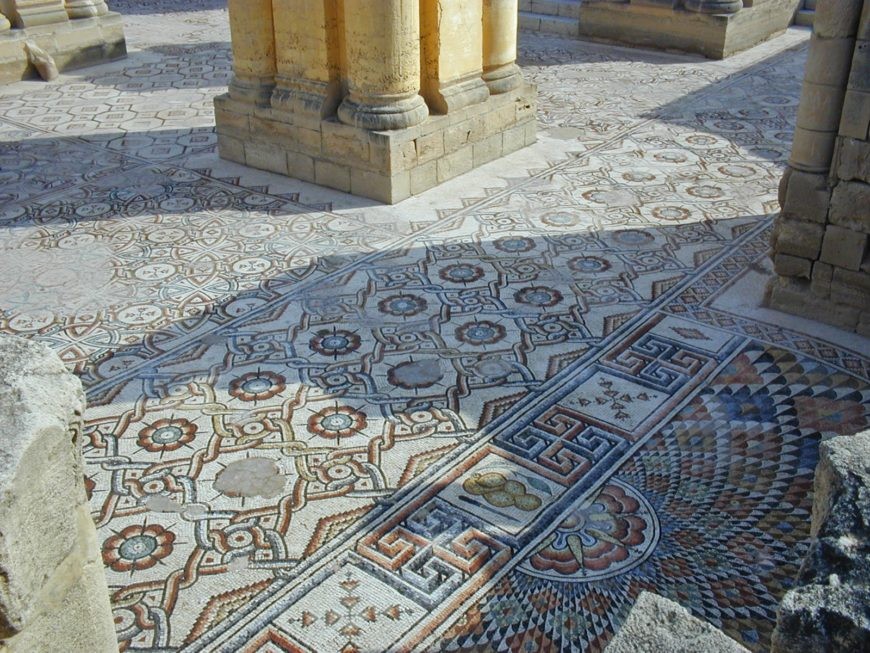
The Binding of Isaac, early 6th century. Mosaic pavement, Bet Alpha (Beit Alfa) Synagogue, Heftziba, Israel
Photo: Sean Leatherbury - Manar al-Athar.
Mosaics occupy a unique intersection between art and perception. Unlike paint or wallpaper, mosaics are inherently three‑dimensional and micro‑textural: the surface is composed of countless tiny facets that catch and reflect light differently depending on angle, intensity, and material. Tesserae made of glass or gold leaf produce shimmering highlights, while stone creates more subdued, matte surfaces. The result is a living surface that changes with the observer’s movement and ambient light, engaging both vision and emotion.
Psychologically, mosaics incorporate pattern, symmetry, and variation in ways that balance order and surprise. Symmetry and repetition promote a sense of stability, coherence, and harmony, while subtle irregularities in color, shape, or material introduce visual interest and dynamism. As a result, mosaics can anchor a space, channel attention, and guide movement, functioning not just as decoration but as spatial organizers. Designers often exploit these qualities intentionally: a mosaic rug pattern on a floor can delineate a living area without partitions; a mosaic feature wall can command focus in an otherwise minimal interior; and a ceiling mosaic can redirect gaze upward, altering perceived height and atmosphere.
This interplay of material and perception is not accidental but rooted in centuries of artisanal refinement. The careful calibration of tesserae size, color transitions, and pattern density reflects an understanding of how visual rhythm and texture affect human experience.
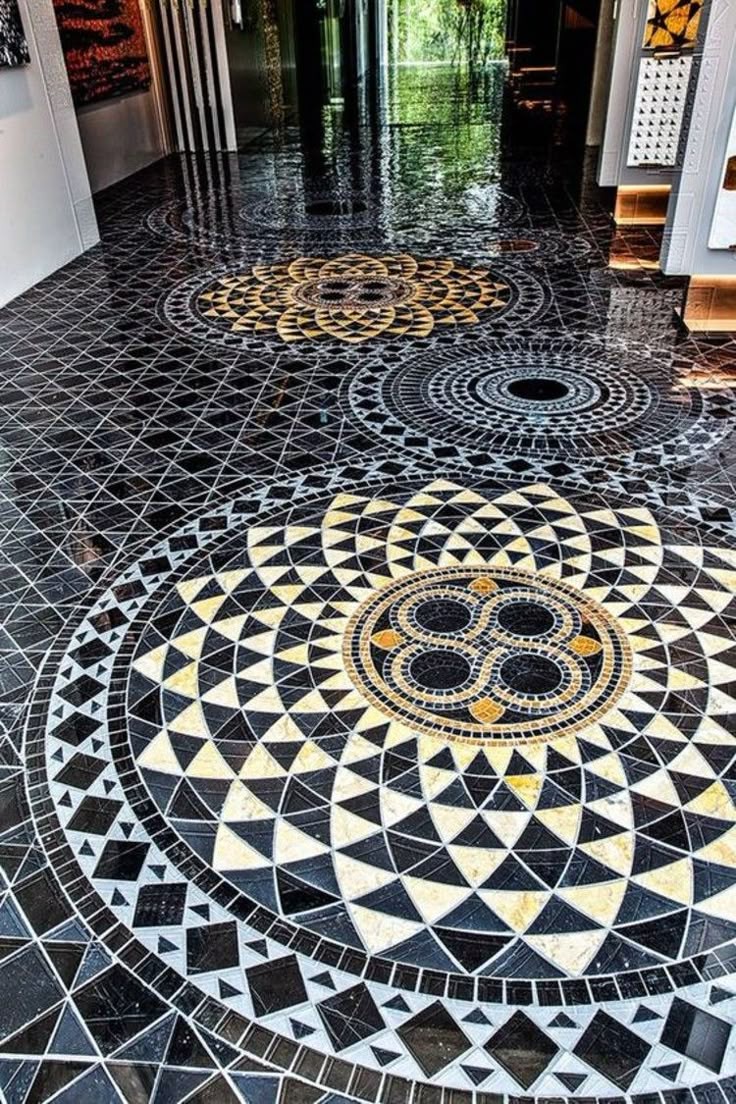
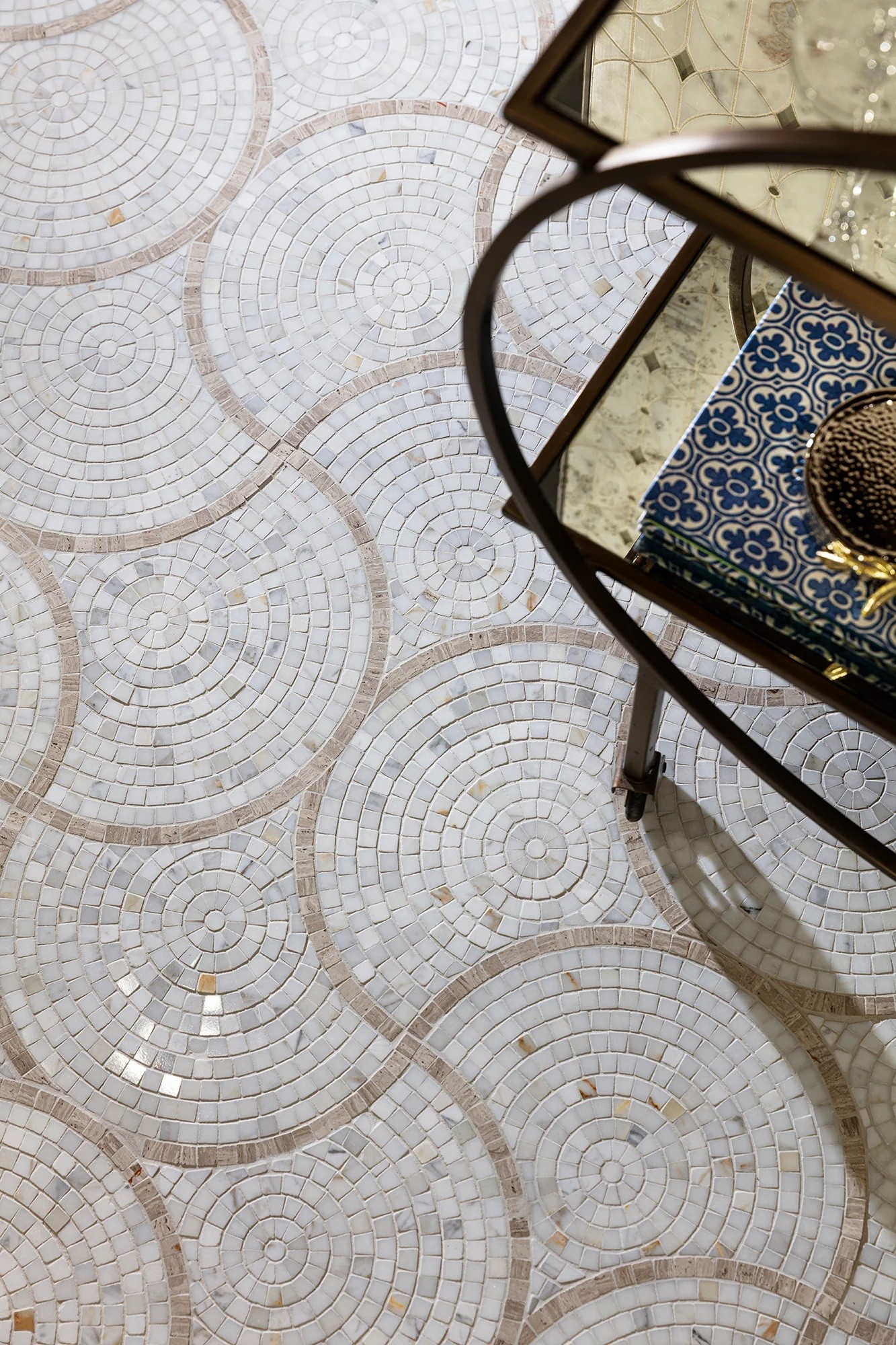
Spin Calacatta
Photo: Pinterest
While minimalism and modernist aesthetics sidelined mosaics for much of the 20th century, the early 21st century has witnessed a resurgence of the medium particularly in luxury interiors, public spaces, and experiential design. This revival stems from multiple factors: a renewed appreciation for craft, a desire for tactile surfaces in increasingly digital environments, and a design shift toward materials that convey narrative and identity.
Contemporary designers embrace mosaics not simply for their visual richness, but for their capacity to convey cultural references, texture, and layered meaning. In interior applications, mosaics function as focal points, transitions, and anchors. Large mosaic installations in kitchens, bathrooms, and terraces transform surfaces that might otherwise be purely functional into immersive visual environments. A mosaic floor in a residential lobby, for instance, can articulate spatial hierarchy by guiding circulation while embedding subtle symbolism or narrative motifs.
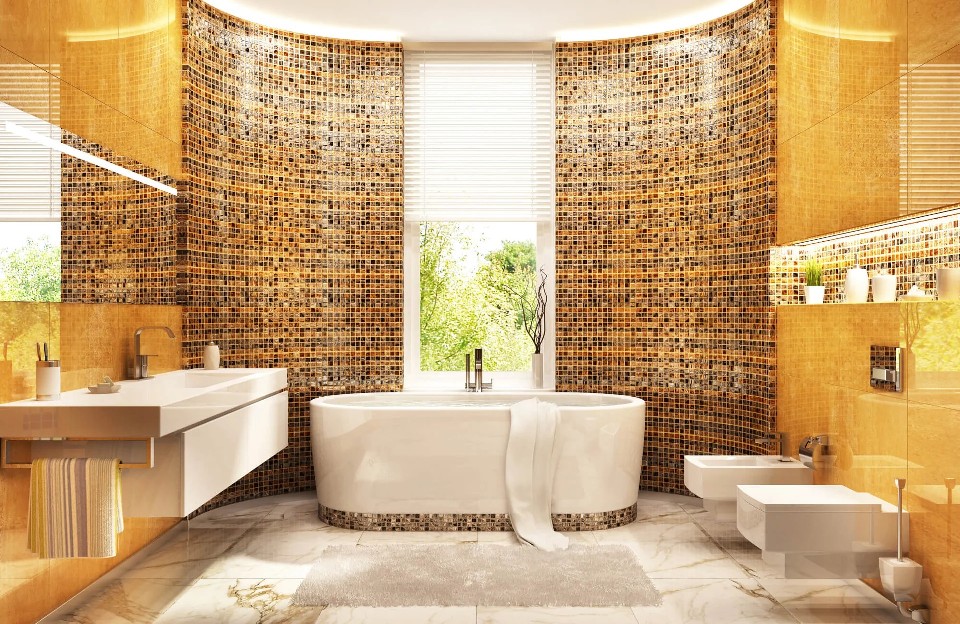
Emerging design trends emphasize customization and artistic expression in mosaic work. According to sources tracking 2026 interiors, personalized mosaic compositions tailored in color, pattern, and layout are becoming increasingly popular, often incorporating organic and nature‑inspired motifs or textured finishes that contrast with high‑gloss surfaces. This trend positions mosaics not as static relics of the past, but as expressive design elements that anchor contemporary spaces in both aesthetic richness and personal narrative.
The resurgence is evidenced in high‑profile projects that bring mosaic into the realm of luxury and experiential design. While designers once viewed mosaics as historical curiosities, today’s creatives approach them as architectural features and artistic focal points. Materials like glass, stone, and metal are combined in complex patterns that bridge traditional craft with contemporary aesthetics, adding depth and identity to interiors that might otherwise feel flat or ephemeral.
Contemporary mosaic practice often navigates the tension between tradition and innovation. On the craft side, artisans trained in historical techniques continue to produce bespoke work that honors centuries‑old methods. Italian mosaicist Giulia Manzoni, for example, blends Roman and Byzantine techniques with contemporary design sensibilities, using materials like Venetian glass and gold leaf to create commissioned works ranging from residential floors to large commercial installations. Her approach underscores the enduring value of craftsmanship: “A mosaic is forever. If it’s properly made, it will last thousands of years.”
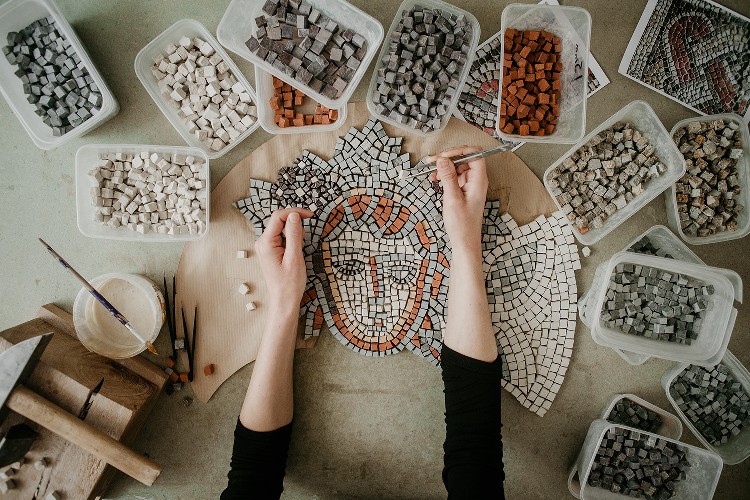
At the same time, technology is reshaping how mosaics are conceived, preserved, and even digitally documented. Recent research in computer vision tackles problems such as tesserae segmentation for digital preservation of ancient mosaics, using deep learning techniques to analyze and segment individual mosaic pieces for conservation and restoration. This research illustrates how contemporary tools can assist heritage professionals in safeguarding fragile artworks for future generations.
Sustainability has also become central to contemporary practice. Designers increasingly use recycled glass and ceramic remnants, or low‑energy production methods, aligning mosaic art with environmental priorities. This not only reduces waste but embeds cultural memory into new forms, reinforcing mosaic’s role as a bridge between past and present.