
|
EN
Subscribe to our Newsletter
This paper argues that women’s hand and foot markings in Persian art and literature from the late 15th to mid-19th century depict henna body art. Using Persian texts, travelers’ accounts, and visual analysis, it explores henna’s techniques, social role, and symbolism, revealing how these images reflect gender, class, and changing ideals of beauty, particularly during the Qajar period.
By the Editorial Staff
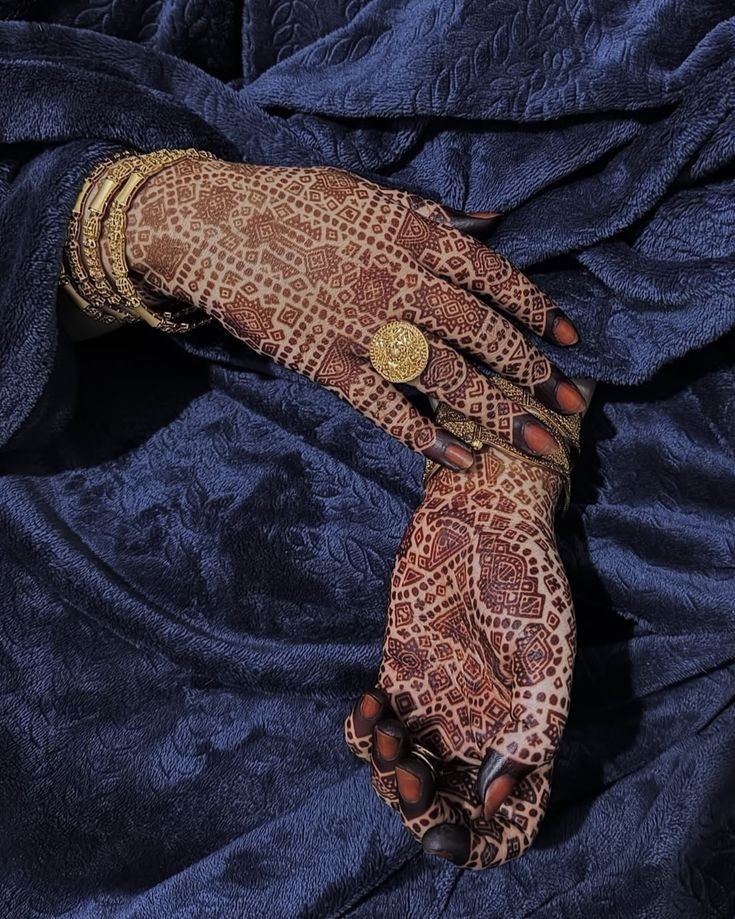
Photo: Pinterest
Persian henna is more than decoration; it is a living thread that weaves together history, artistry, and social ritual. Across centuries, from the late 15th to the mid-19th century, women’s hands and feet in Persian visual and literary traditions were adorned with intricate markings that speak to both beauty and identity. These designs, captured in manuscripts, paintings, and travelers’ accounts, were far from random. They represent the sophisticated art of henna, reflecting technical mastery, social customs, and a nuanced understanding of aesthetics.
Through these images, we see how henna was not just an ornament but a marker of class, gender, and evolving ideals of feminine beauty. In the Qajar era, as European styles began to influence Persian aesthetics, henna persisted as a uniquely Persian expression, an art form that negotiated continuity and change, tradition and modernity.
An Introduction to Henna: Nature, Craft, and Color
Henna, known in Semitic languages as the plant Lawsonia inermis, is more than a plant. It is the paste created from its crushed leaves, and the art form that flows from that paste onto skin, nails, and hair. At the heart of henna’s magic is lawsone, a natural dye also called hennotannic acid, which imparts a rich spectrum of color, from warm oranges and deep reds to earthy browns, and in rare cases, nearly black.
The Growth and Journey of Henna
Thriving in semi-arid subtropical regions, henna is a plant of resilience. It survives with minimal rainfall, endures long droughts, and withstands scorching daytime heat of up to 45°C, while never tolerating nights below 11°C. Today, Iran remains one of the traditional centers of henna cultivation and processing, though the industry has gradually declined in favor of more lucrative crops like fruits and vegetables. Historical records suggest that Iranian henna milling may trace back to the Safavid era or even earlier; Jean-Baptiste Tavernier, in his 1654 account of Yazd, described local henna production in detail. Remarkably, some of these centuries-old mills in Yazd still operate with limestone grinding wheels turned by camels or donkeys, echoing techniques unchanged for generations.
From Leaf to Paste
The process of transforming leaves into henna paste is both simple and alchemical. Crushed fresh or dried leaves are mixed with lemon juice or another mildly acidic liquid, forming a thick, verdant paste. Applied to skin, fingernails, or hair, this paste gradually releases its color as it interacts with keratin. The longer it rests, the deeper and more enduring the stain becomes, a natural, living pigment that connects craft, body, and tradition.
Henna is not merely decoration; it is a tangible expression of culture, a medium that carries centuries of knowledge, ritual, and artistry in every curve, line, and color it leaves behind.
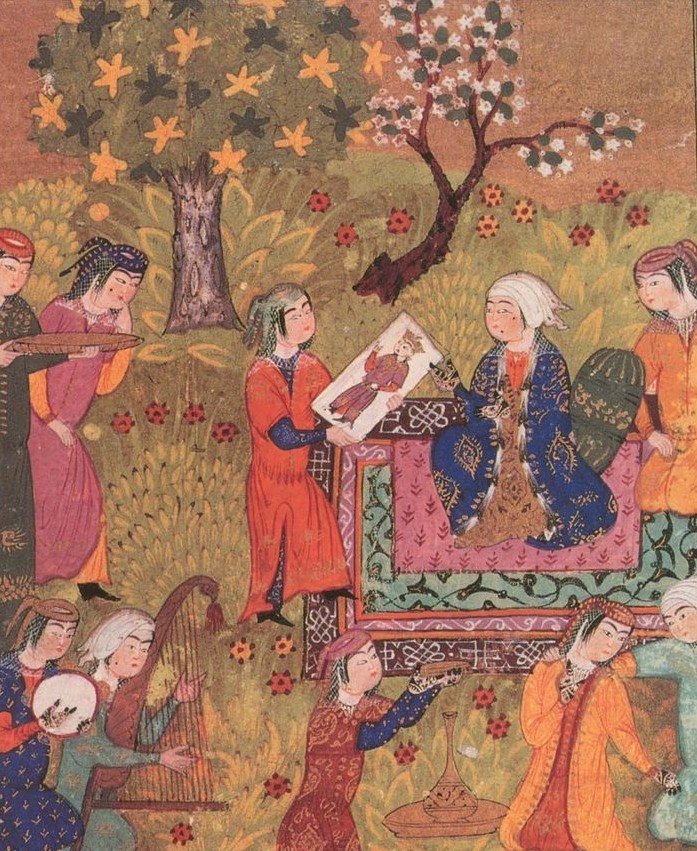
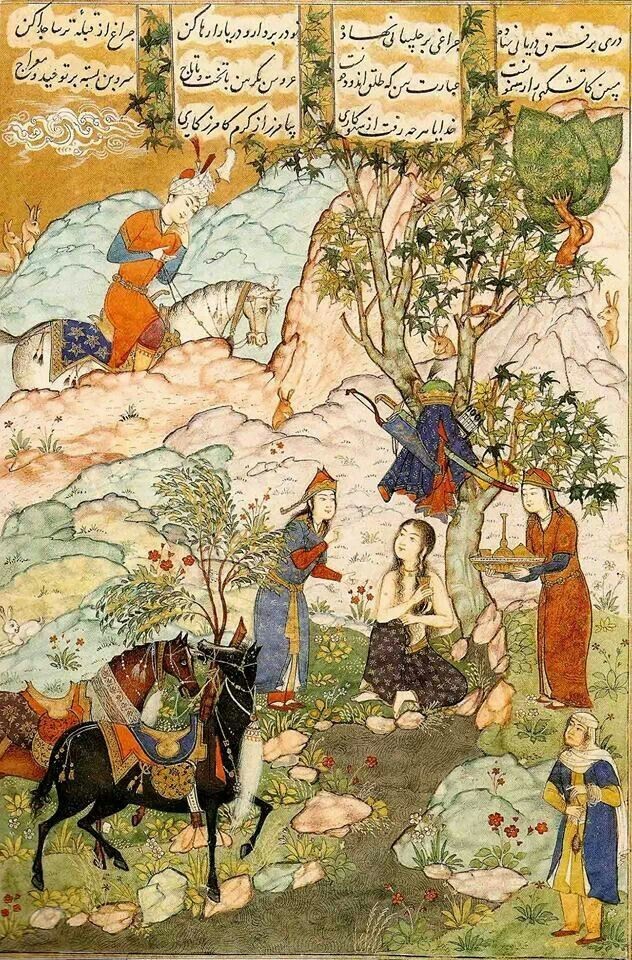
“Shirin Examines Khusraws Portrait”, late 15th century Iran, plate 2, Khamsa of Nizami, Arthur Sackler Gallery, Smithsonian Institution, s1986.140
Photo: Pinterest
For over a millennium, Persian poets have celebrated the beauty of henna-stained hands, elevating them from simple decoration to an enduring symbol of elegance, ritual, and femininity. Across centuries, Persian literature consistently describes henna’s rich hues, intricate placement, and the emotional allure it imparts, revealing a cultural practice deeply embedded in the social fabric.
Classical poets such as Roudaki and Sa’di compared the color of hennaed hands to tulips, coral, and other natural wonders, emphasizing both visual delight and sensual charm. Sa’di, writing in the thirteenth century, affectionately described the “russet-red, Persian way” of hennaed hands and feet, praising the transformative power of this simple yet profound art. Jami, later in the fifteenth century, likened hennaed fingertips to precious coral, marking them as a signature adornment for women and celebrating henna as an essential aspect of feminine beauty.
The artistry of henna went beyond mere decoration. Patterns, known as negar, were carefully drawn on hands (negarin dast) and feet (negarin pa), while hana-bandi referred to the ceremonial decoration of brides.
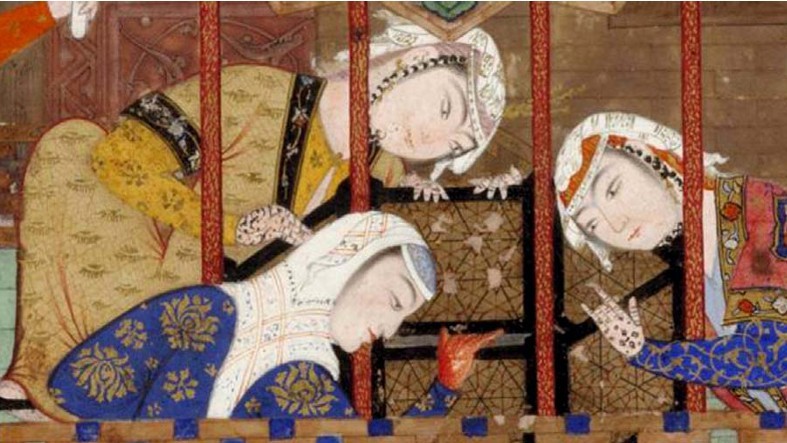
Feet, being more challenging to adorn, required a dedicated footrest (bandan) to allow the paste to dry undisturbed, an intricate ritual demonstrating patience, care, and the ceremonial significance of henna. Even individual fingertips, stained lightly, were affectionately called fandoqča (little hazelnut), revealing the poetic imagination embedded in everyday beauty practices.
“Nighttime in a Palace”, folio from a manuscript, attributed to Mir Sayyid ‘Ali (Persian, 16th century), Arthur M. Sackler Museum, Harvard University Art Museum
Photo: Pinterest
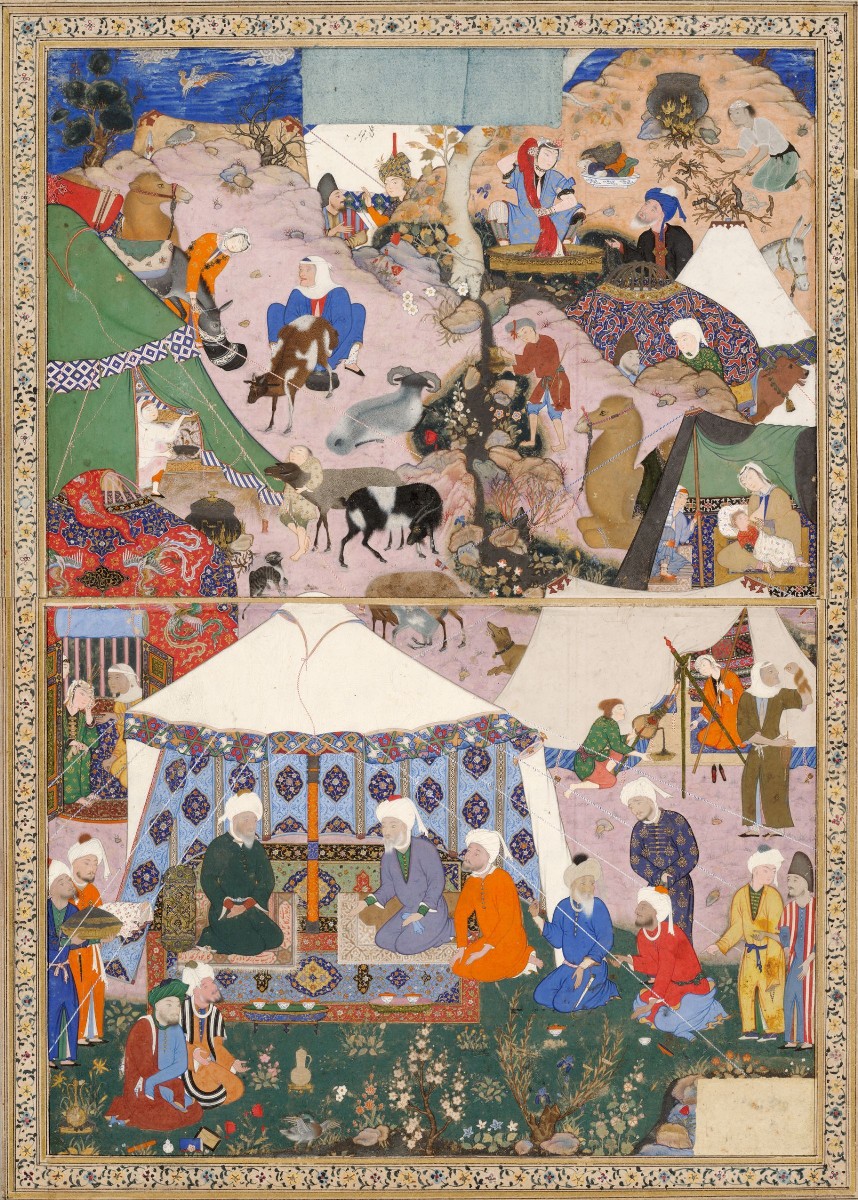
While calligraphy reigned supreme in early Islamic Persia as the most sacred art form, figurative painting found its place in secular contexts, illustrating literature, architecture, and decorative objects. By the Safavid period, the lavish patronage of Shiraz, Isfahan, and Tabriz allowed artists to depict humans with remarkable finesse, capturing both lifelike beauty and cultural rituals. Among these visual treasures, women’s hennaed hands appear as a recurring motif, linking pictorial art to the literary and social traditions described by poets and travelers.
One striking example emerges from an epic illustrating the courtship of the Sassanian prince Khusraw and the Christian princess Shirin. In this painting, Shirin’s attention is immediately captivated by Khusraw’s portrait, so vivid that the scene conveys romance at first glance. Four women in the composition display patterned hands, suggesting henna markings. Since practical use of tambourines or serving dishes would be hindered by wet paste, these depictions are best understood as stylized stains, visually preserving the essence of henna artistry rather than literal application.
Historical sources confirm the plausibility of such visual representations. By the tenth century, poets like Kisa’i Marvazi described blackened fingertips, and by layering henna with additives such as pomegranate juice or citron, wrapping the paste, or leaving it overnight, as documented by Pietro della Valle, Tavernier, and Olearius, stains could reach deep red or near-black tones. Even Syrian techniques, like rubbing hennaed areas with sal-ammoniac, lime, and honey to intensify darkness (Sonnini, 1798), suggest that Persian artisans could easily produce similarly dramatic effects.
These images, therefore, serve not only as artistic decorations but as historical records, allowing us to reconstruct the techniques, colors, and social significance of henna from more
By the early 19th century, travelers and artists alike documented Persian women’s henna practices with remarkable precision. In 1815, Malcom noted that brides stained their hands with henna the day before their wedding, a ritual corroborated by Tancoigne, who wrote, “The Persian ladies … stain their nails, the palms of their hands and the soles of their feet with an orange color …” Henna in daily practice was often maintained as a uniform, glove-like stain, rather than elaborate patterns, since decorative designs could peak in color only two to three days after application and fade quickly. For women in harems, consistently presentable, though unadorned, hands were preferable to beautifully patterned hands that would soon lose their vibrancy.
Artistic evidence from this period mirrors these social choices. A painting titled A Female Acrobat (Tehran, circa 1815, Victoria and Albert Museum, London) shows evidence of a palimpsest: the flesh-toned paint of the woman’s hands is cracked, suggesting an earlier henna pattern was removed and overpainted. While the nails and possibly the palms retain traces of orange henna, darker patterns seem obscured beneath the newer layer. The disturbance is confined to the fingers, indicating intentional alteration rather than accidental damage. In contrast, other painted elements, the pearl cuffs, silk brocade, and facial features, remain pristine, revealing that henna, and only henna, was considered objectionable or outdated in visual representation.
By the late 19th century, European fashions and artistic norms increasingly influenced court painting. A diorama-like depiction of harem life during the reign of Nasir al-Din Shah (1848–1896) portrays ten women and one boy, some wearing skirts inspired by Paris Opera tutus. Six women have visible hands or feet, and among them, one clearly displays henna patterns on her palms and fingers, while two others may show lighter traces. These depictions align with Isabella Bishop’s observations of Persia in the late 19th century: “the fingernails, and the inside of the hands are stained with henna”.
Interestingly, the henna itself is rendered with subtlety: fingertips show a hazelnut hue, transitioning to soft orange on the backs of the fingers and palms, a stark contrast to the vivid orange of early 19th-century depictions or the deep black of the Safavid era. The pictorial emphasis shifted away from henna, instead highlighting women’s luxurious silks, intricate embroideries, jewelry, carpets, and even minute details of fruit and tea service. This meticulous detailing functioned as a visual inventory, a testament to wealth and status, while the henna, once central, became a quiet, almost private marker of feminine ritual and beauty.
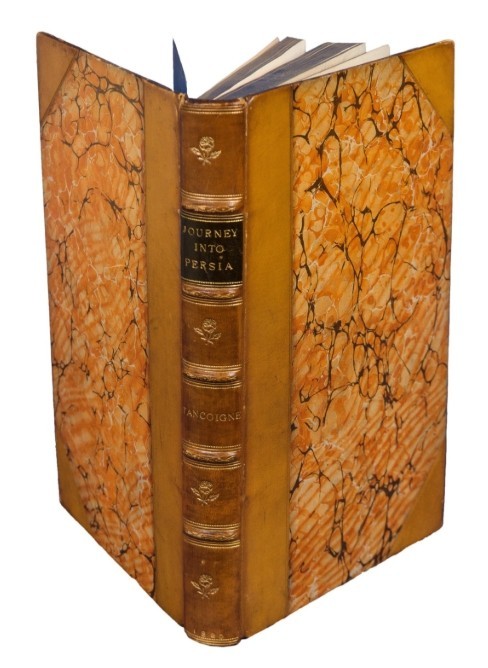
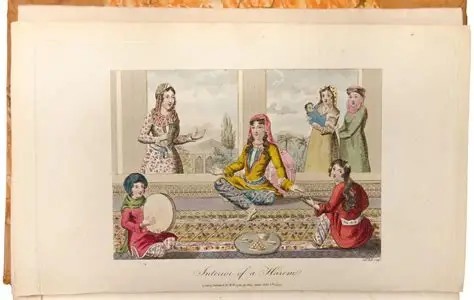
Tancoigne, Joseph Michel | A noted French epistolary narrative describing an Embassy to Persia
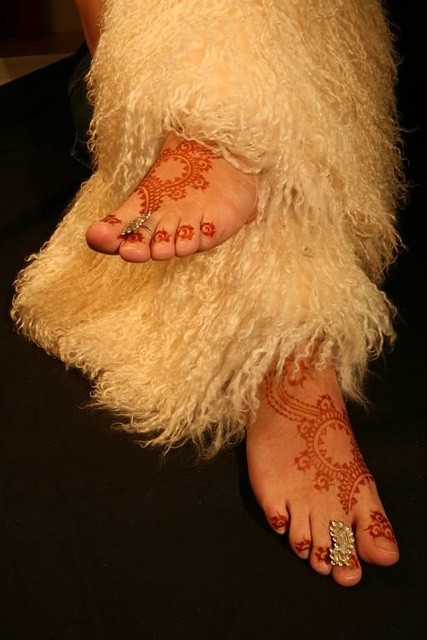
The art of henna in Persia has often been overlooked by scholars, sometimes dismissed as non-Persian or considered merely red-orange in tone, or thought to have originated solely in India. Yet henna has a deep history in Persia, practiced largely by women in harems or baths, beyond the eyes of male chroniclers. Archaeological evidence is scarce, since henna stains leave no lasting trace on the skin, making literary sources, travelers’ accounts, and visual arts the primary windows into this tradition.
Historical records reveal that Persian henna artists, known as negarin, mastered a range of stain colors, from warm reddish-brown to nearly black, applying techniques that enhanced the hue: thick paste, wrapping, pomegranate juice, and citron were used to deepen the color. While blackened patterns were often depicted in Safavid-era paintings, they may have represented aesthetic ideals rather than the literal color of the skin, reflecting the cultural canon of beauty alongside delicate feet, clear skin, and small, smiling mouths.
By the early 19th century, preferences shifted. European influence at the Qajar court and changing fashions may have reduced the visual emphasis on henna. Many European visitors criticized the aesthetic, likening hennaed palms to tar-stained hands (Buckingham, 1827). In Persian court paintings, black patterns were sometimes scraped away and replaced with lighter orange tones, maintaining the softening and protective benefits of henna while deemphasizing ornamentation.
Artistic representation functioned as both cultural canon and display of status. In Safavid paintings, blackened patterns symbolized elegance, skill, and conspicuous consumption, while in later Qajar depictions, simpler orange stains on hands reflected changing tastes. Paintings such as Ladies around a Samovar illustrate this evolution: the toffee-colored henna on the back of hands preserves the practice without drawing attention to elaborate designs.
Throughout Persian history, henna has remained dynamic rather than static. Its style, color, and application varied with fashion, social class, and aesthetic ideals, reaching peaks of complexity during periods of wealth and indulgence, then undergoing subtle simplification under external influences.
Although henna has sometimes been labeled “old-fashioned” in modern Iran (Friedl, 1991), its cultural and artistic significance endures. Persian mastery of henna predates the well-known patterned designs of Hindu India by centuries, and studying historical Persian henna illuminates the elegance and beauty once cherished on women’s hands, preserving a tradition that risks being forgotten through neglect or historical revision.
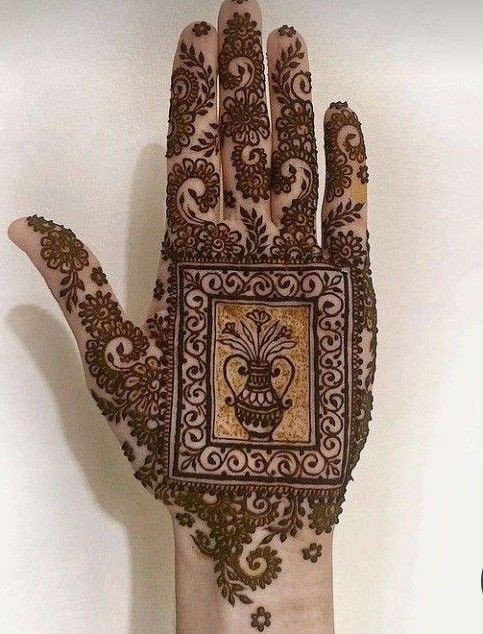
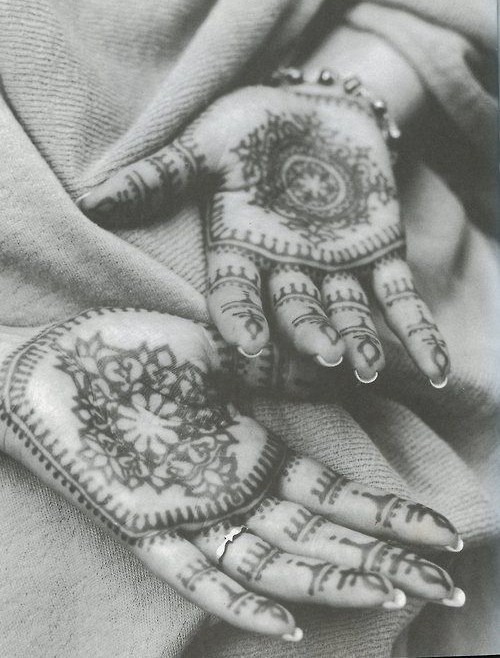
Photo: Flickr
This article is an original editorial analysis produced by [DIBA magazine]
Research and references are used for contextual accuracy.