
|
EN
Subscribe to our Newsletter
In his European runway debut at Pitti Uomo, SOSHIOTSUKI delivered a poised yet emotionally charged collection that bridged Japanese precision and Italian sensual tailoring. A study in movement, nostalgia, and modern restraint, Fall marked a confident global arrival.
By the Editorial Staff
When Soshiotsuki stepped onto the runway stage of Pitti Uomo as guest designer, anticipation had already reached a crescendo. Since winning the 2025 LVMH Prize for Young Designers against more than 2,300 competitors, the Japanese talent has been under intense international scrutiny. His Florence debut did not merely meet expectations, it reframed them.
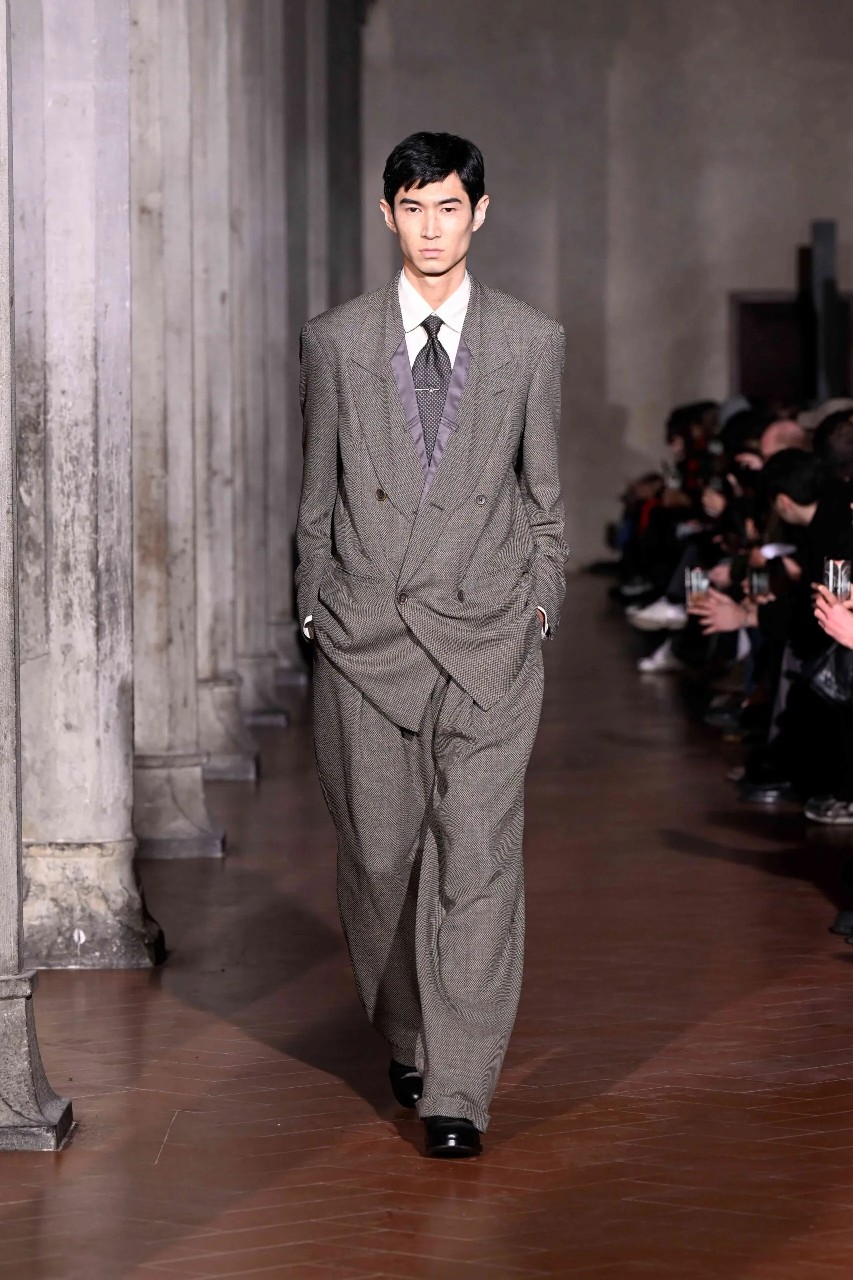
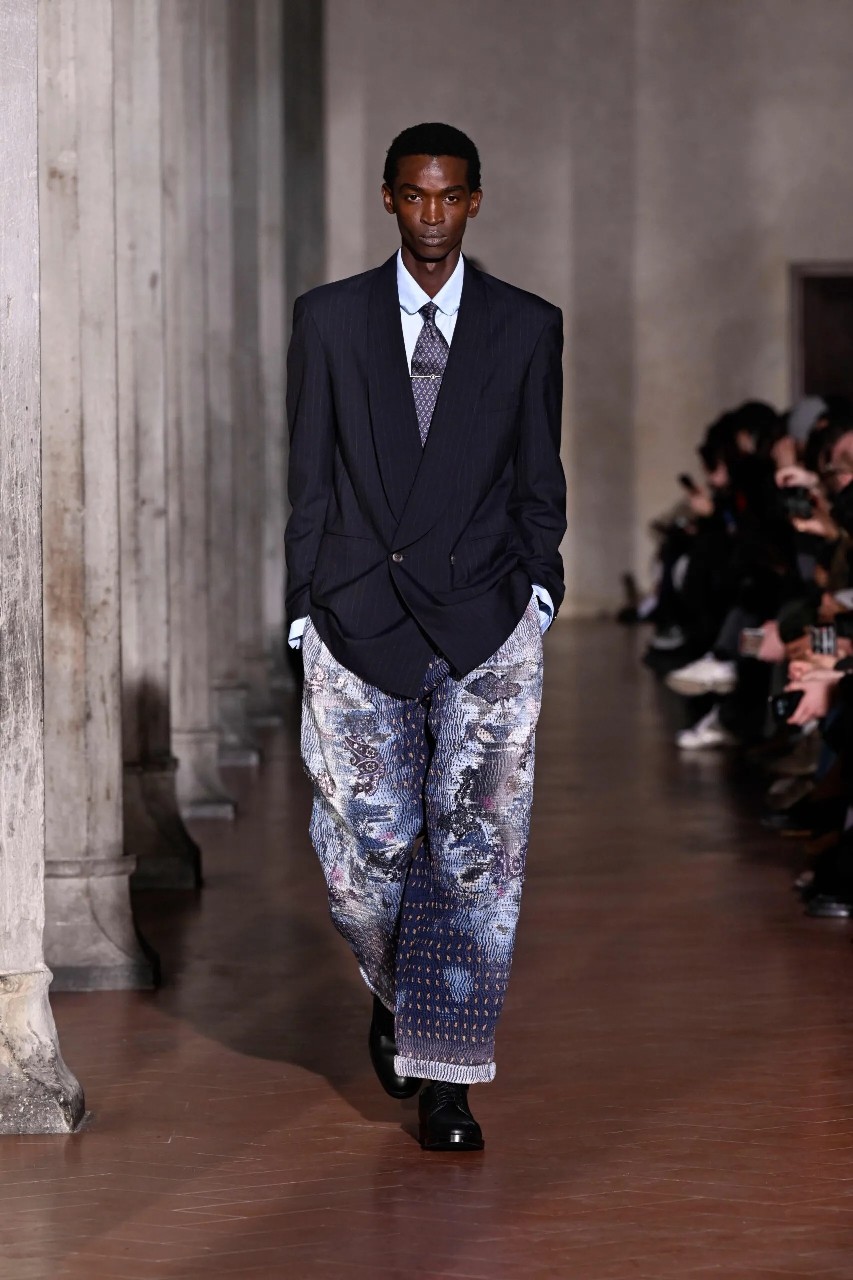
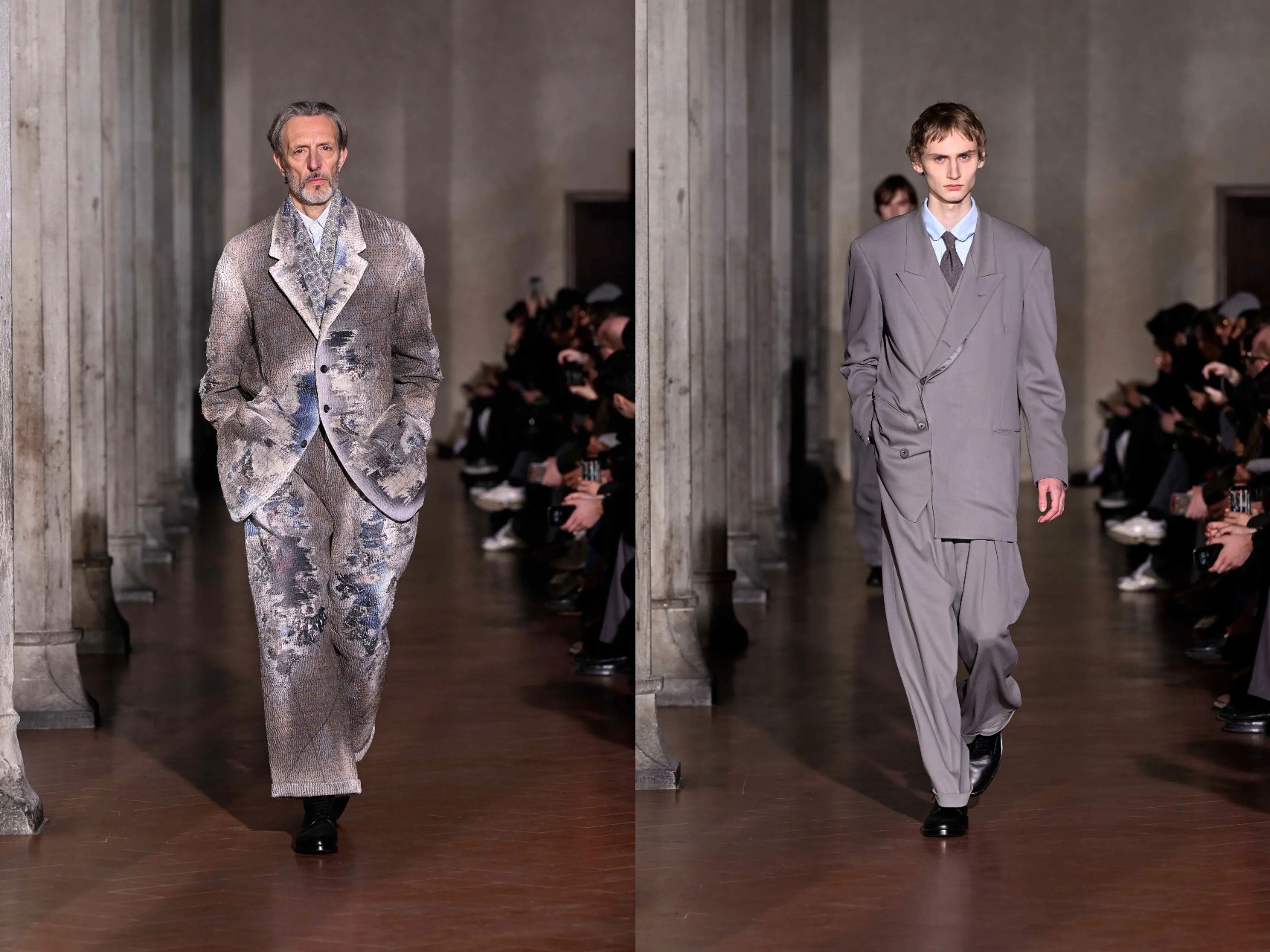
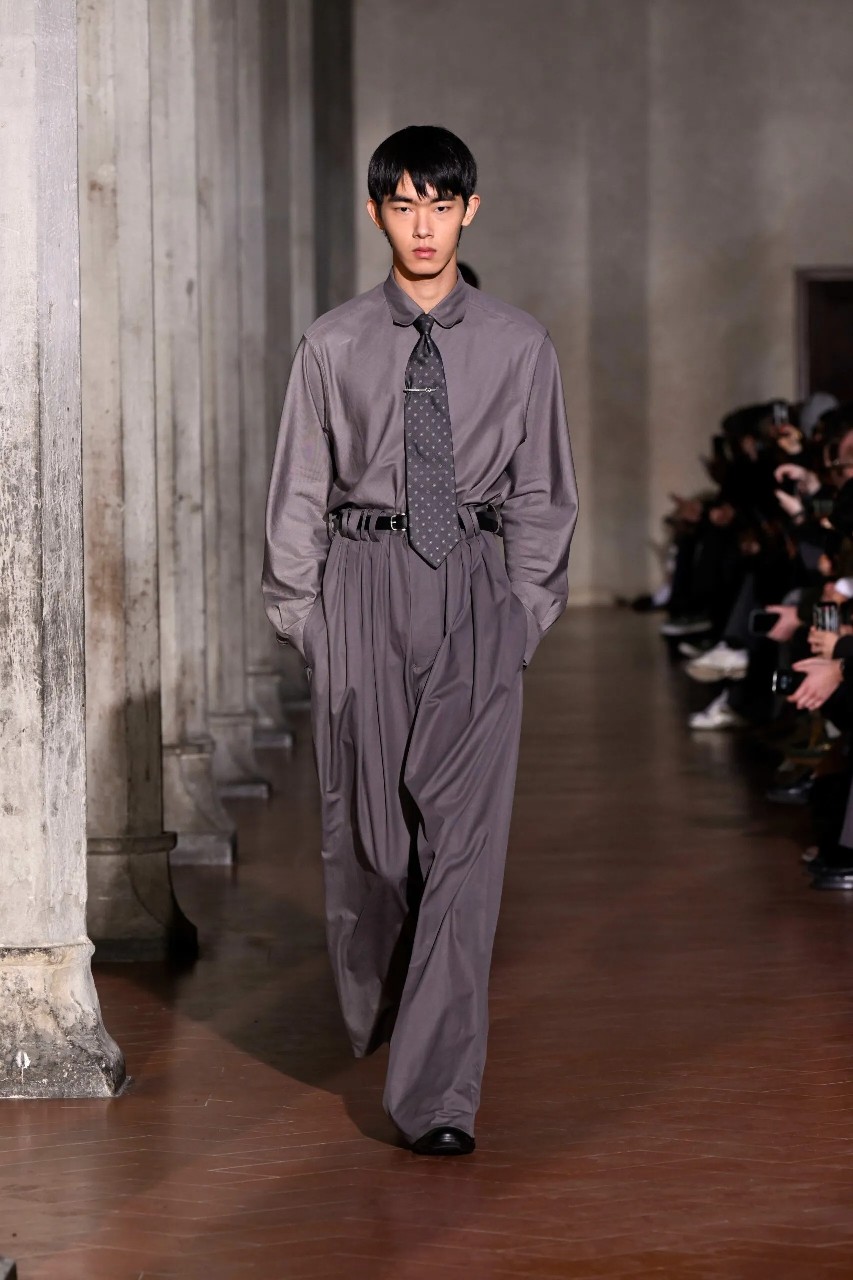
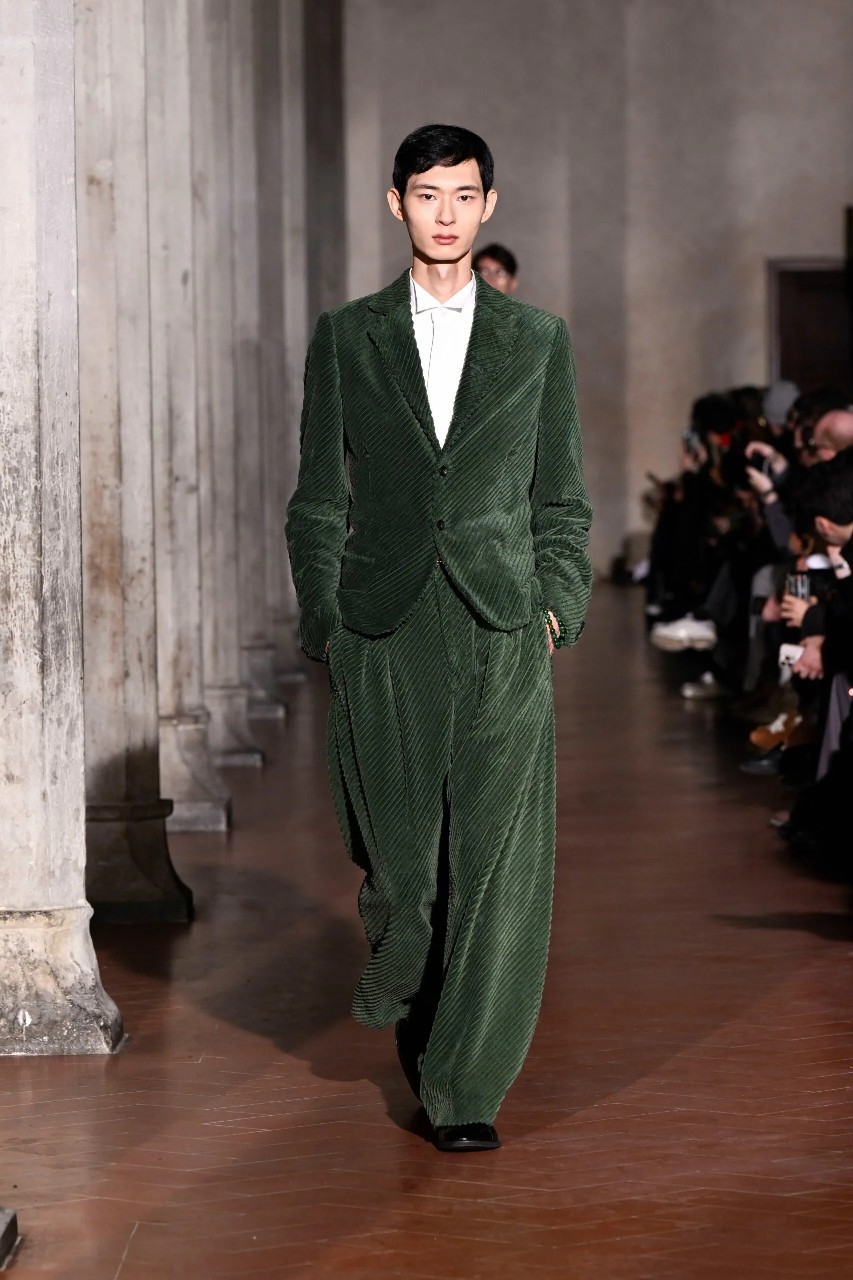
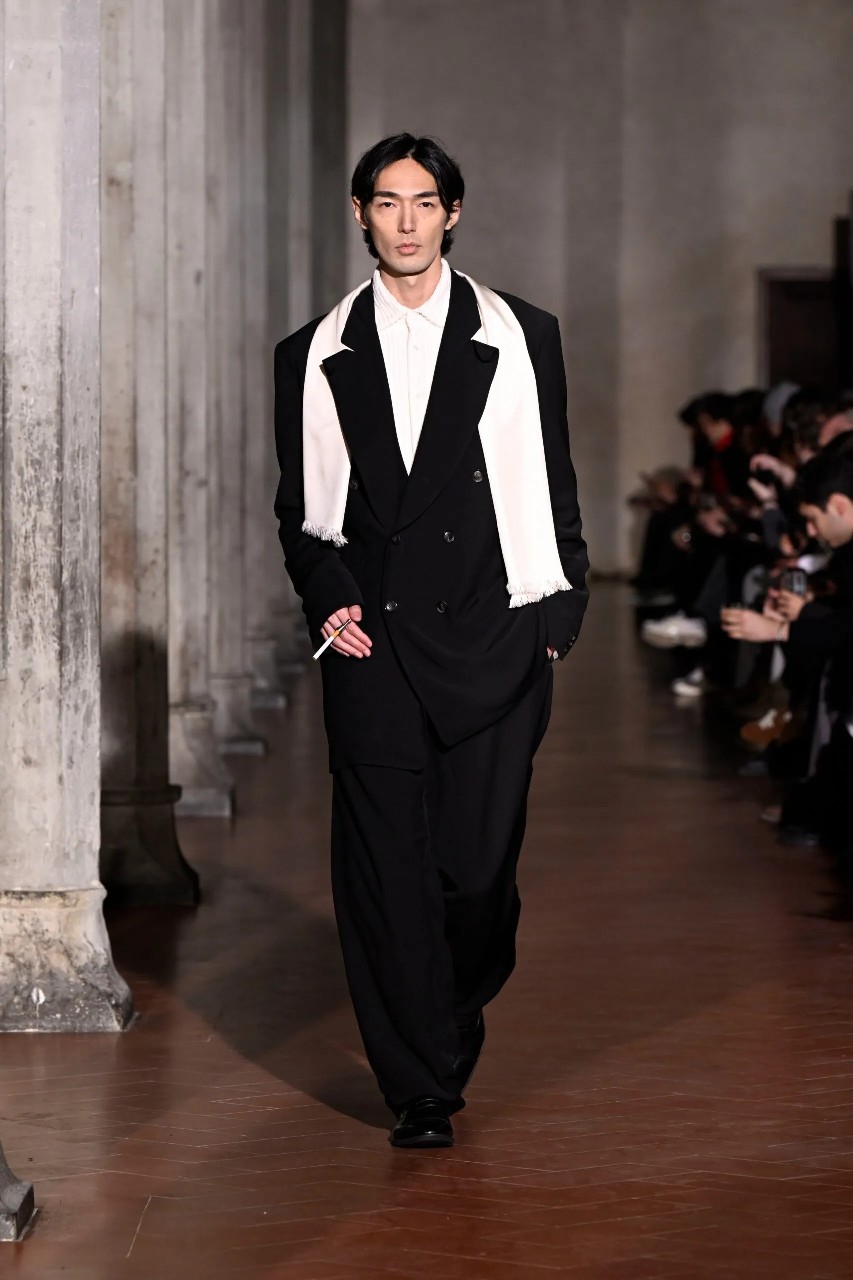
Staged inside the vaulted Refettorio of Santa Maria Novella, the Fall presentation unfolded like a dialogue between eras and geographies. Otsuki’s tailoring, fluid, elongated, and subtly deconstructed, carried the unmistakable echo of Giorgio Armani, long cited by the designer as a personal hero. Yet this was not homage; it was translation.
Otsuki has often reflected on the wave of Made in Italy tailoring that entered Japan during the economic boom of the 1980s and ’90s. This season, he inverted that narrative. “I am re-exporting that story,” he explained, a symbolic return of Italian-influenced Japanese craftsmanship back to its European source.
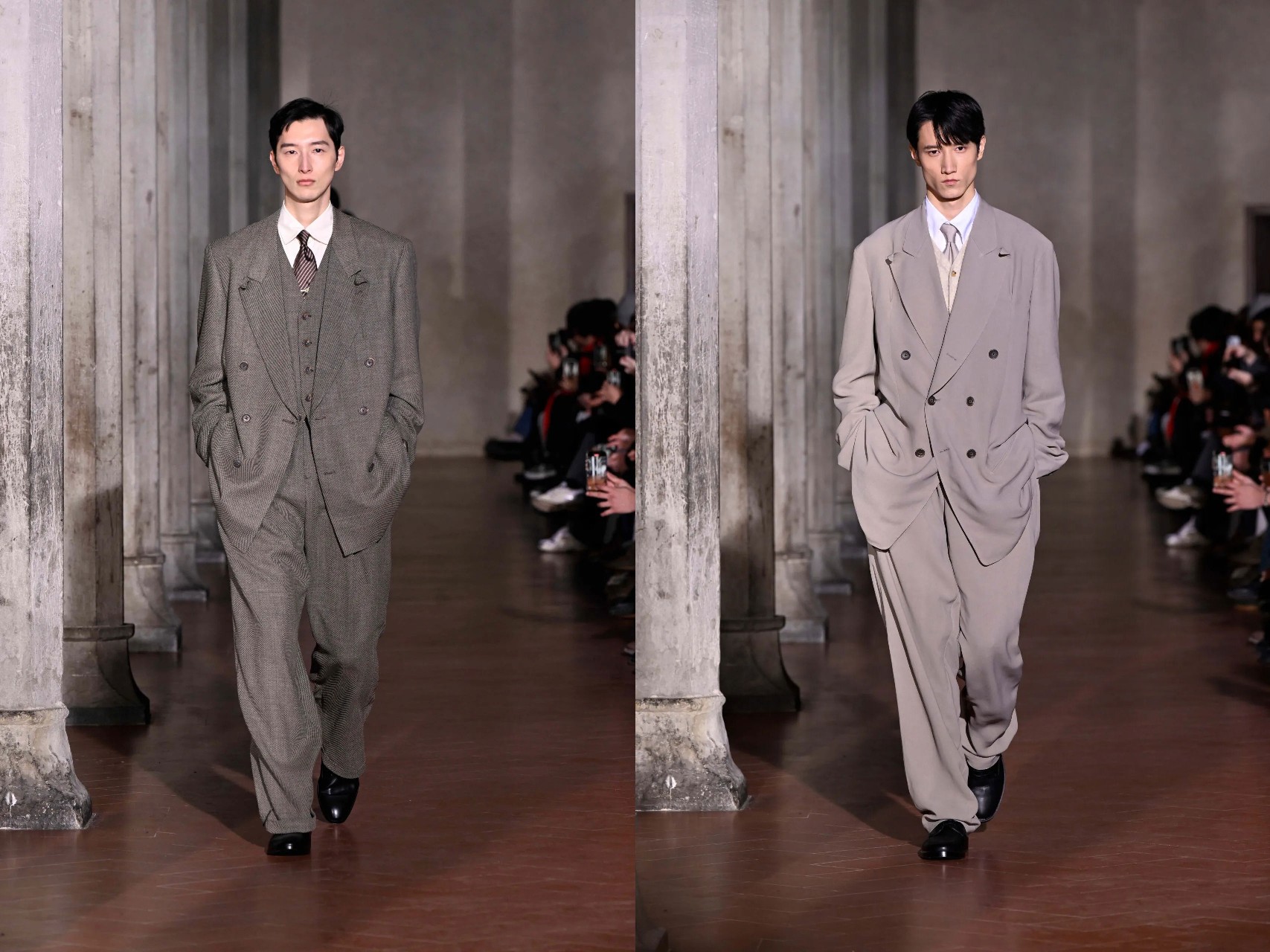
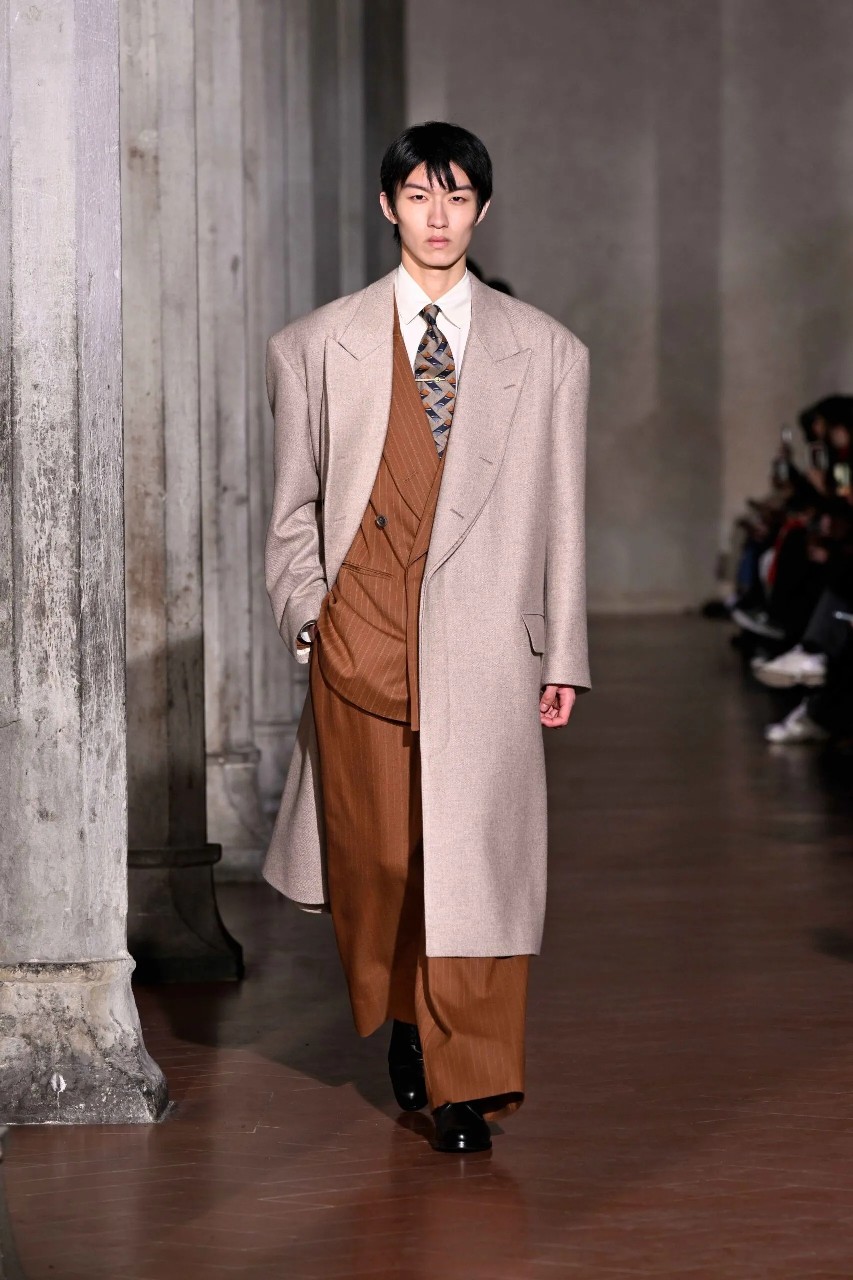
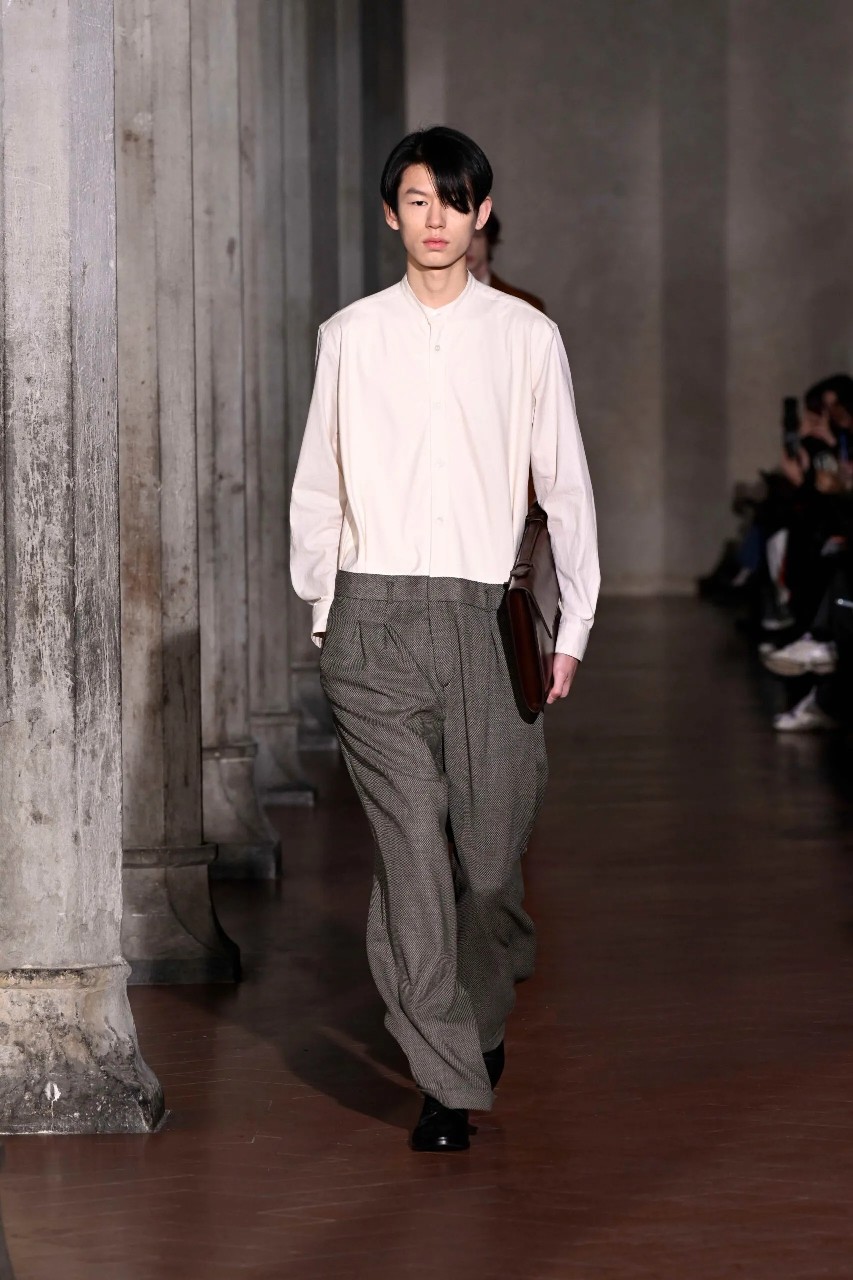
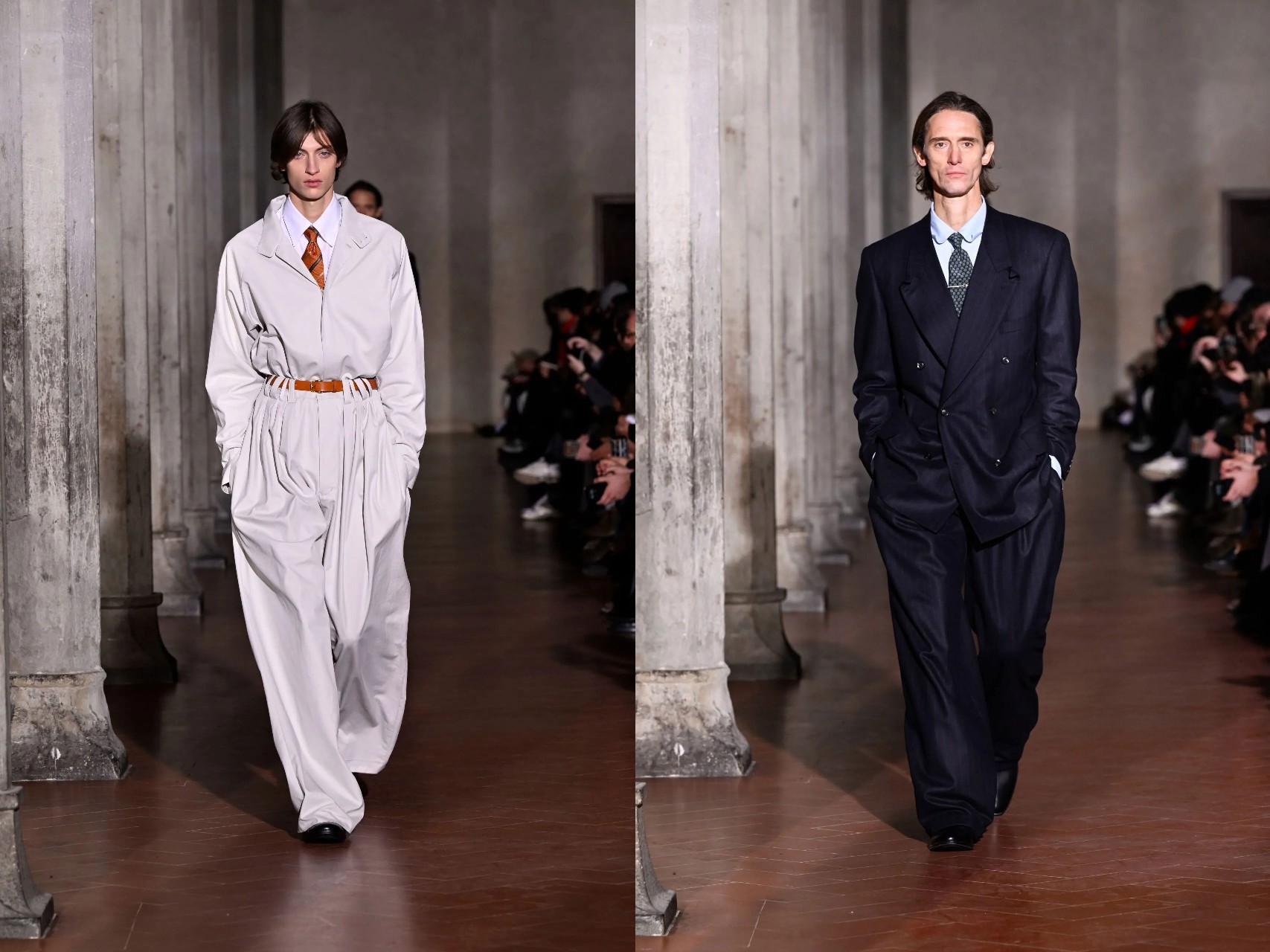
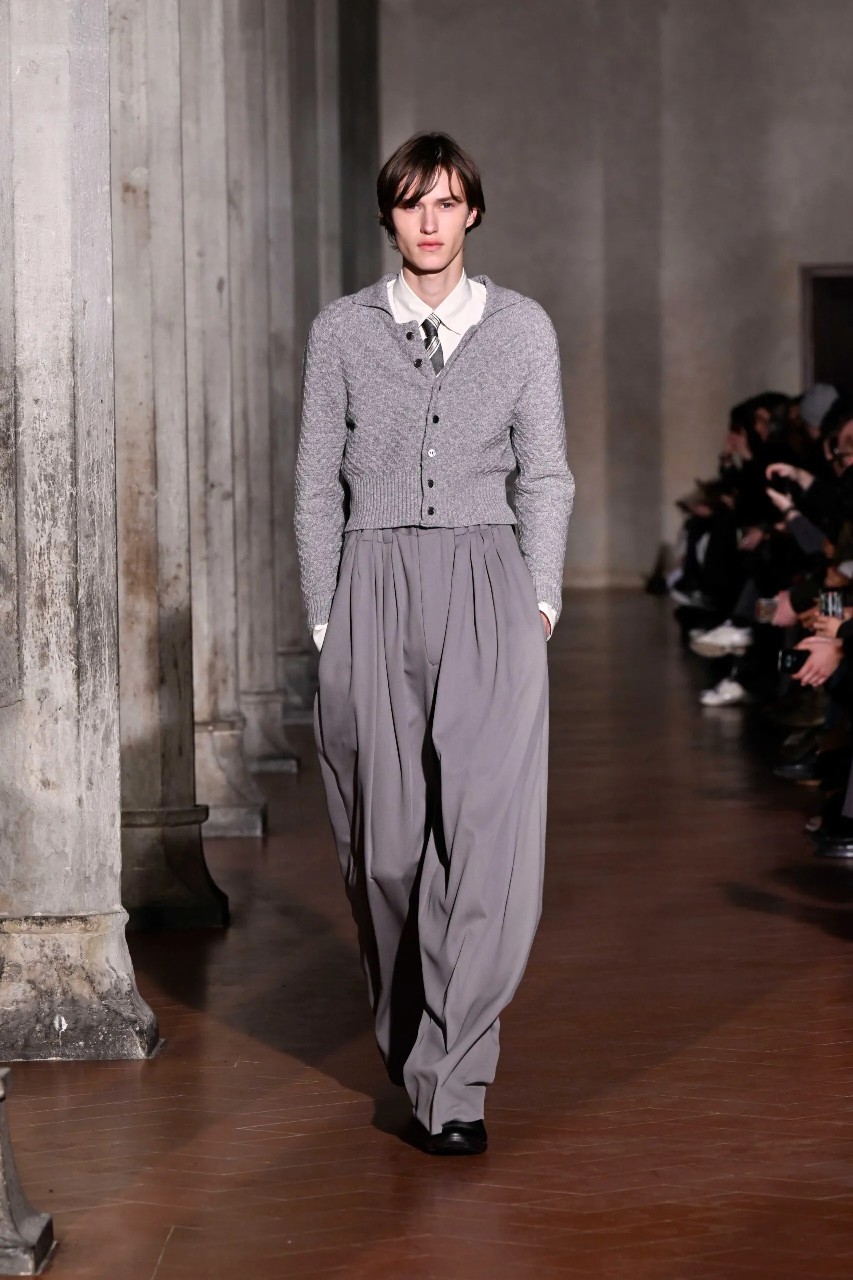
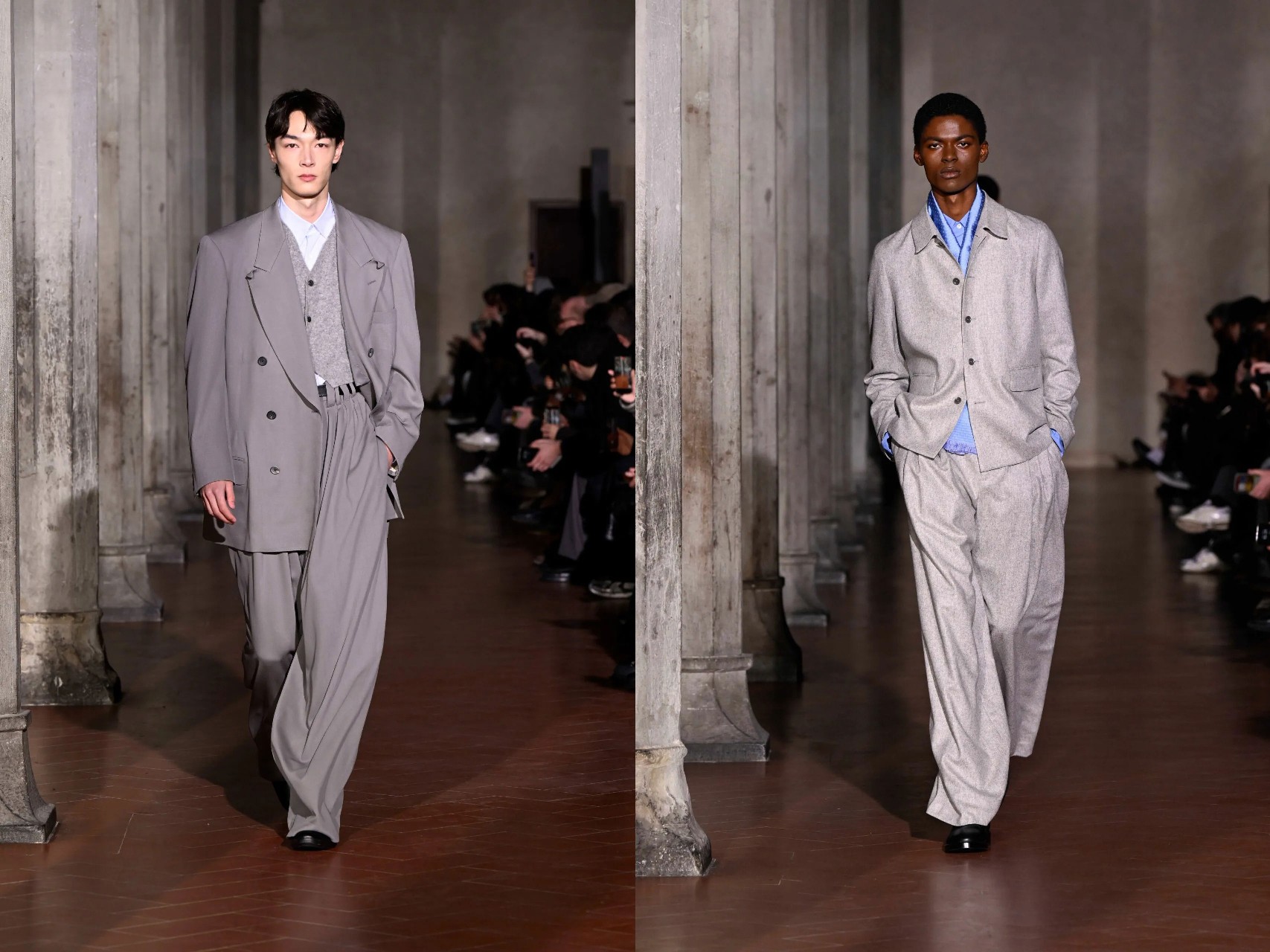
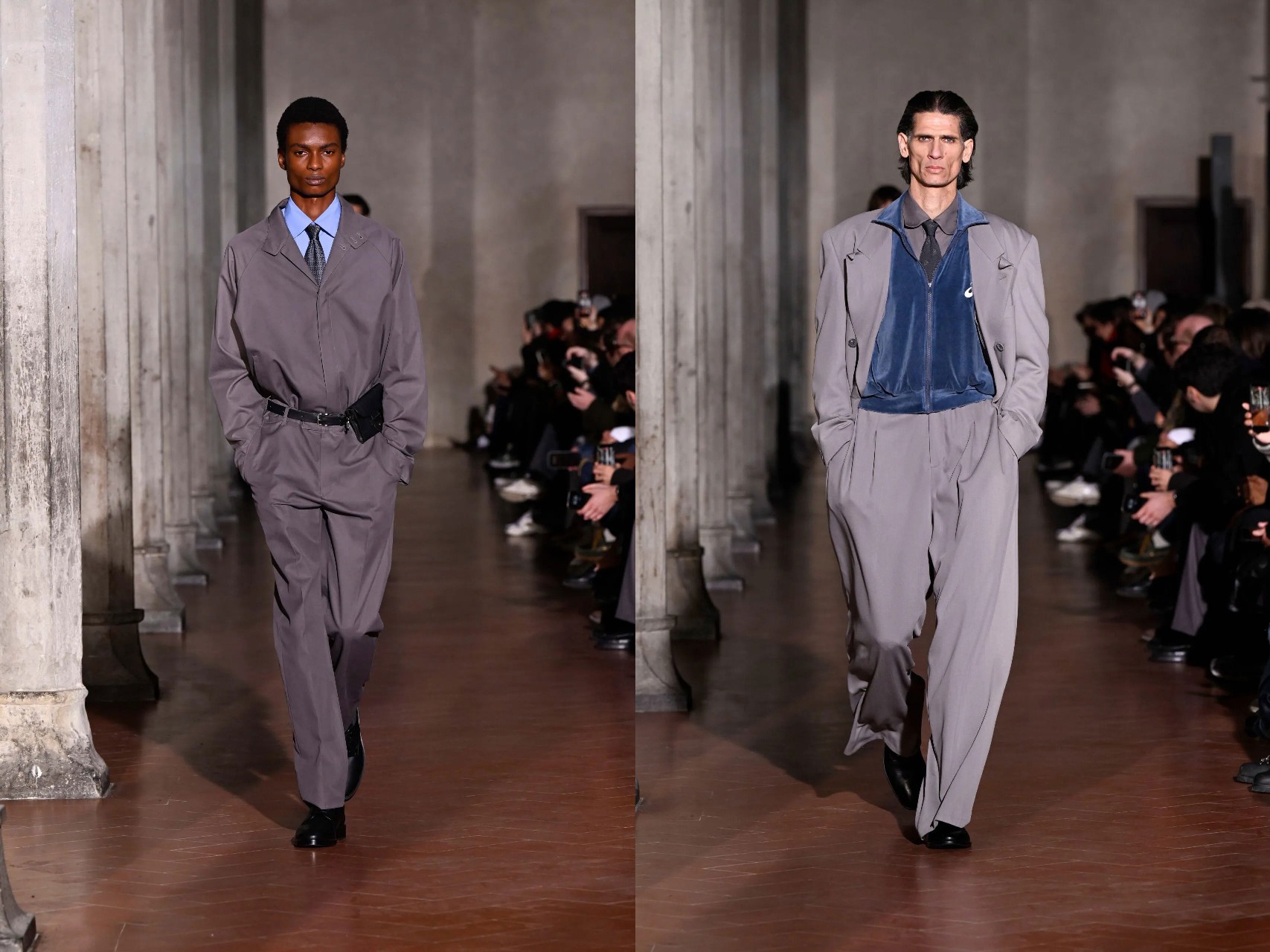
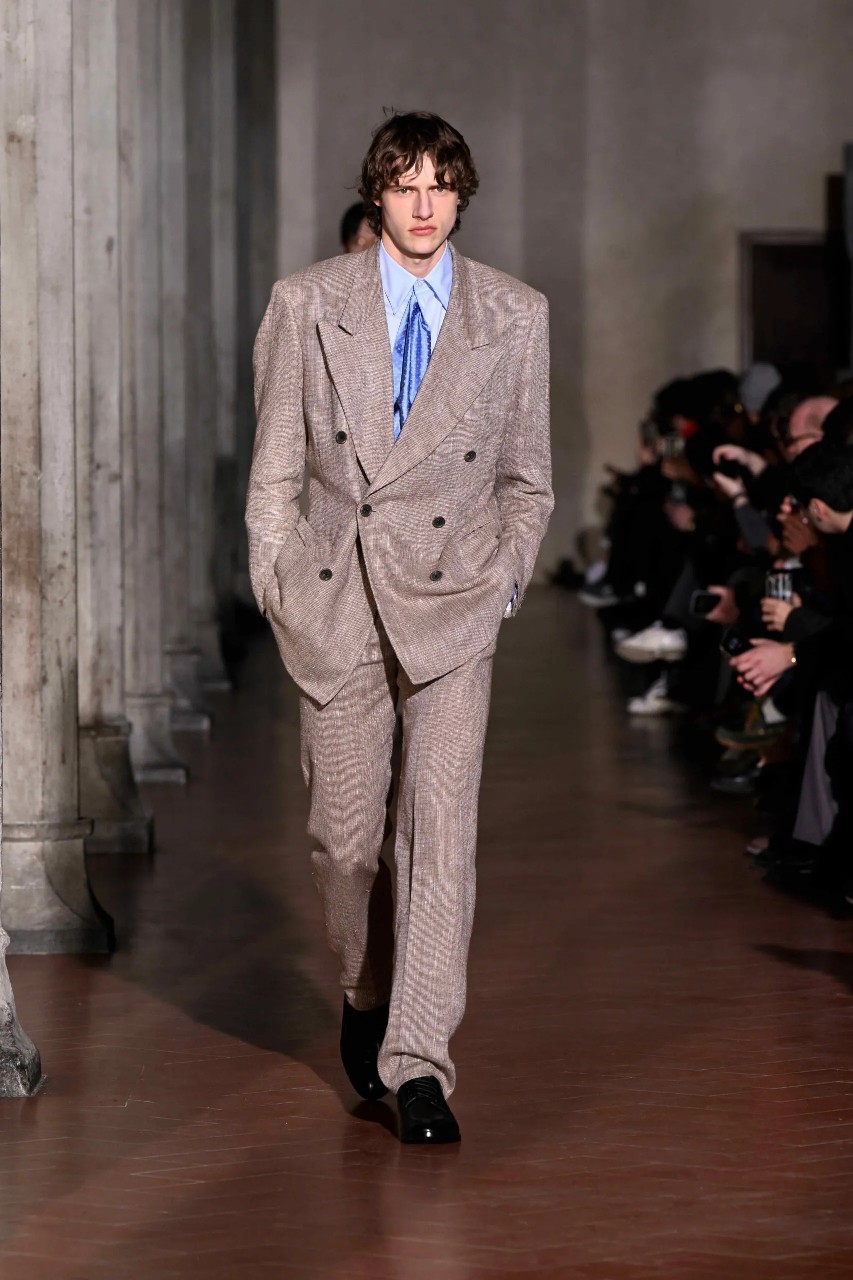
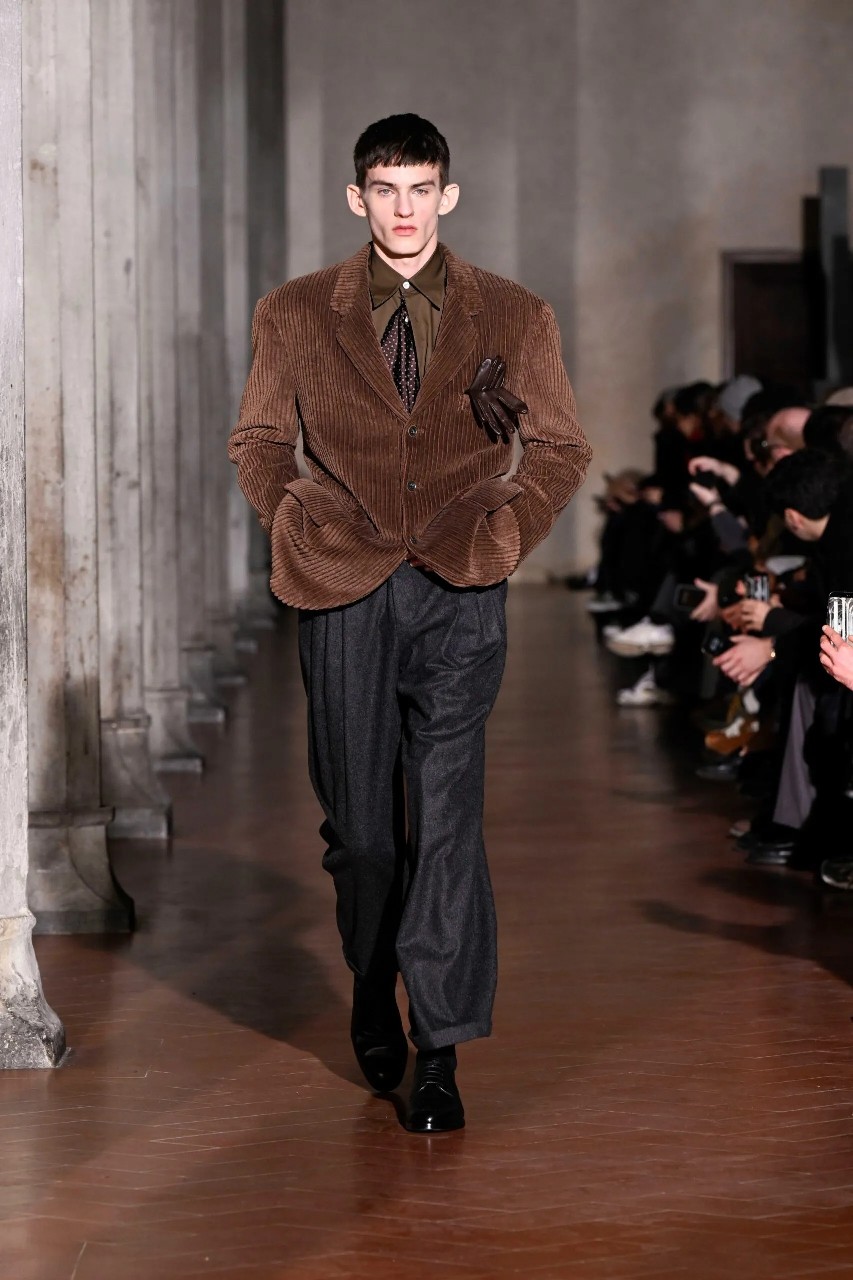
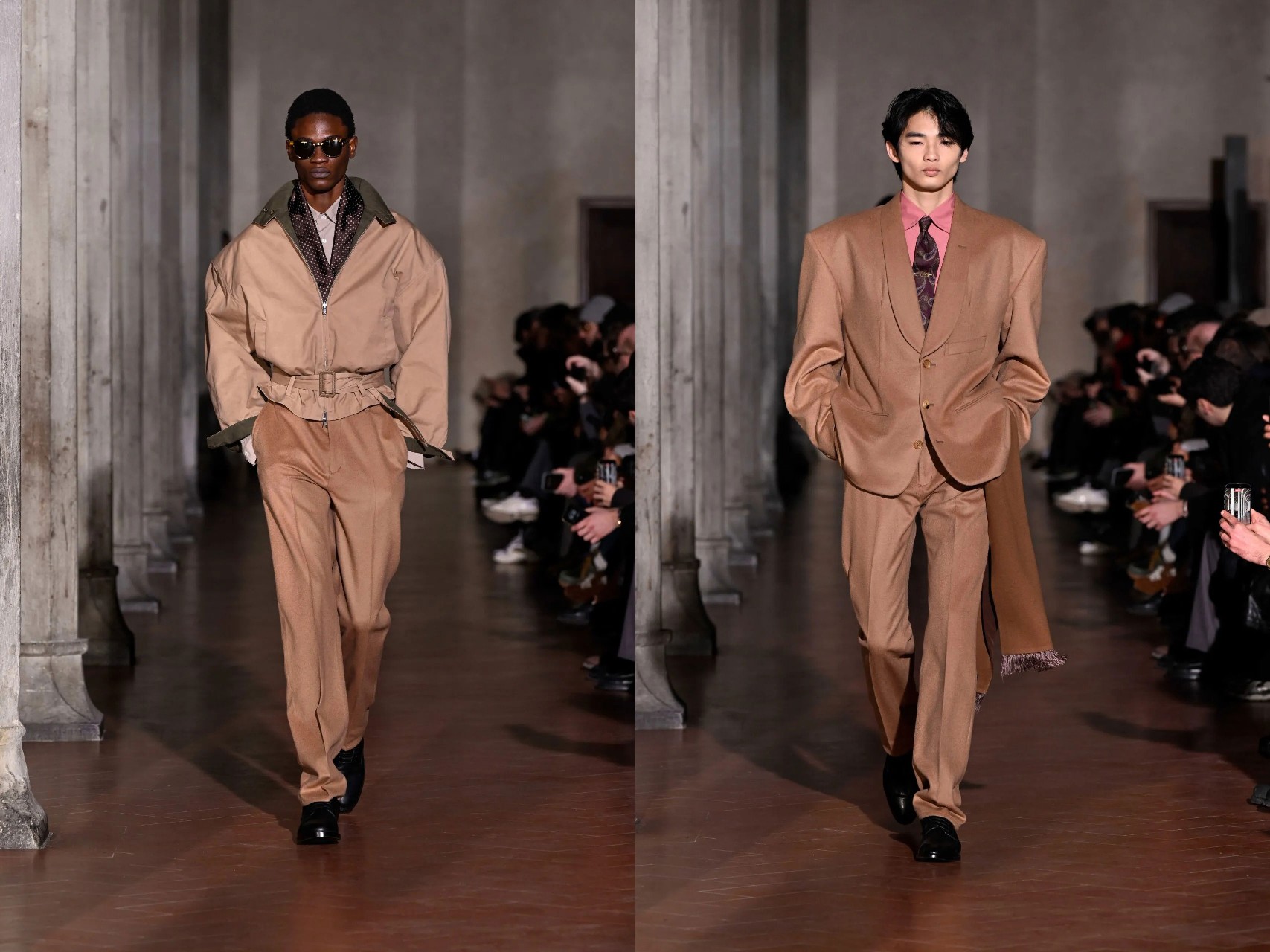
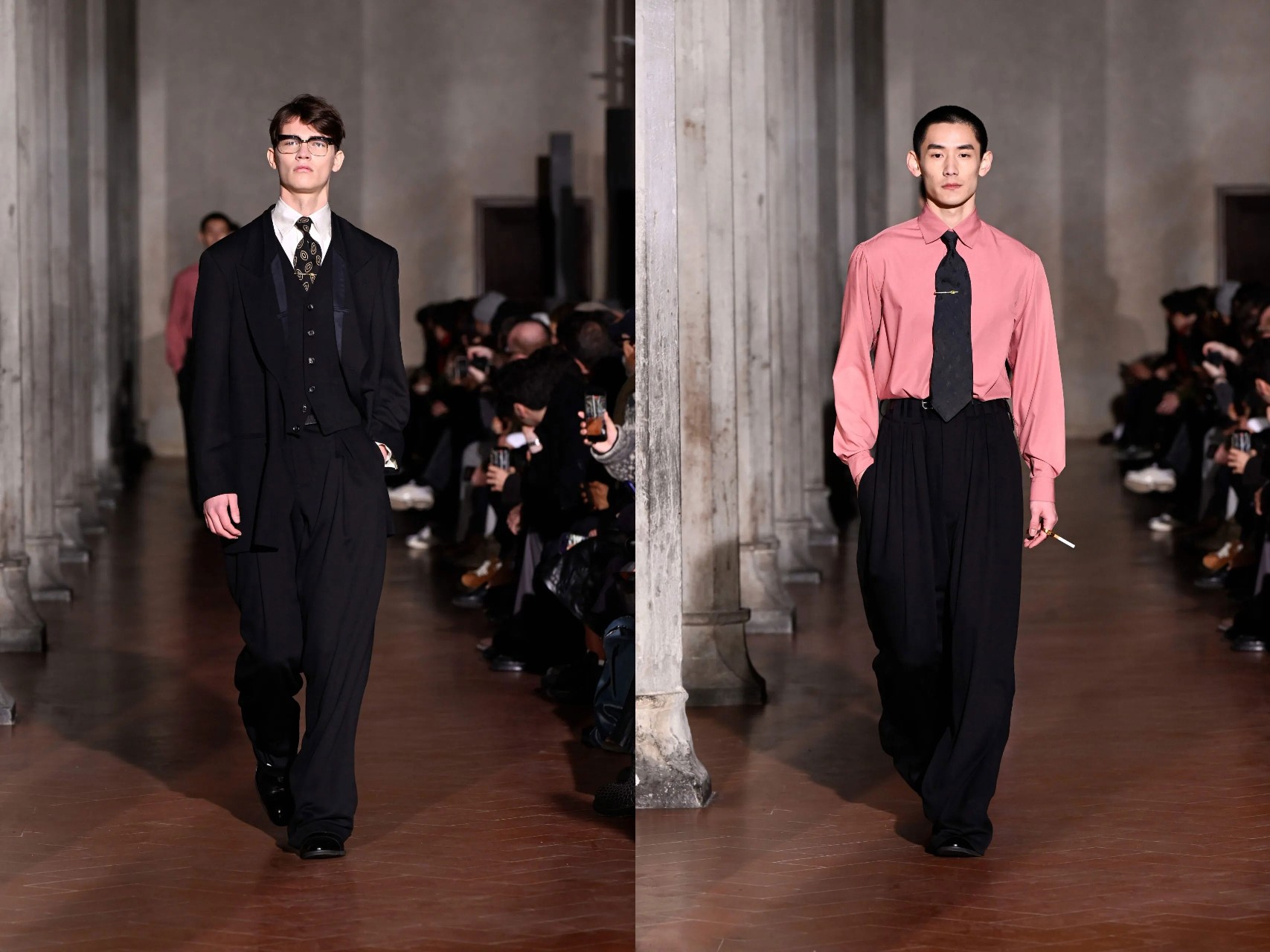
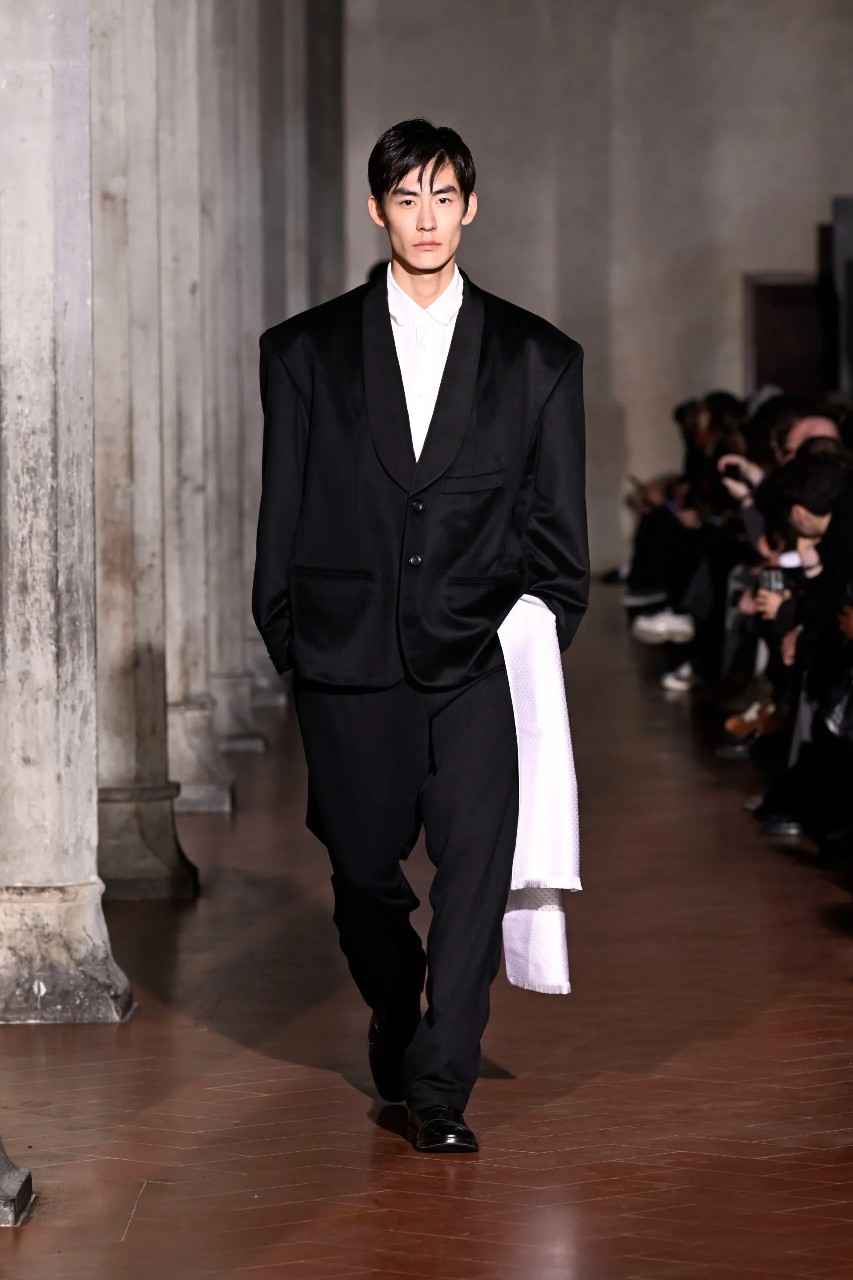
The suits told that story with clarity. Double-breasted grey ensembles featured elongated blazers and generously pleated trousers, while beige and brown boxy iterations referenced the archetype of the ’80s power businessman. But where power dressing once projected authority, Otsuki infused fragility. Shoulders were sharp yet softened by proportion; lapels subtly curled; silhouettes verged on caricature without losing elegance.
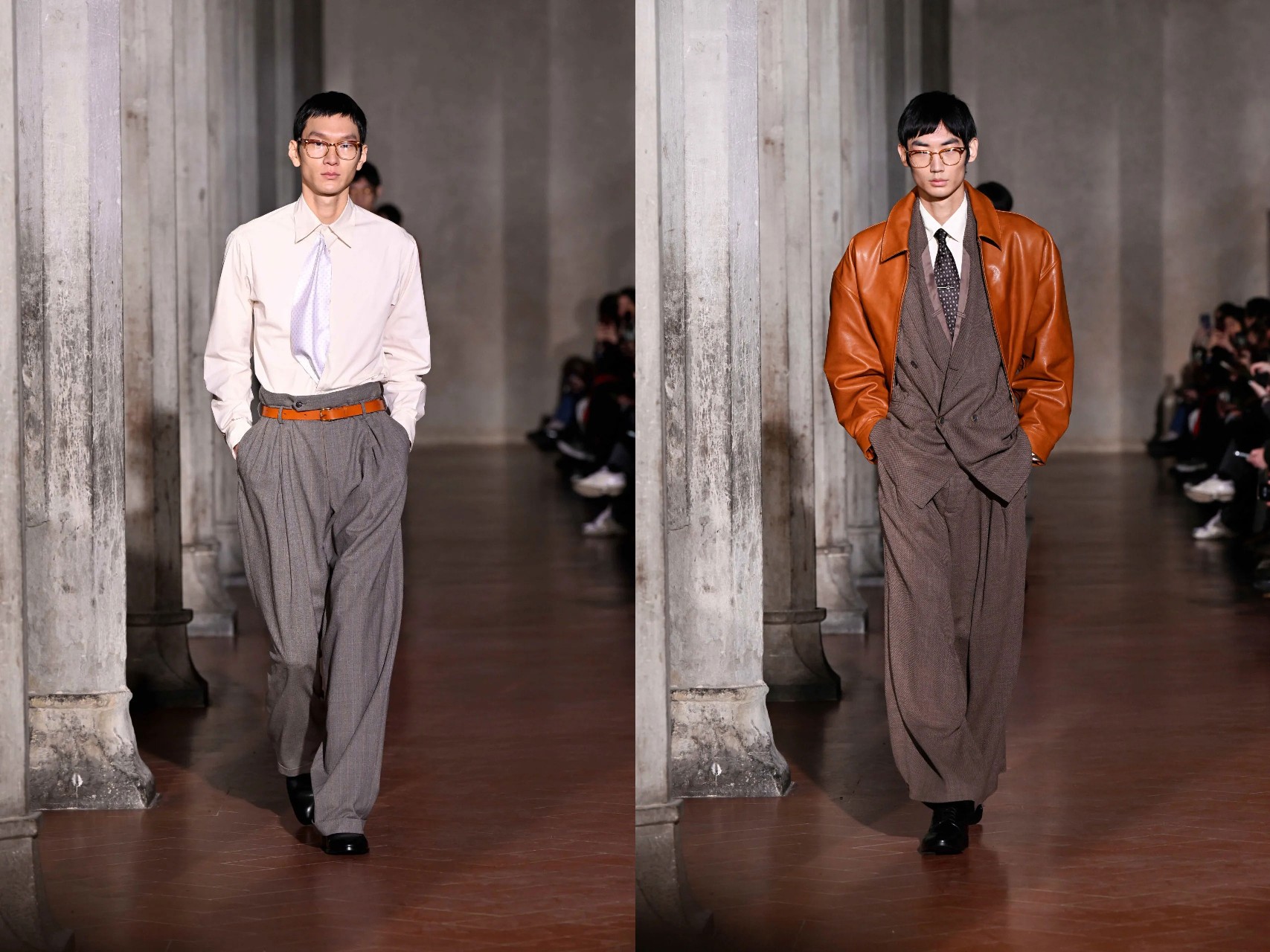
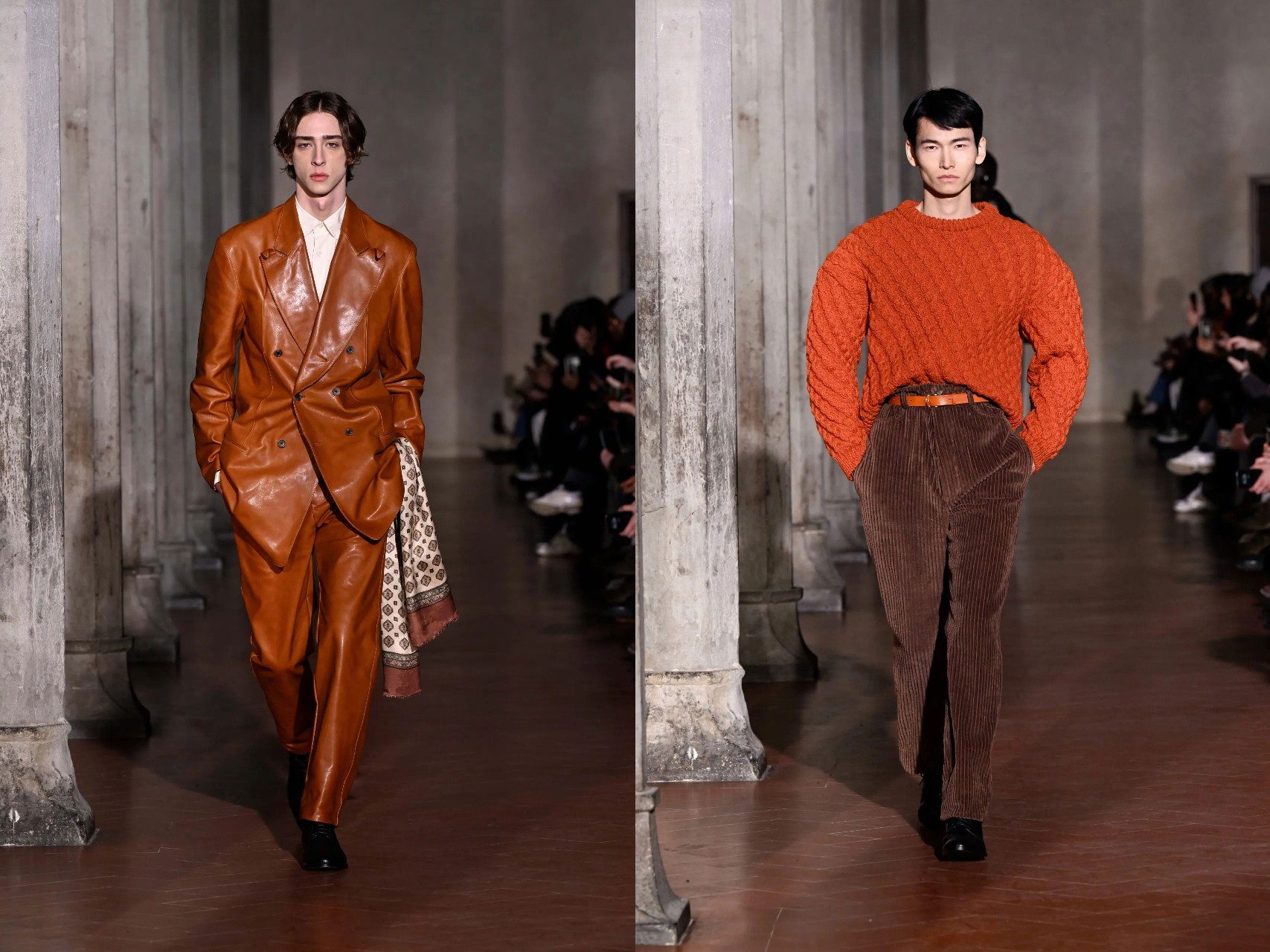
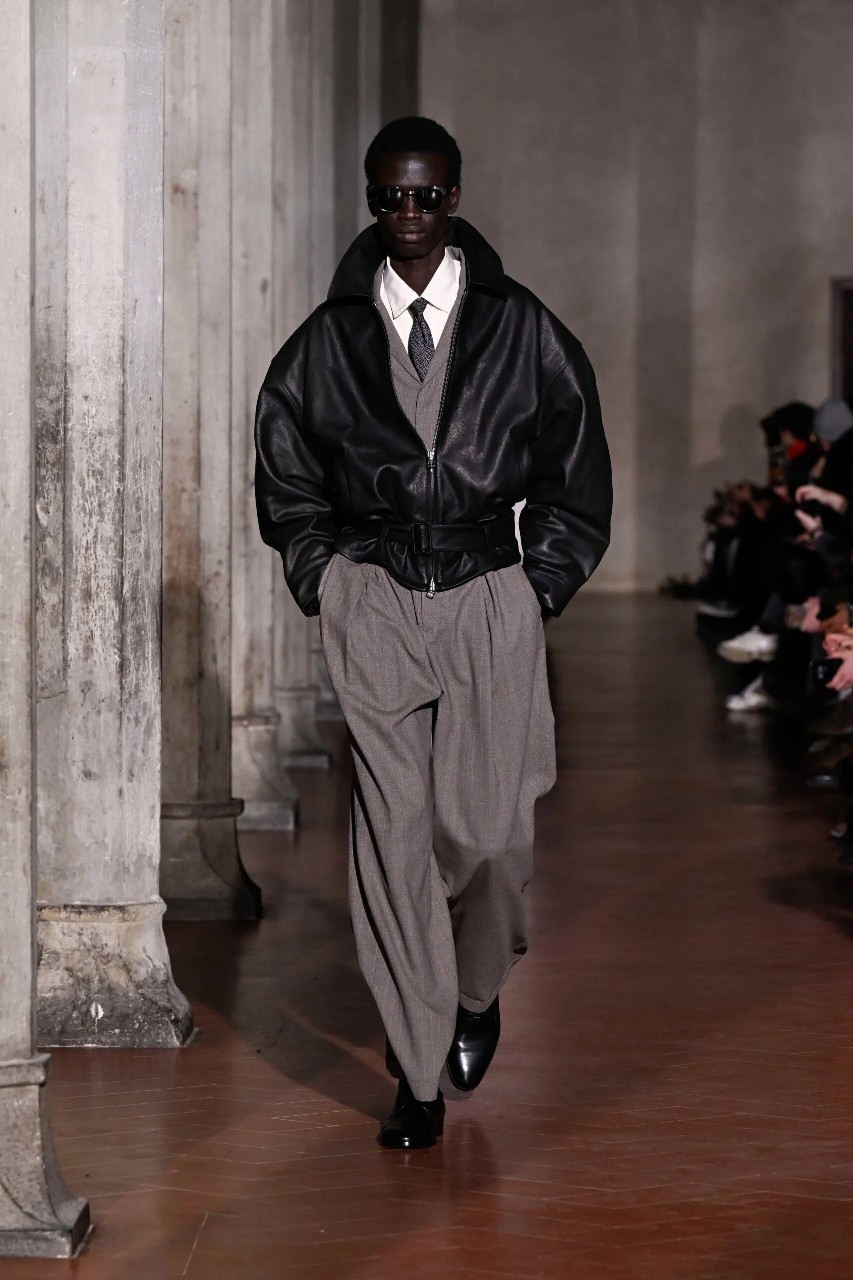
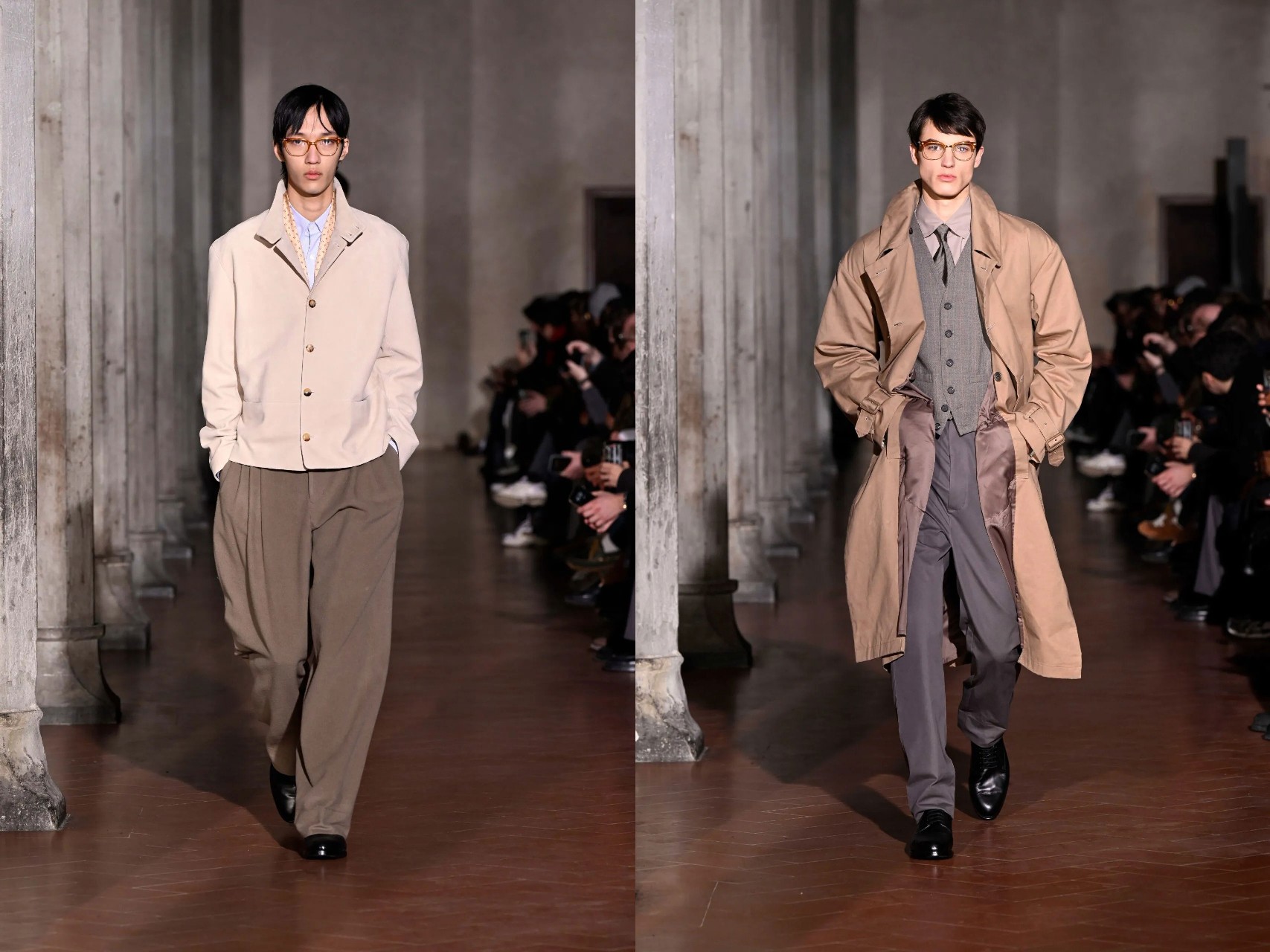
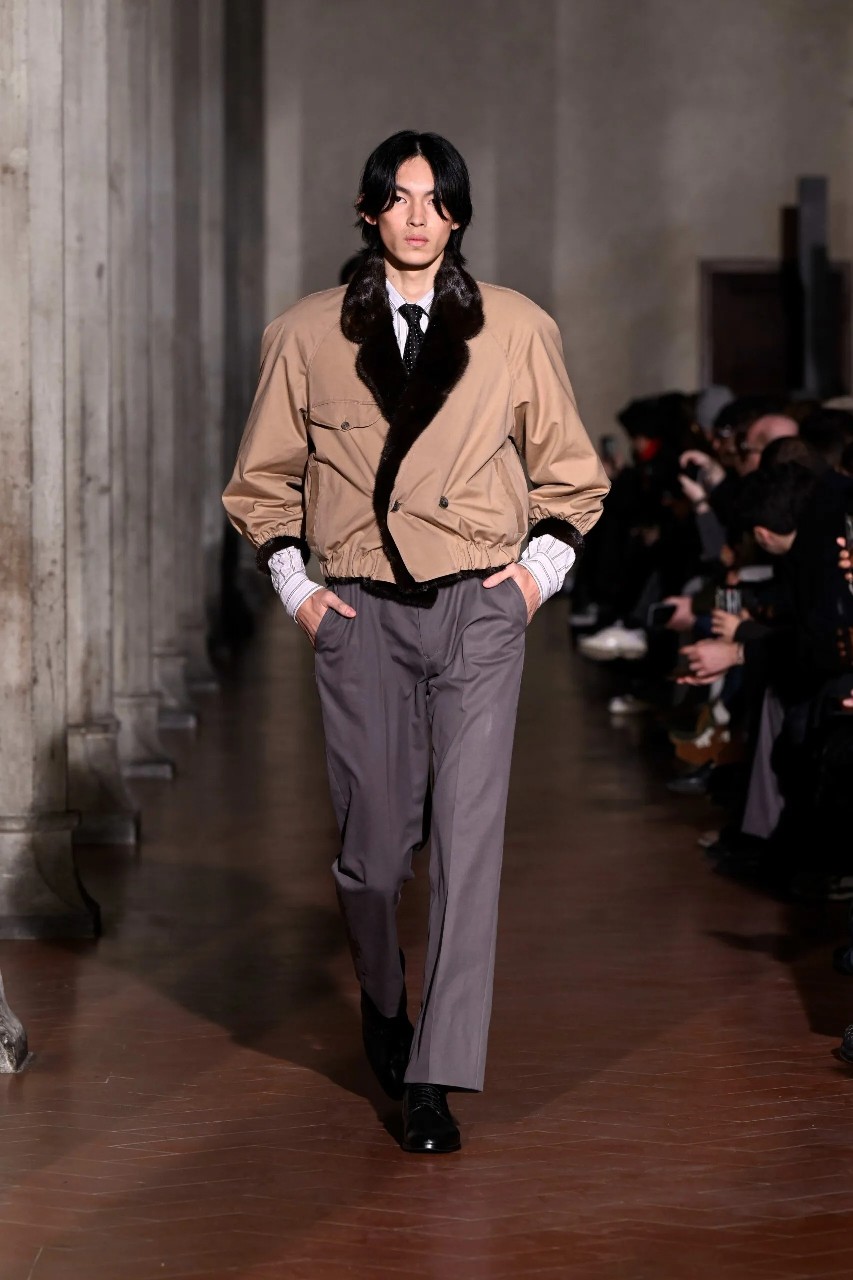
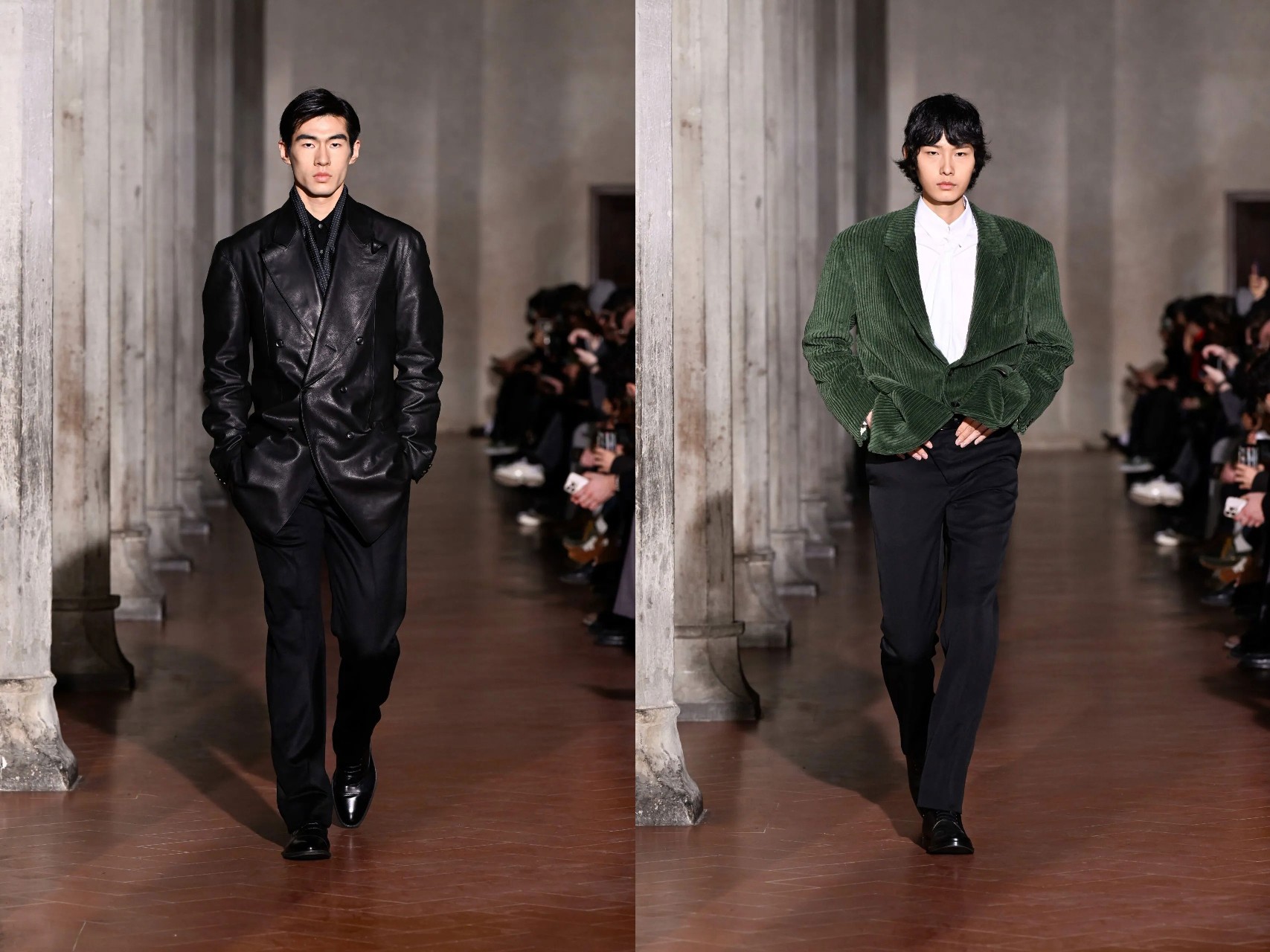
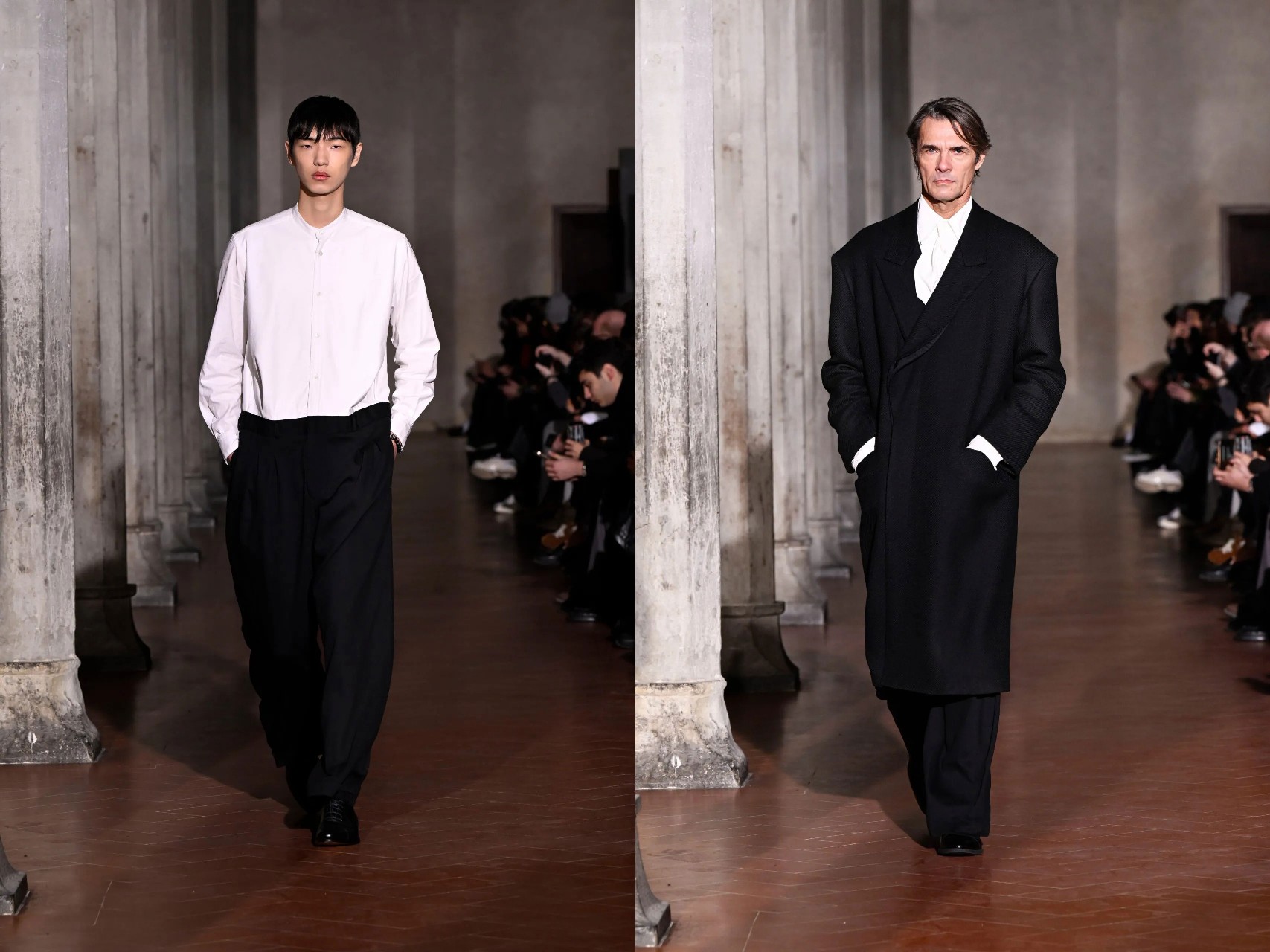
Details animated the collection. Oxford shirts cut on the bias created intentional drape and movement when tucked into trousers. Leather blousons were cinched narrowly at the waist, allowing their hem to flare outward like a corolla. A faux-fur–lined peacoat, cropped and slightly off-kilter, injected quiet irreverence. Tuxedos with curling lapel tips paired with a vintage cigarette holder ring felt both cinematic and mischievous.
Texture enriched the narrative: tweeds, pinstripes, sateen foulards, corduroy in diagonal emerald, and toffee-hued leather layered beneath cardigans. Collaborations with ASICS and PROLETA RE ART subtly grounded the tailoring in contemporary reality, reinforcing Otsuki’s interest in motion and lived-in elegance.
If Japanese tailoring is known for discipline and Italian tailoring for sensuality, Otsuki refuses the binary. His Fall collection balanced both perspectives simultaneously, precision without rigidity, fluidity without collapse. As applause filled the Florentine hall, it was clear: this was not merely a successful debut. It was a designer positioning himself as a thoughtful mediator between cultures, histories, and the evolving language of menswear.
This article is an original editorial analysis produced by [DIBA magazine]
Research and references are used for contextual accuracy.