
|
EN
Subscribe to our Newsletter
Unveiled at Paris Fashion Week, Alexander McQueen Spring/Summer 2026 by Seán McGirr examined the tension between discipline and instinct. Inspired by The Wicker Man, the collection fused sharp British tailoring with sensual disruption, reframing the uniform through controlled rebellion and precise volatility.
By the Editorial Staff
On October 5th, 2025, during Paris Fashion Week, Seán McGirr presented his Spring/Summer 2026 collection for Alexander McQueen, a season charged with tension between discipline and desire.
Titled around a meditation on instinct versus imposed order, the collection examined what happens when restraint fractures. What unfolds when uniforms loosen, when structure yields, and when the body reasserts itself as the primary force? McGirr’s answer was neither chaotic nor romantic. Instead, it was controlled volatility, precision tailoring destabilized by primal impulse.
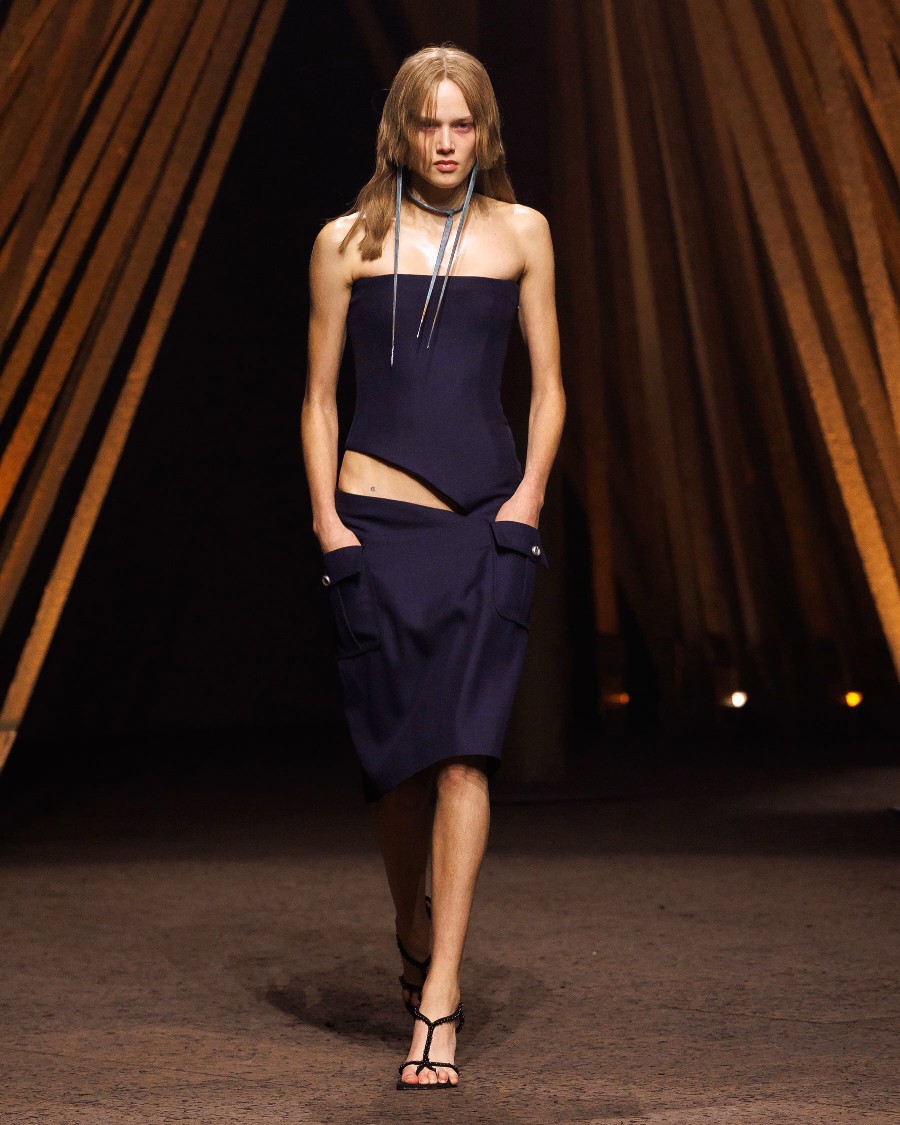
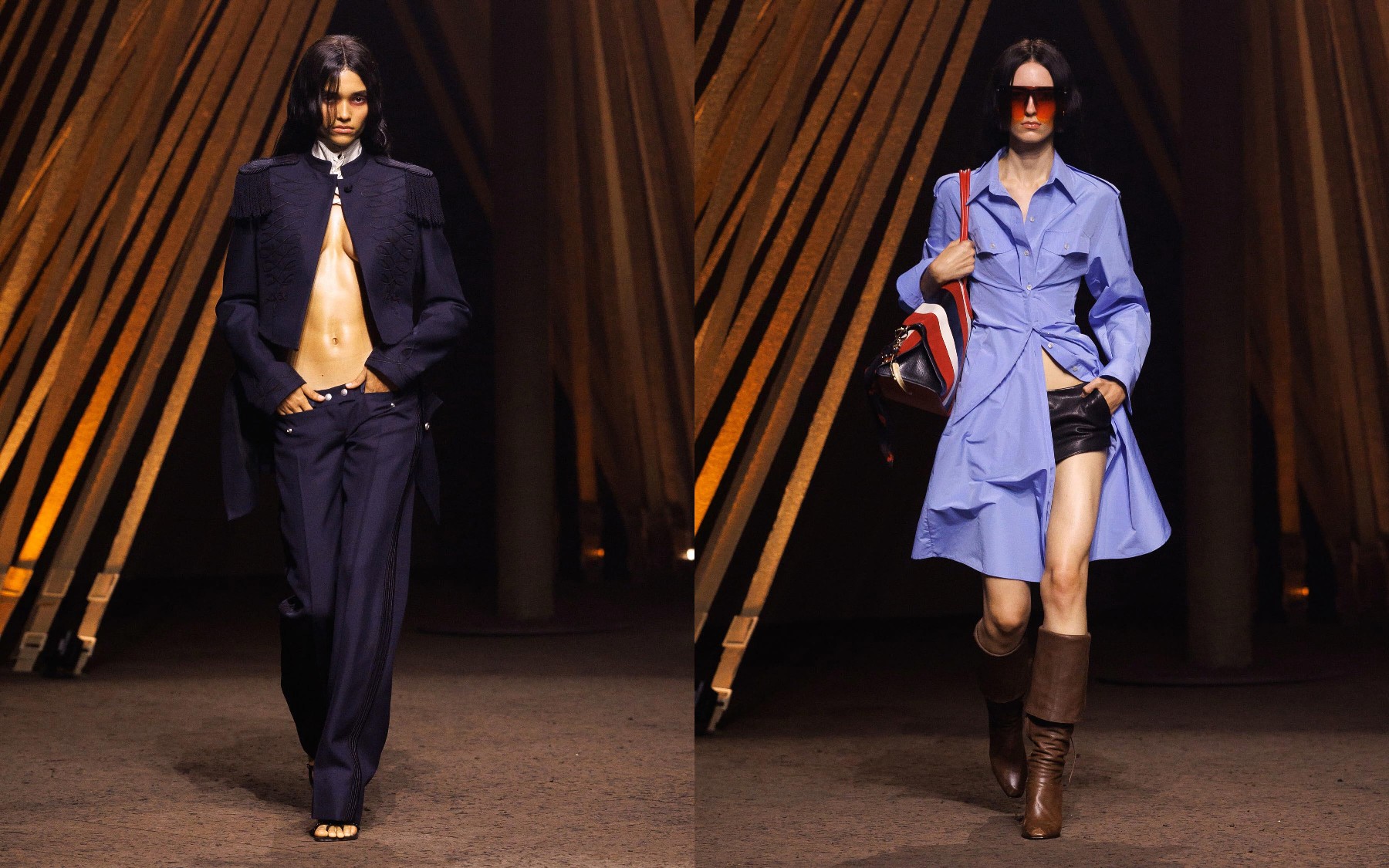
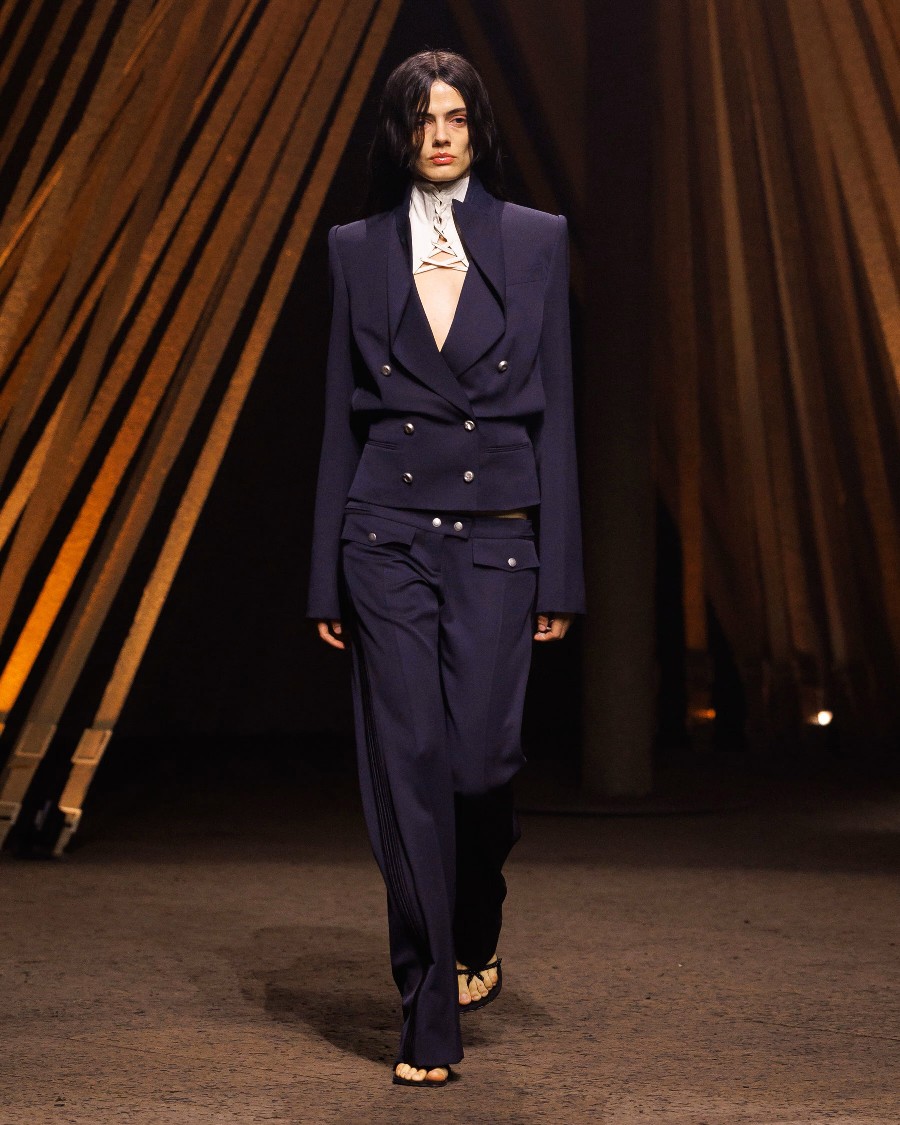
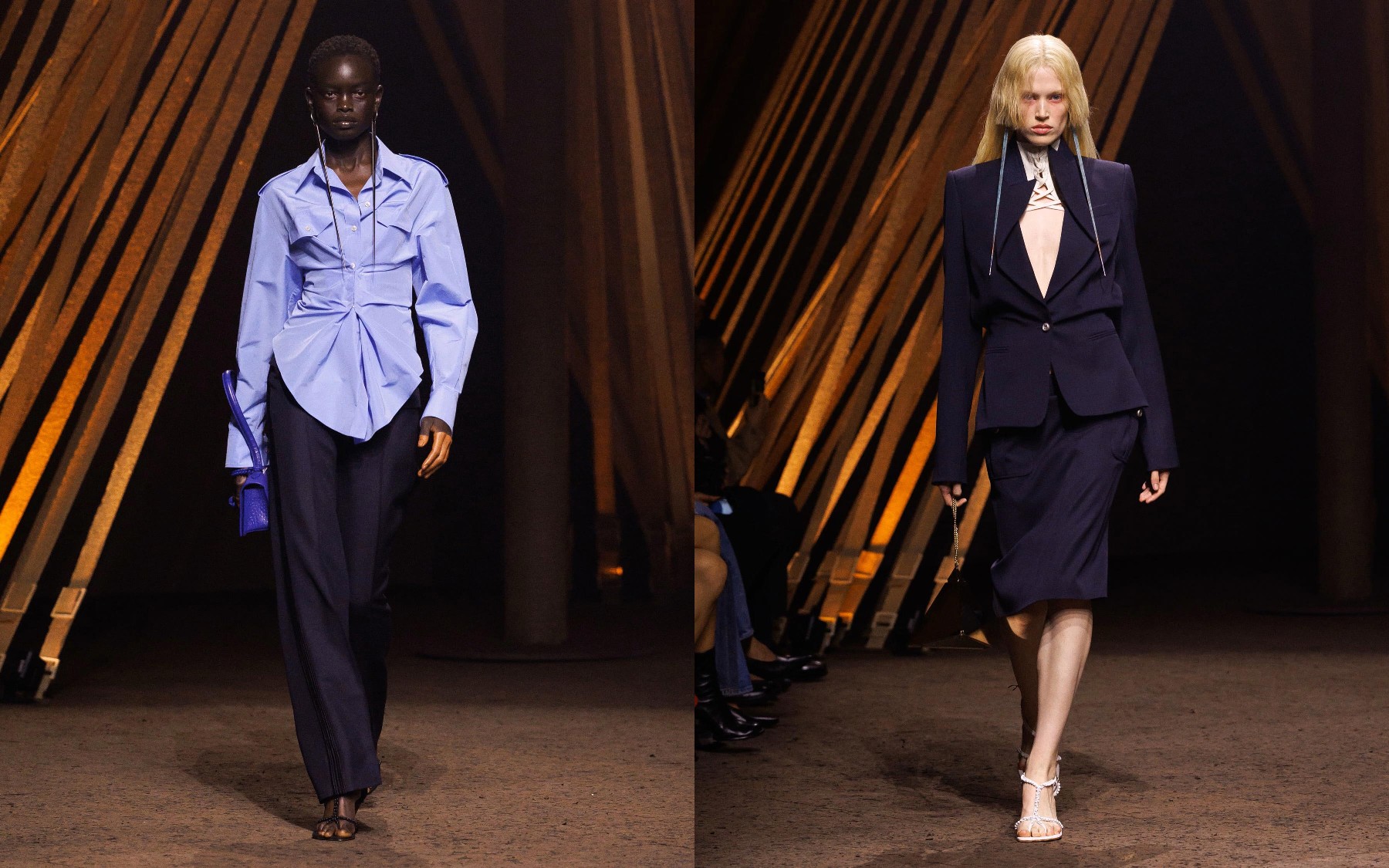
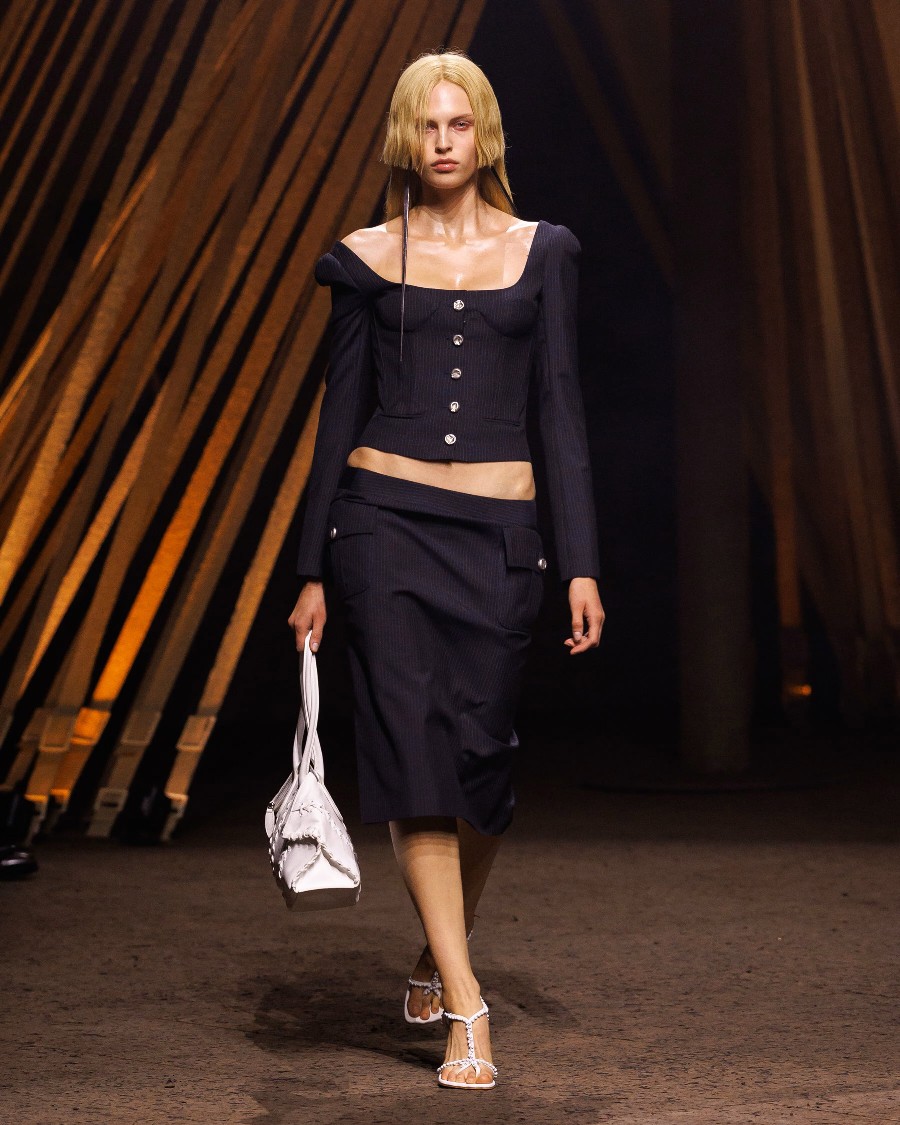
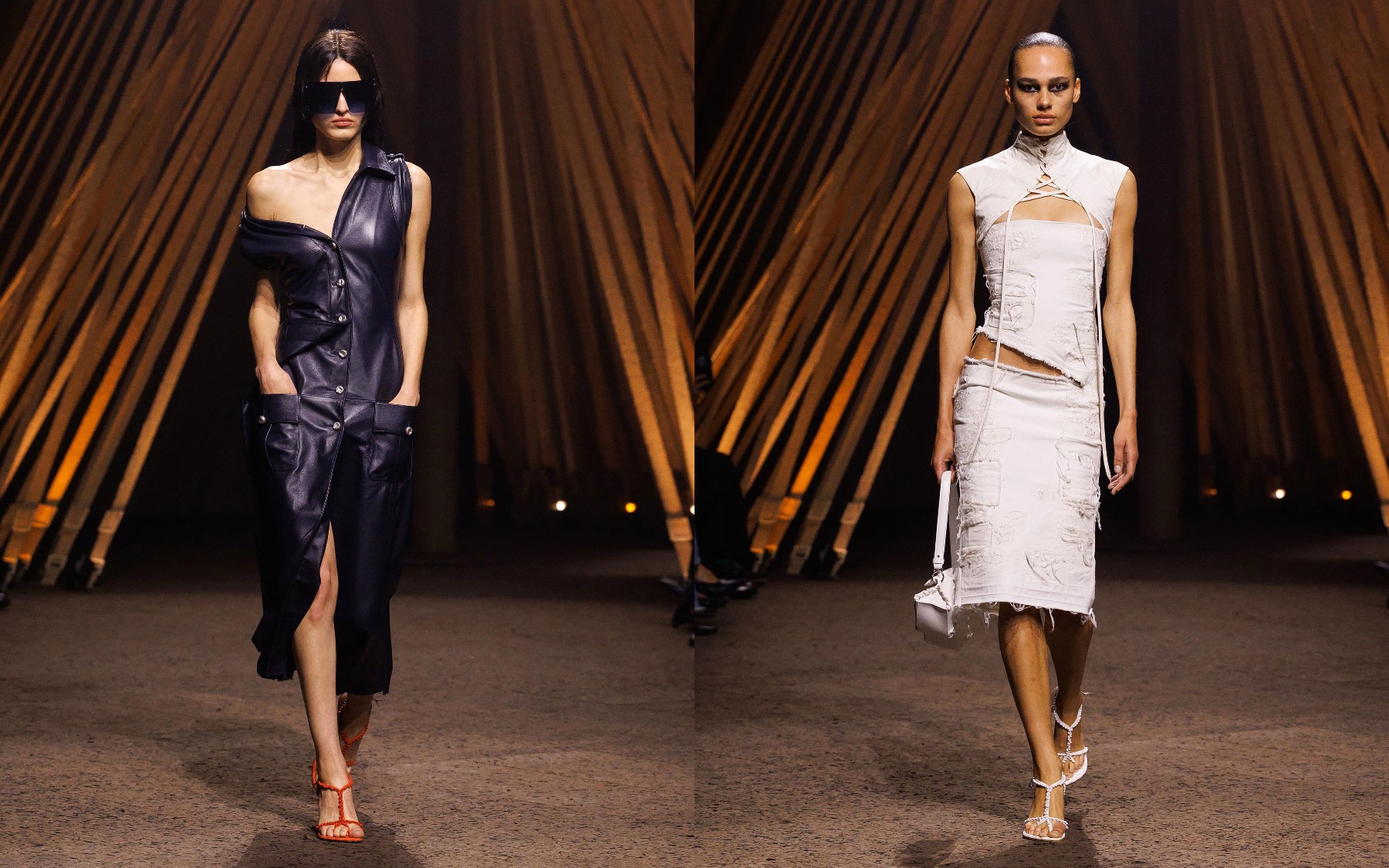
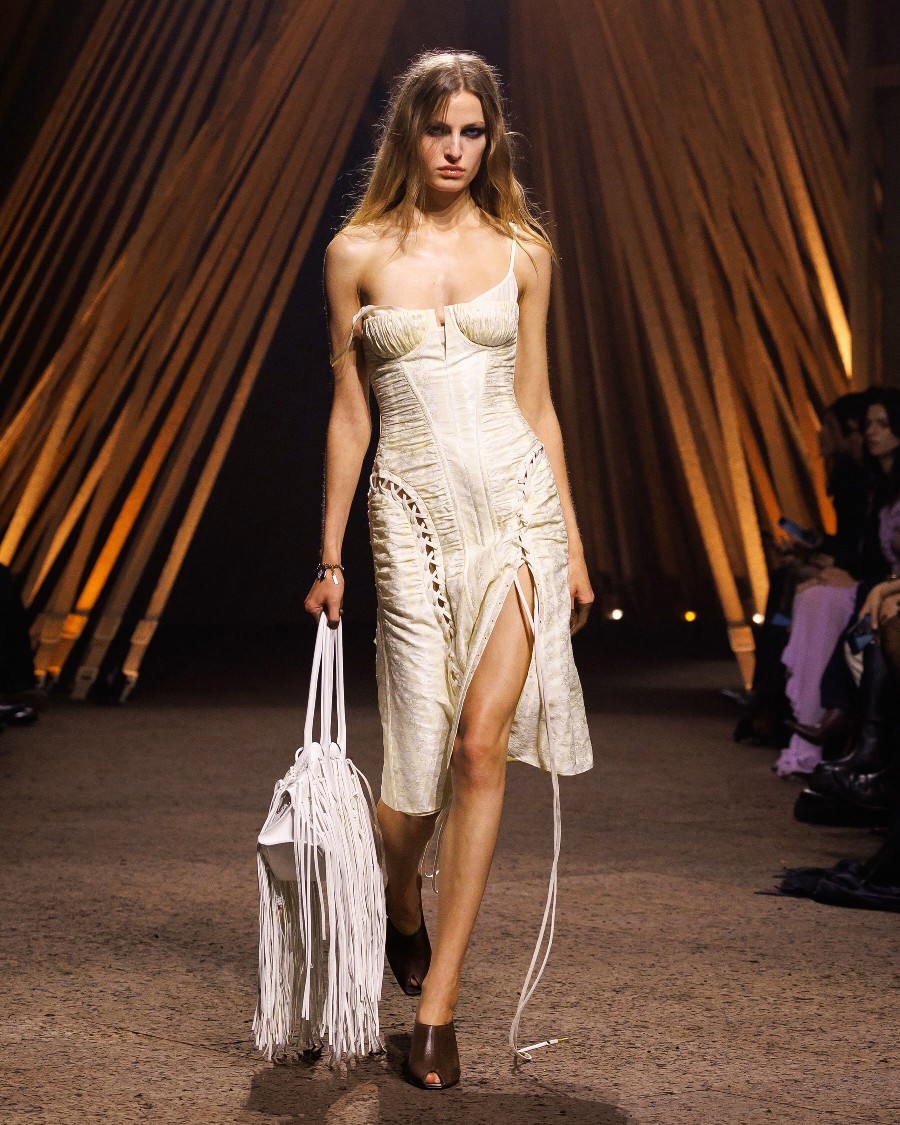
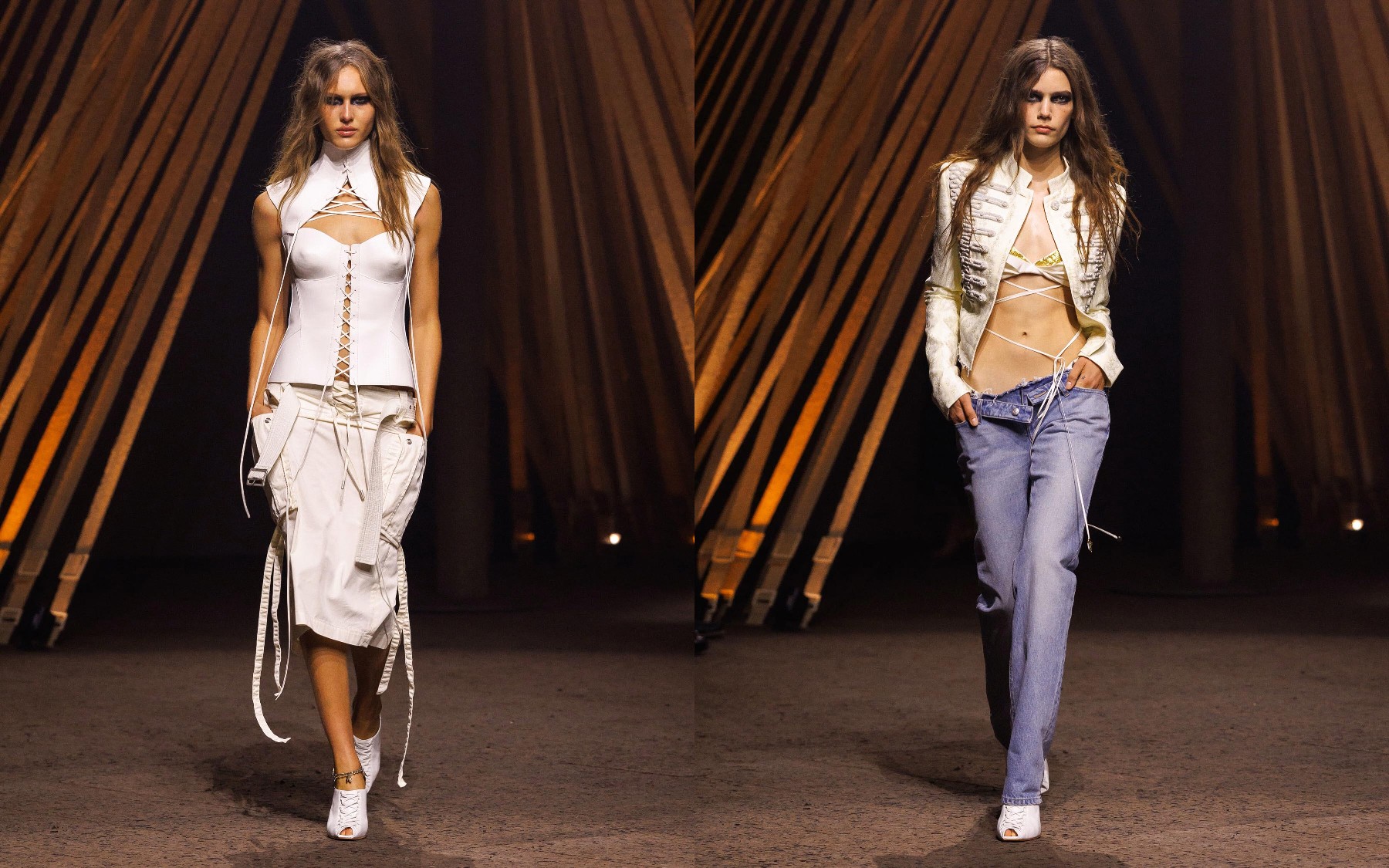
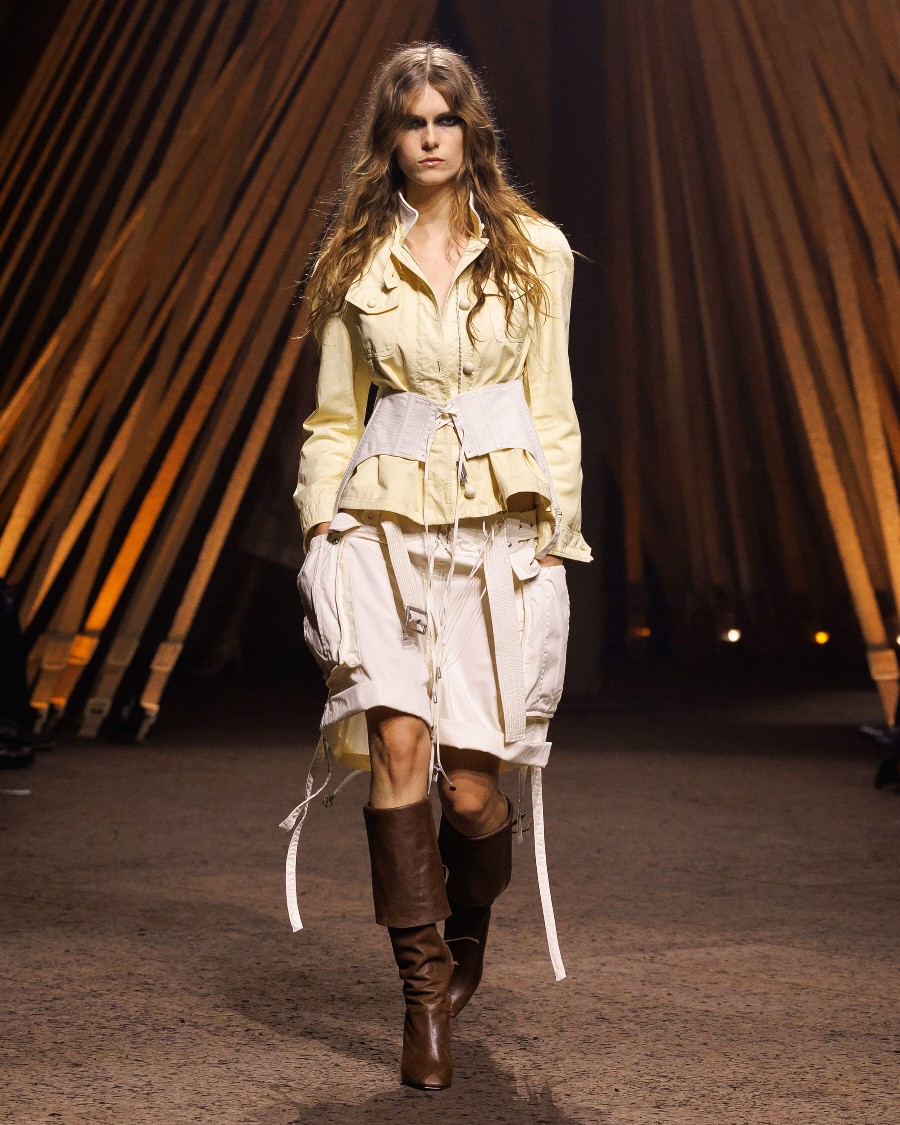
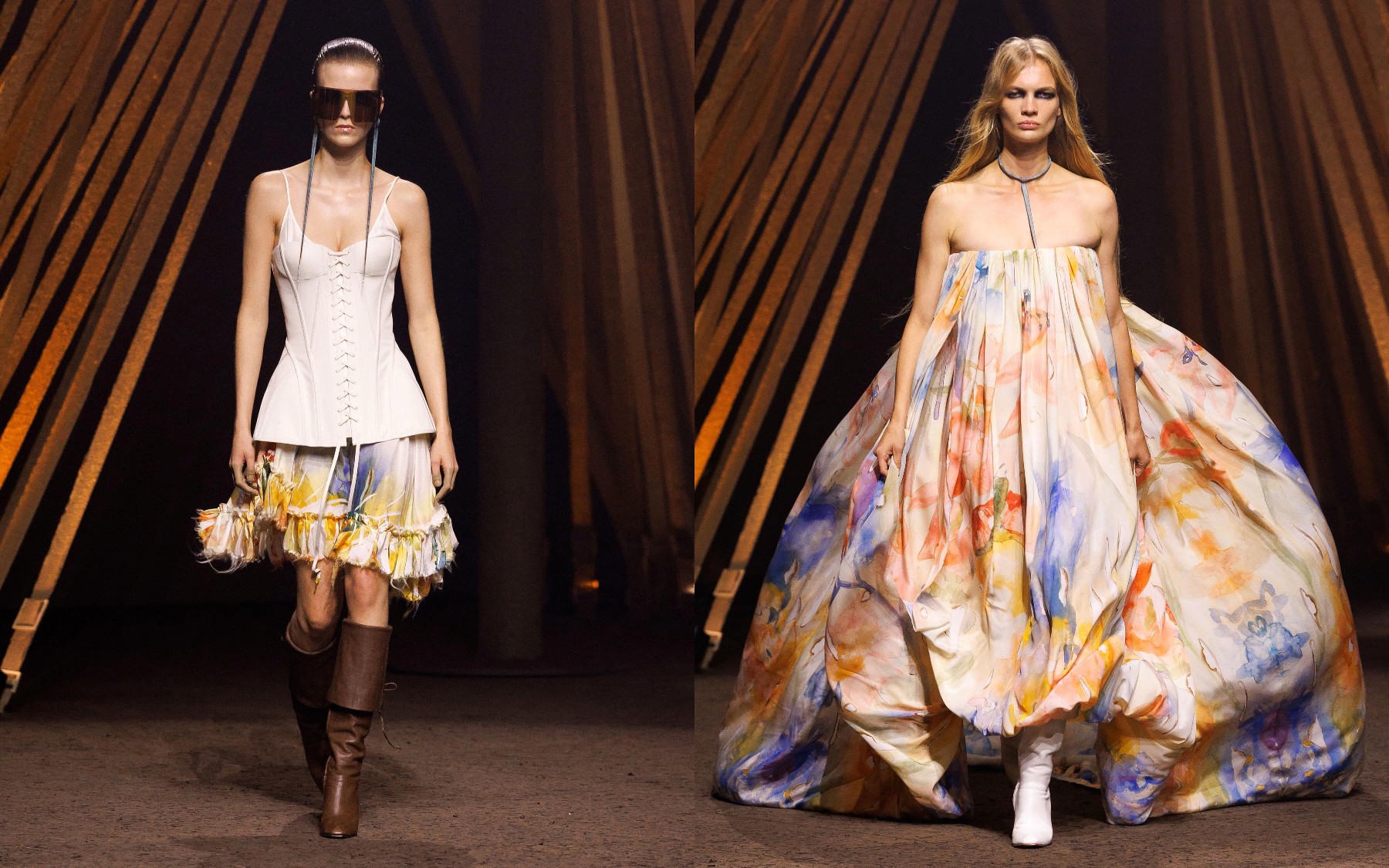
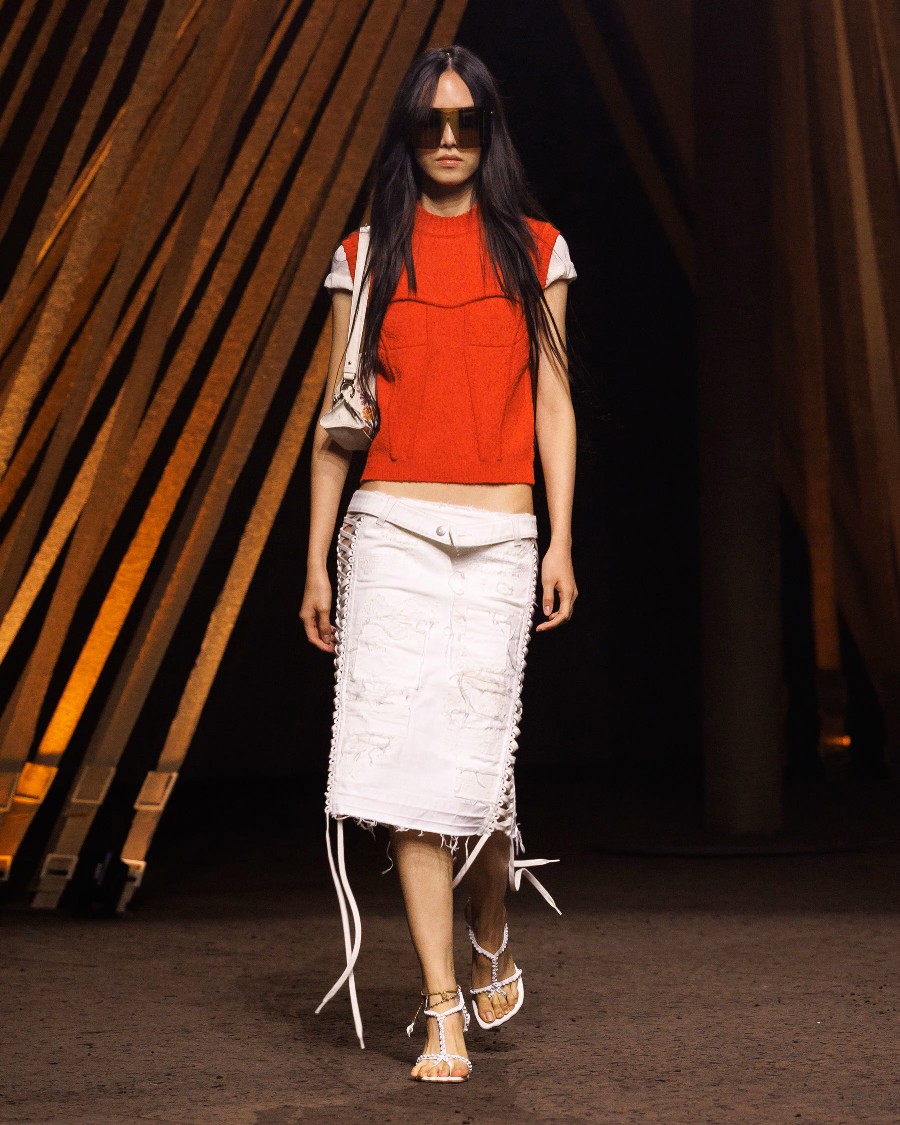
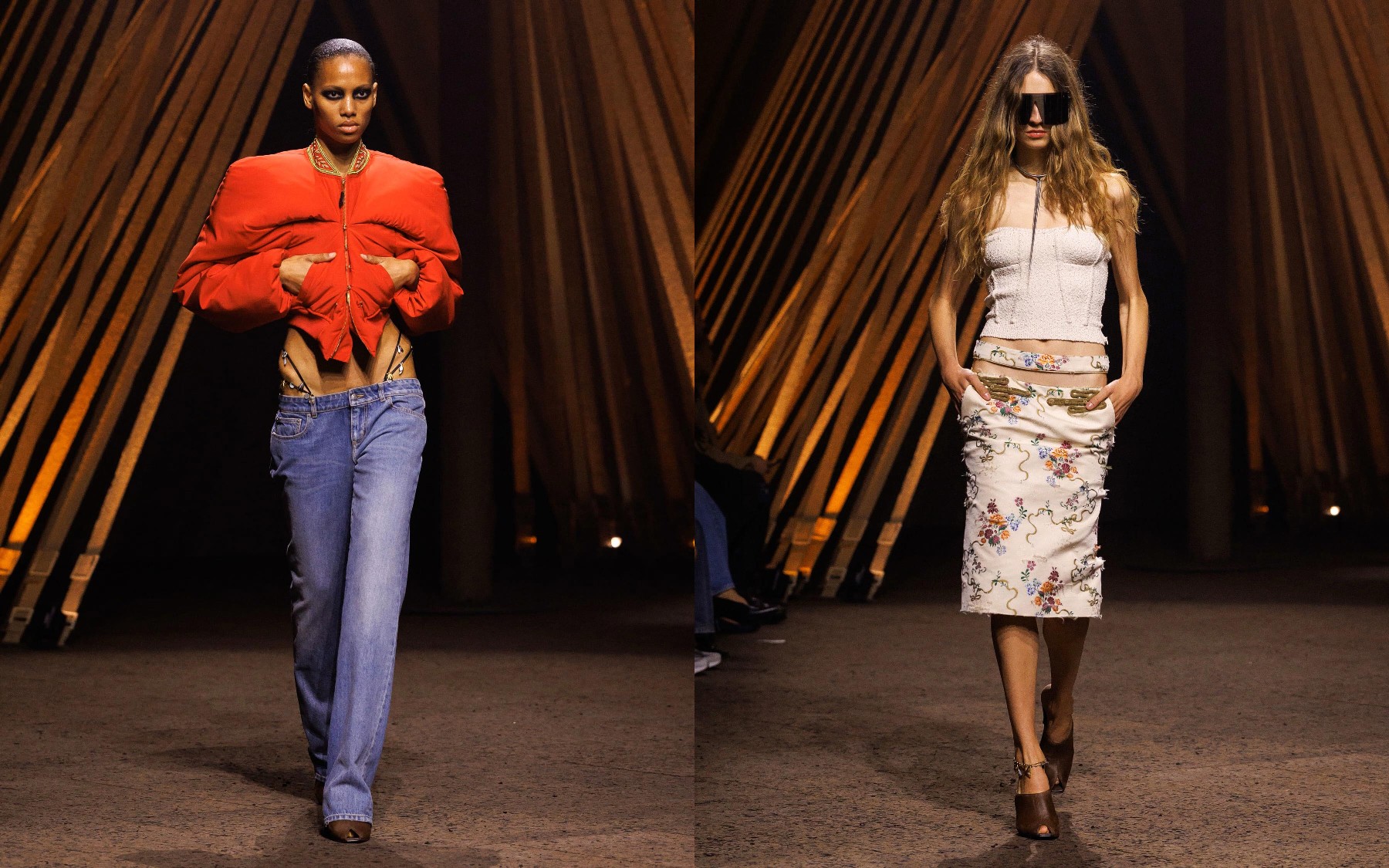
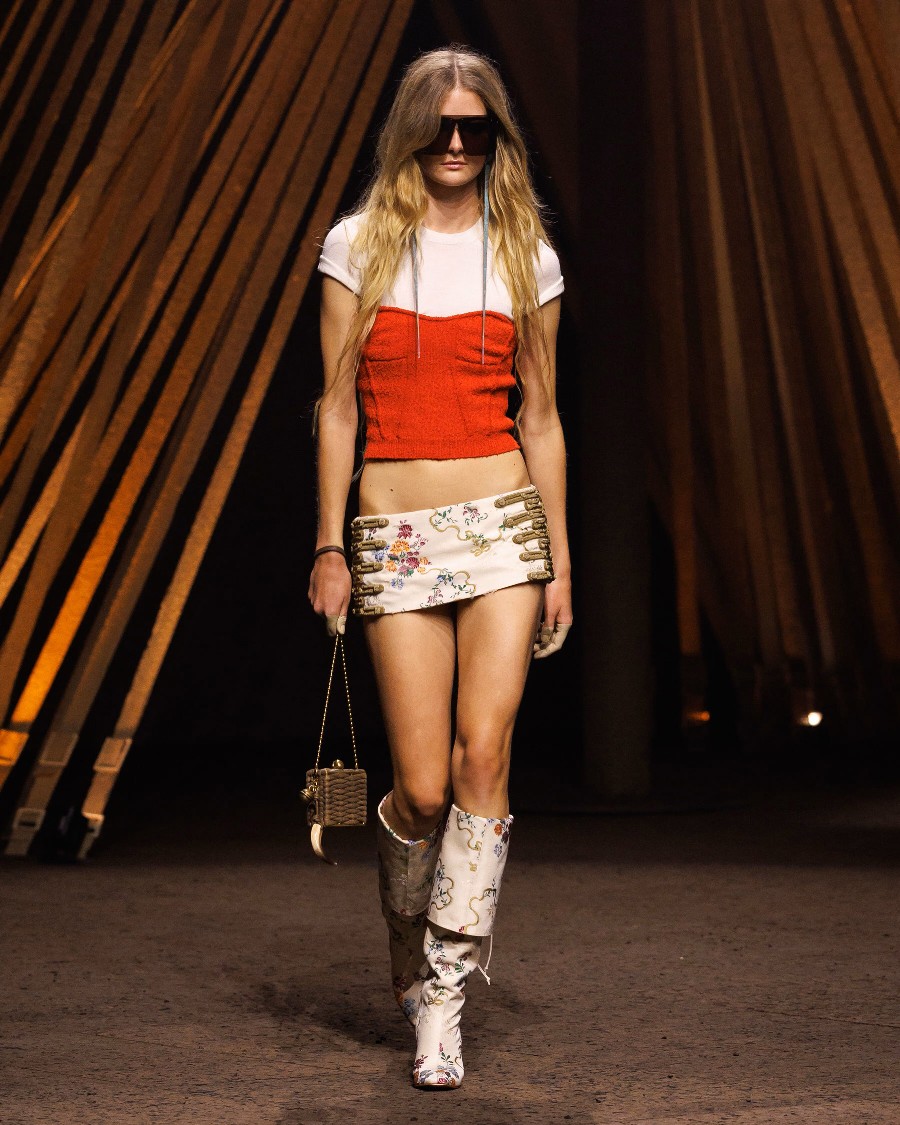
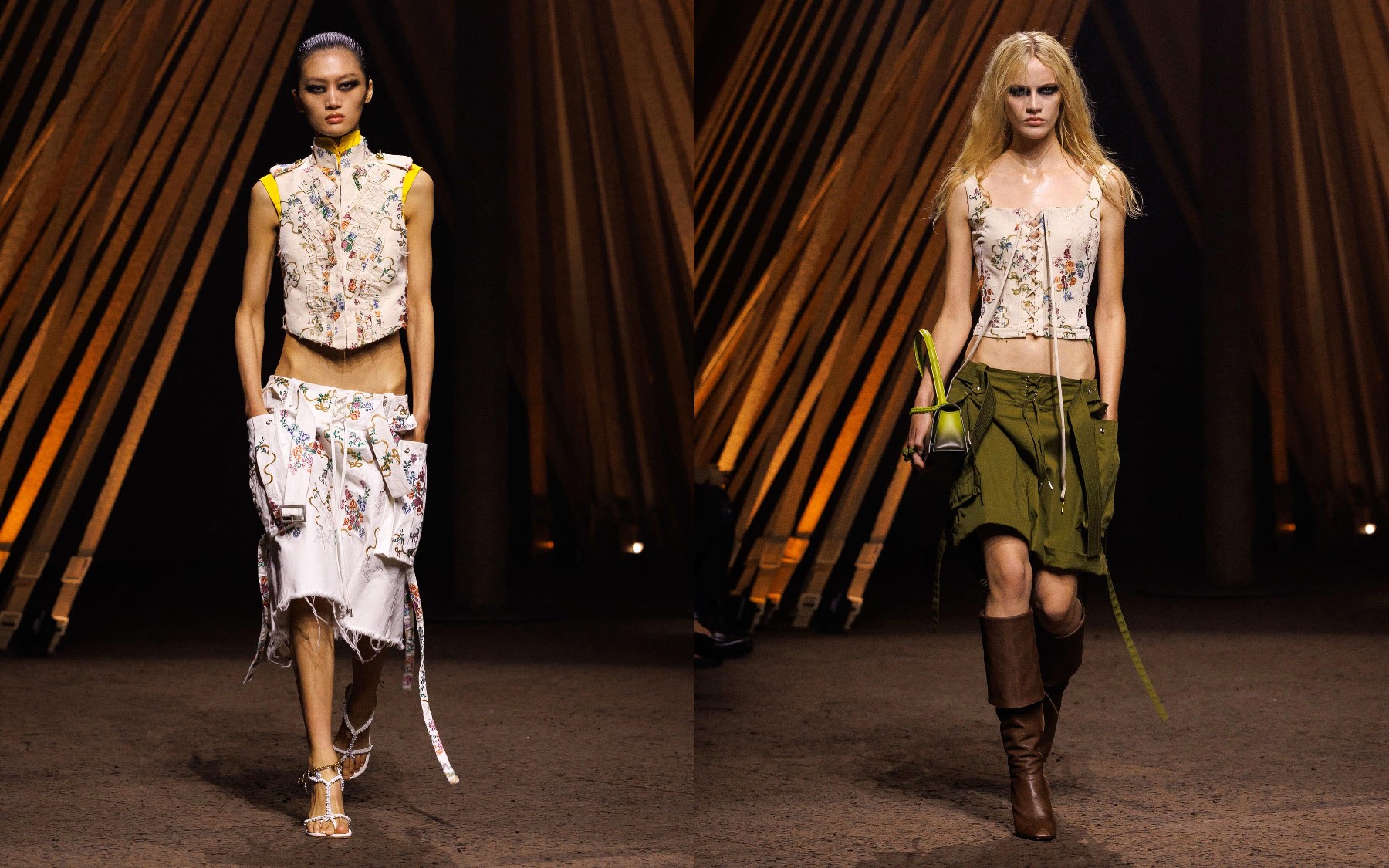
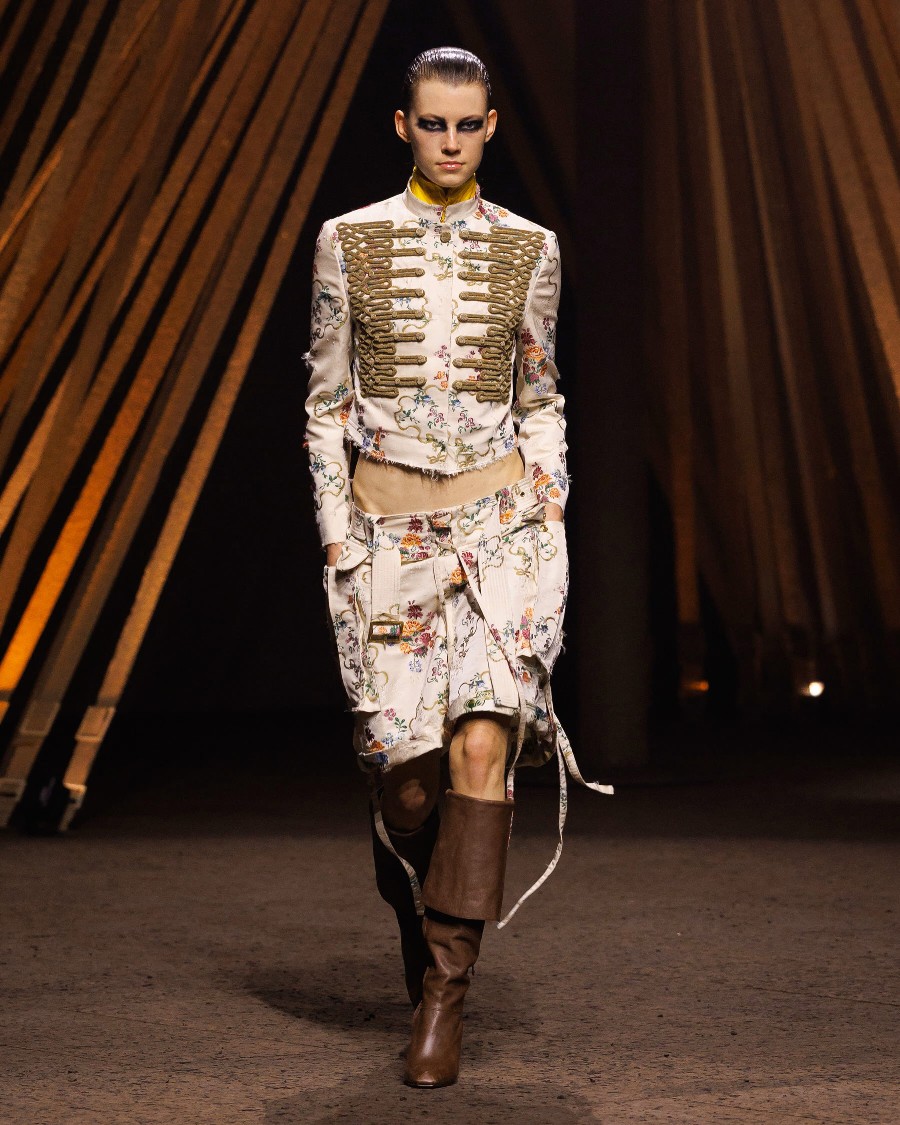
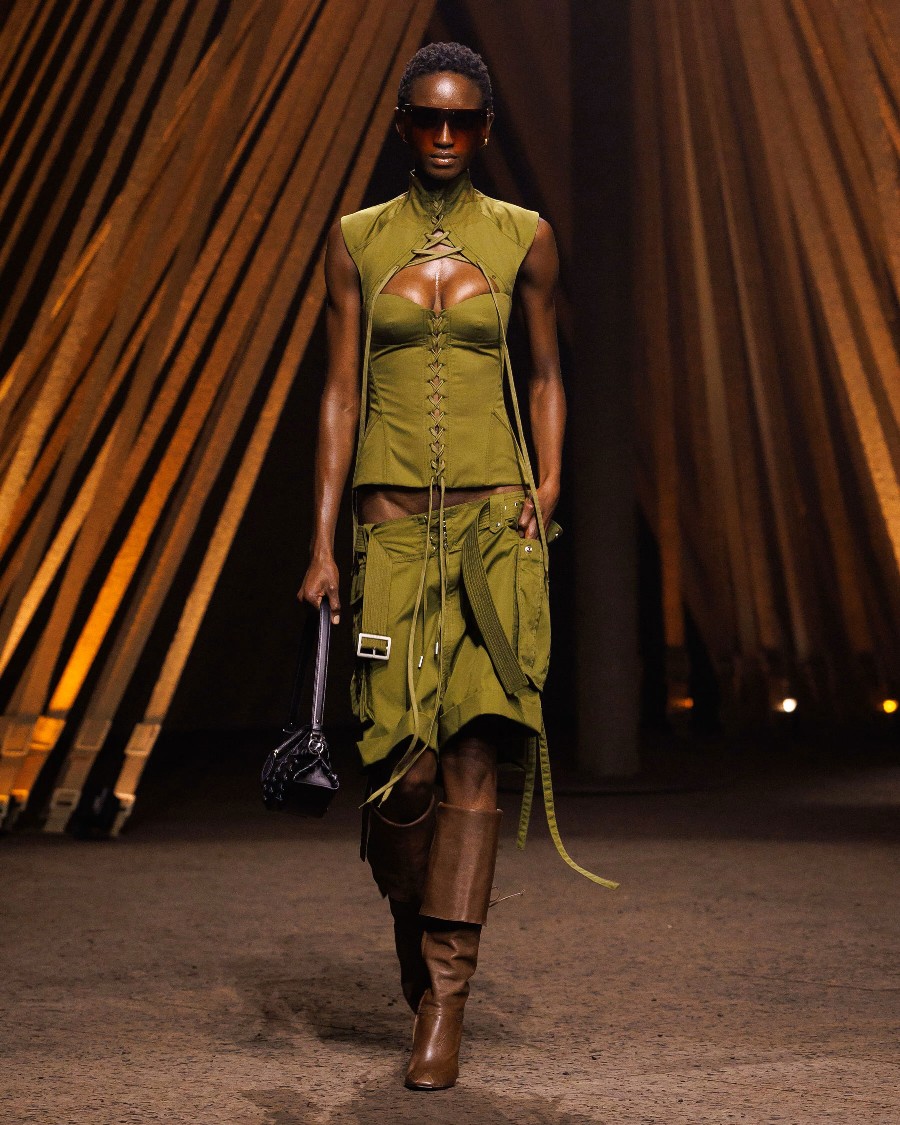
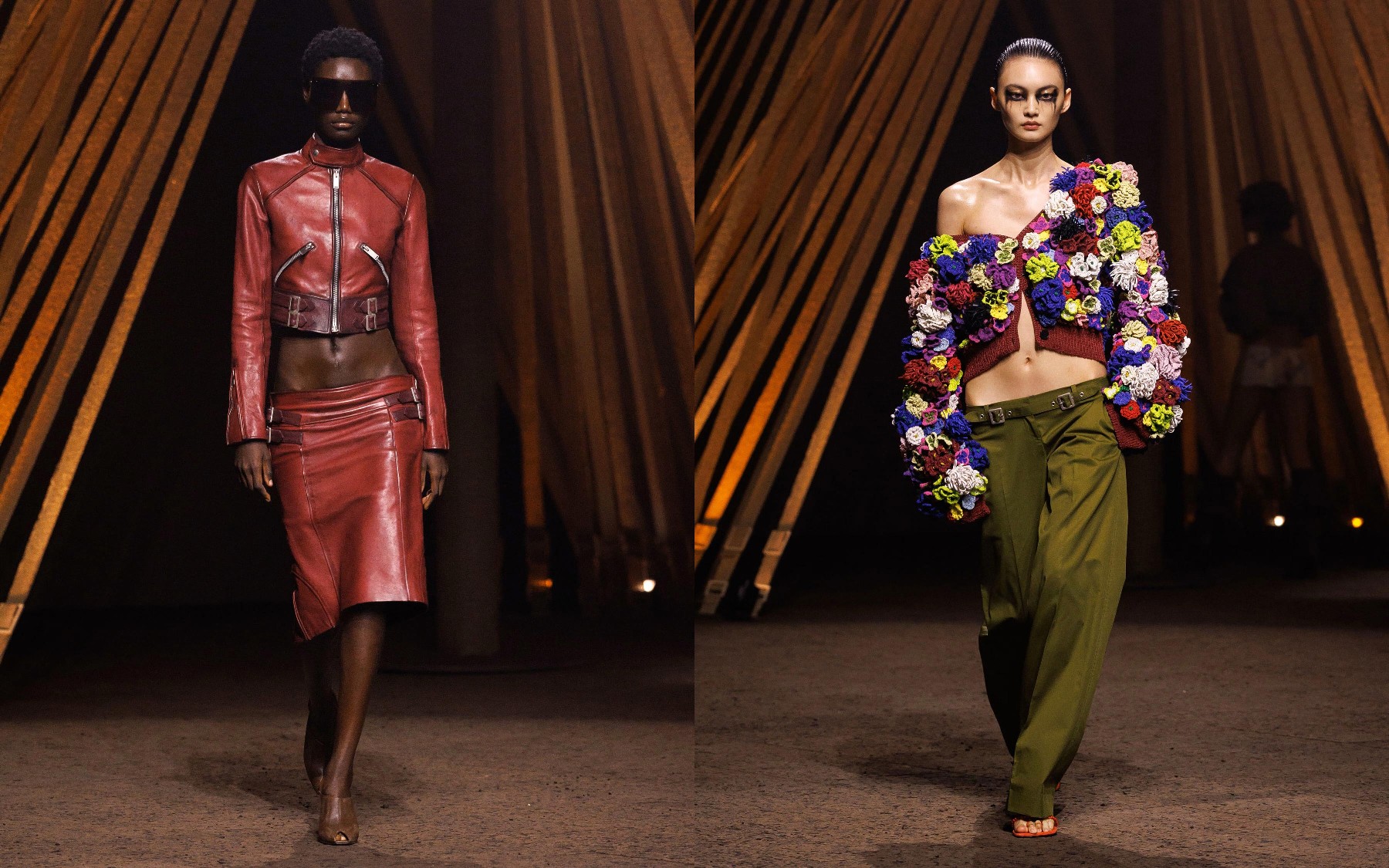
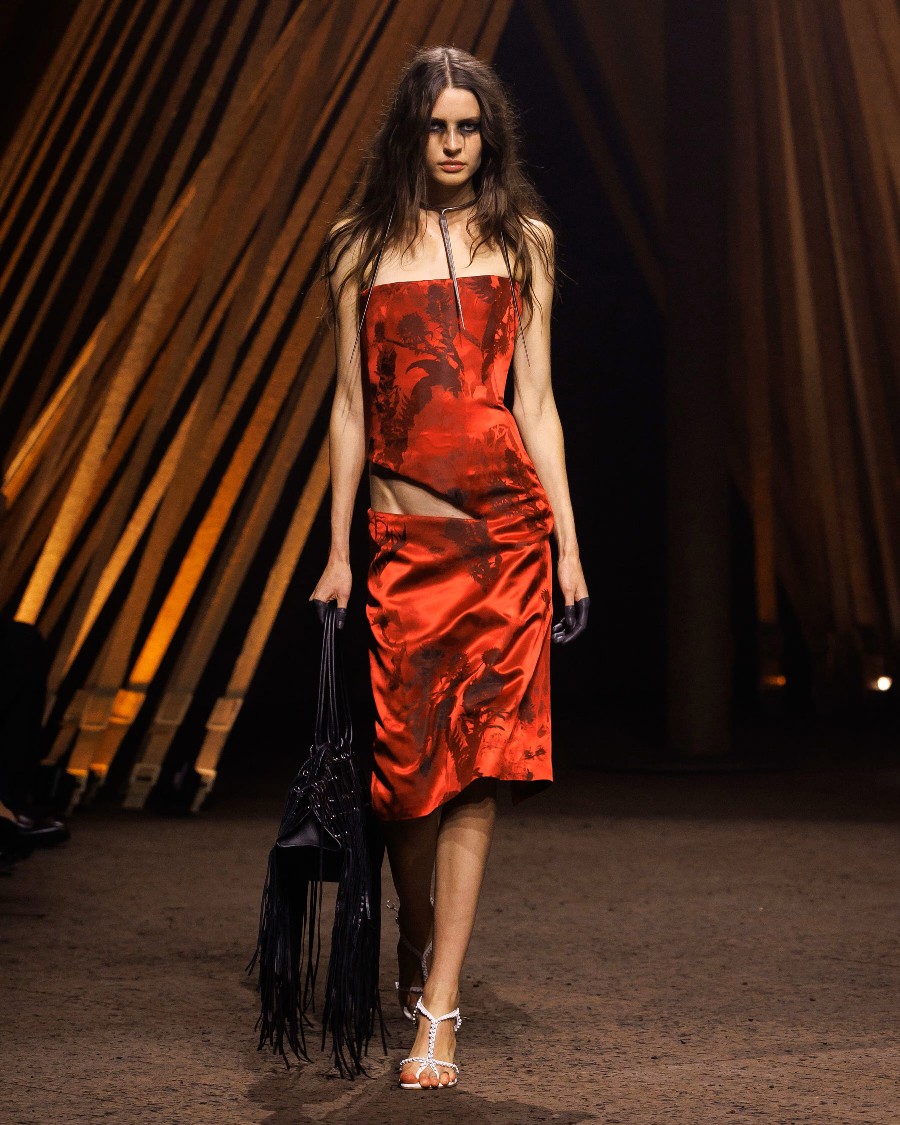
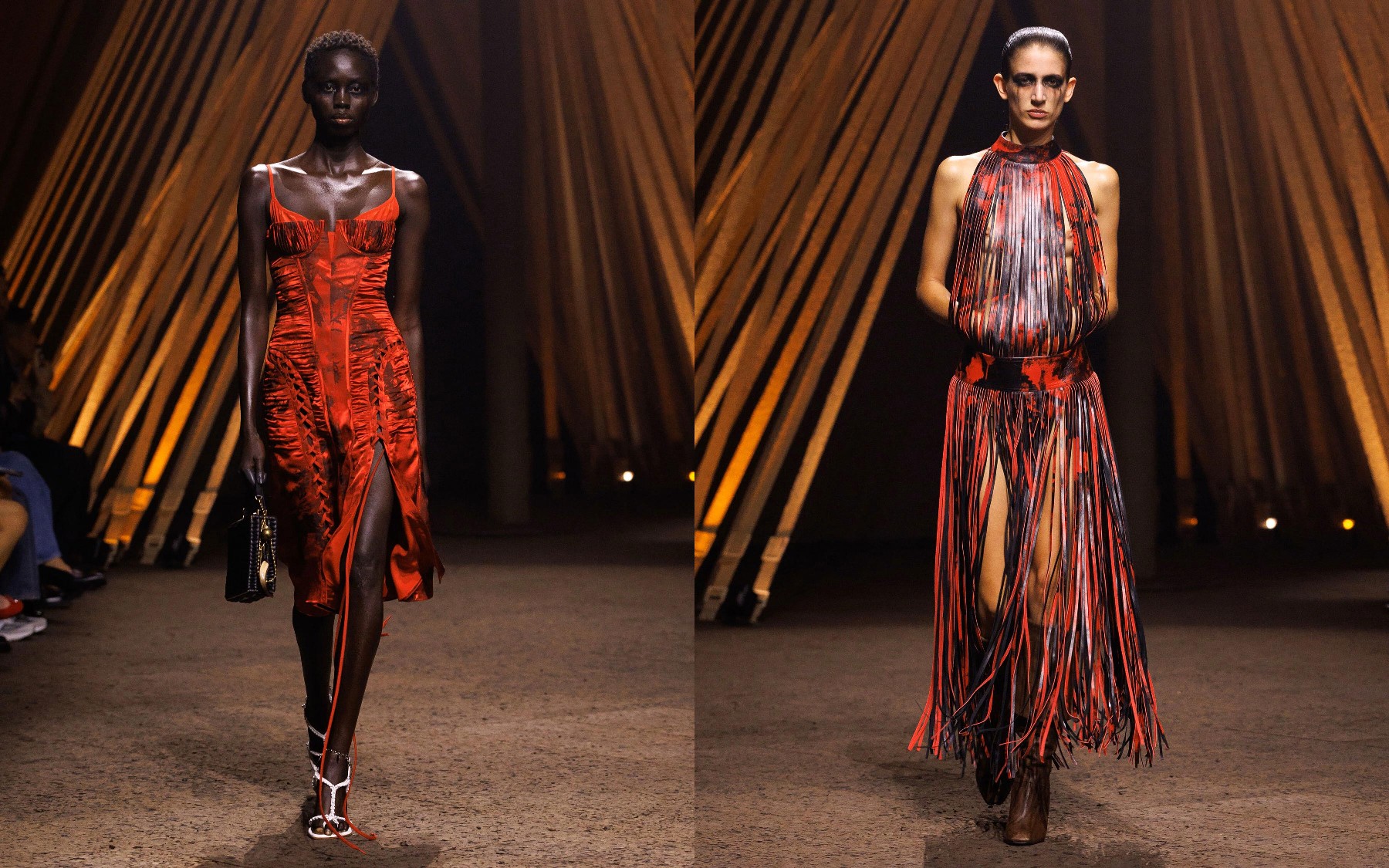
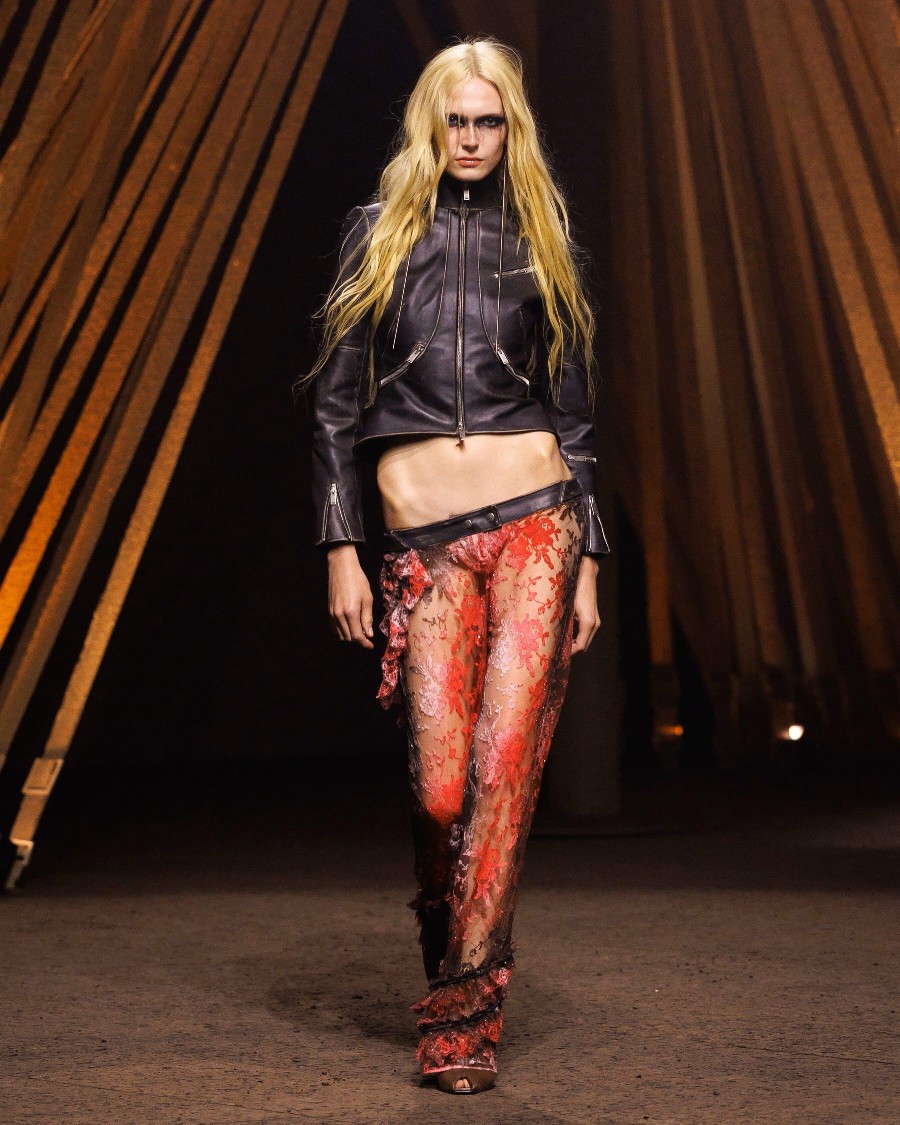
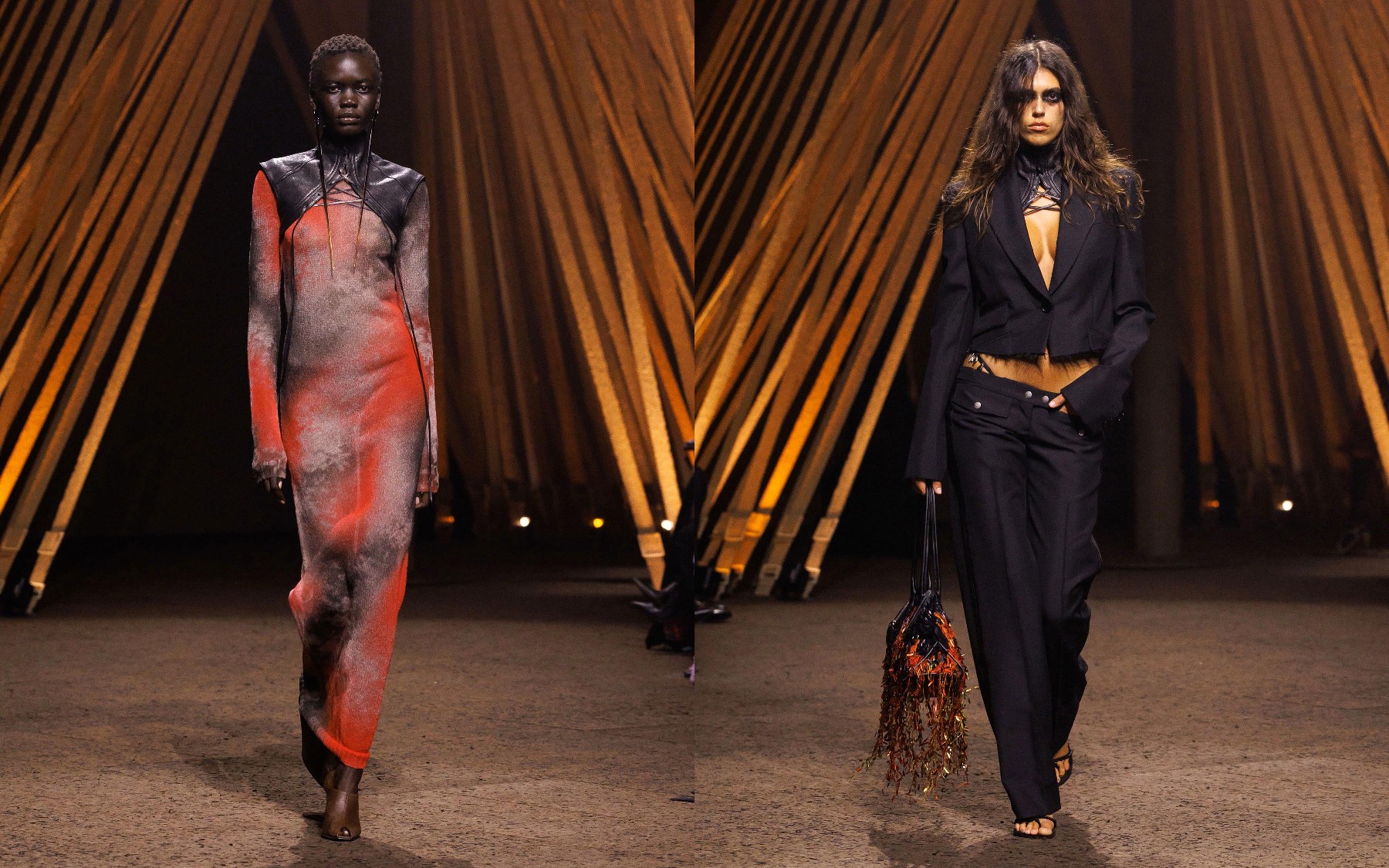
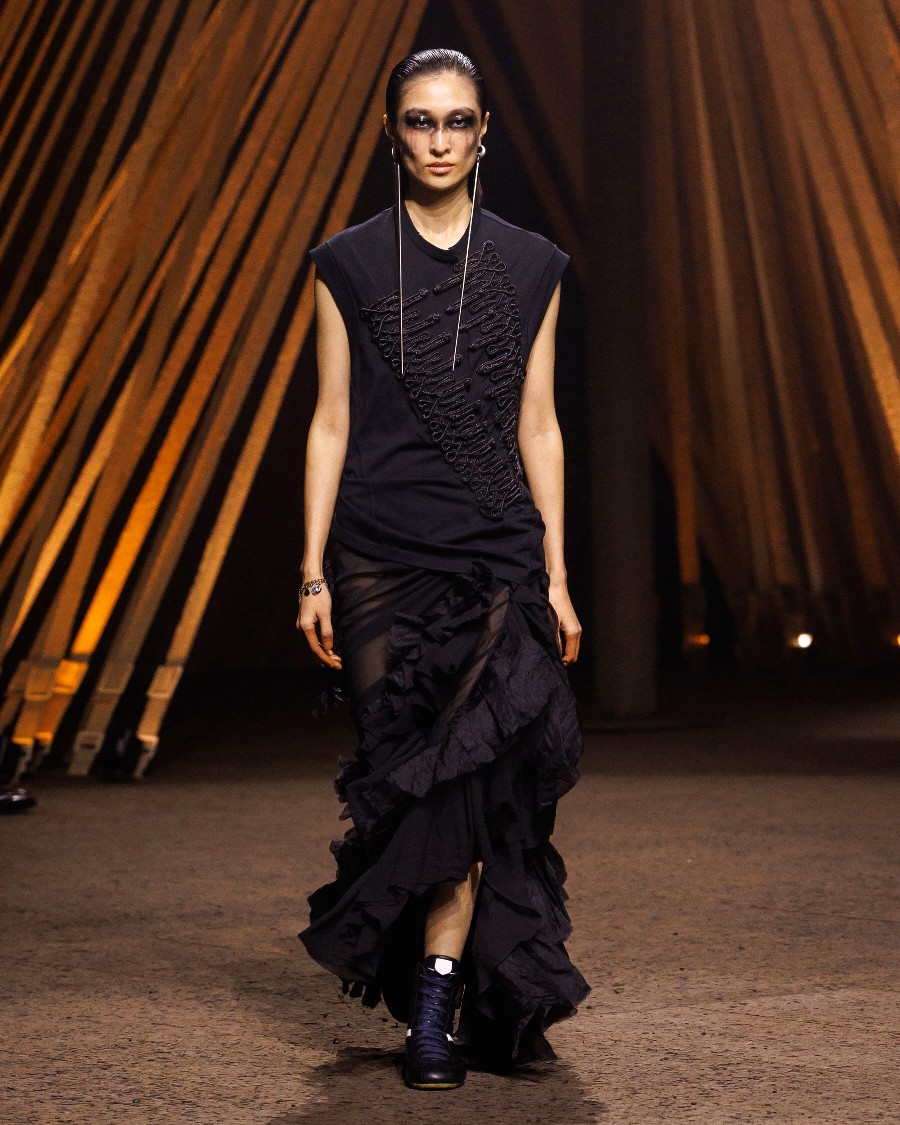
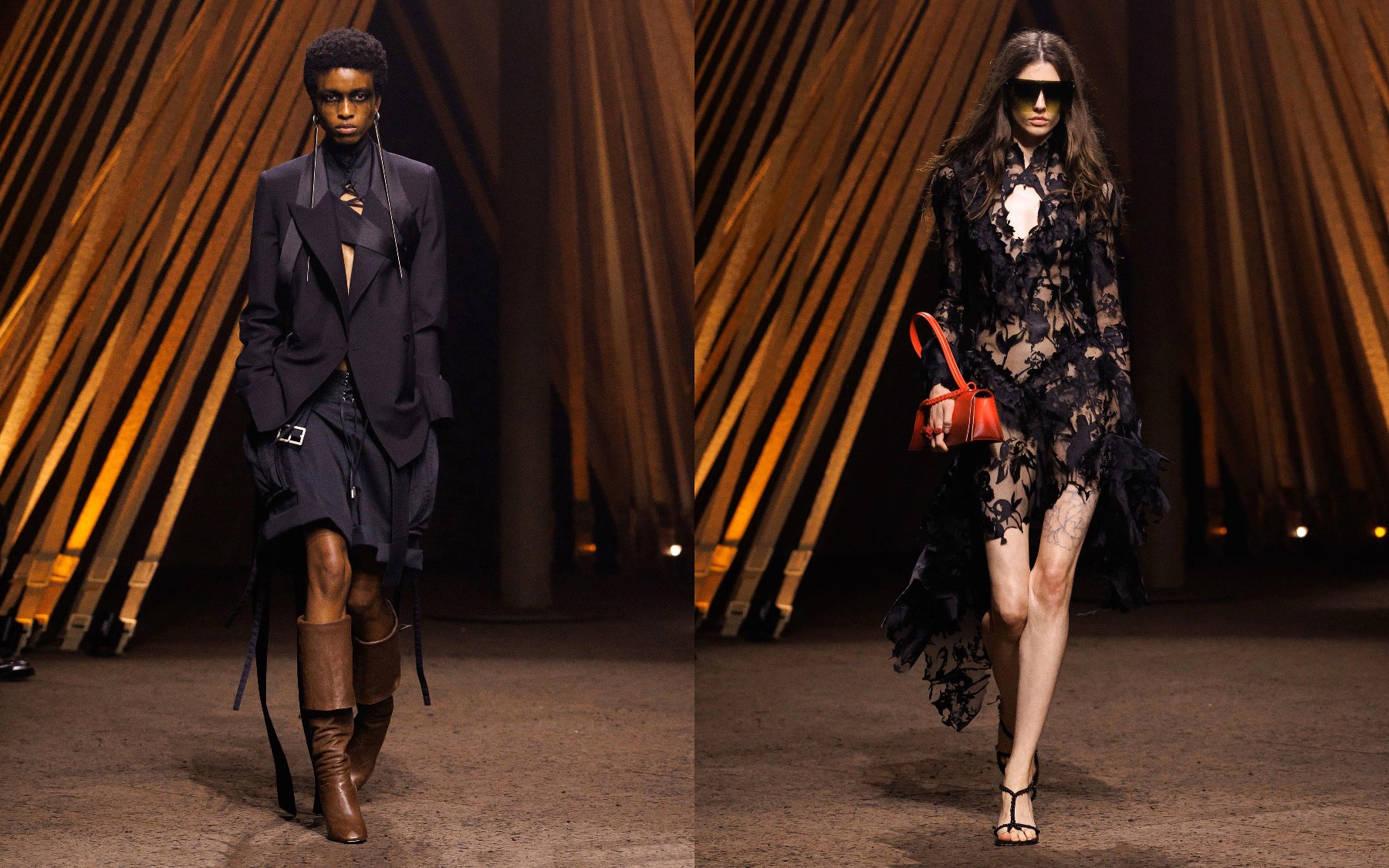
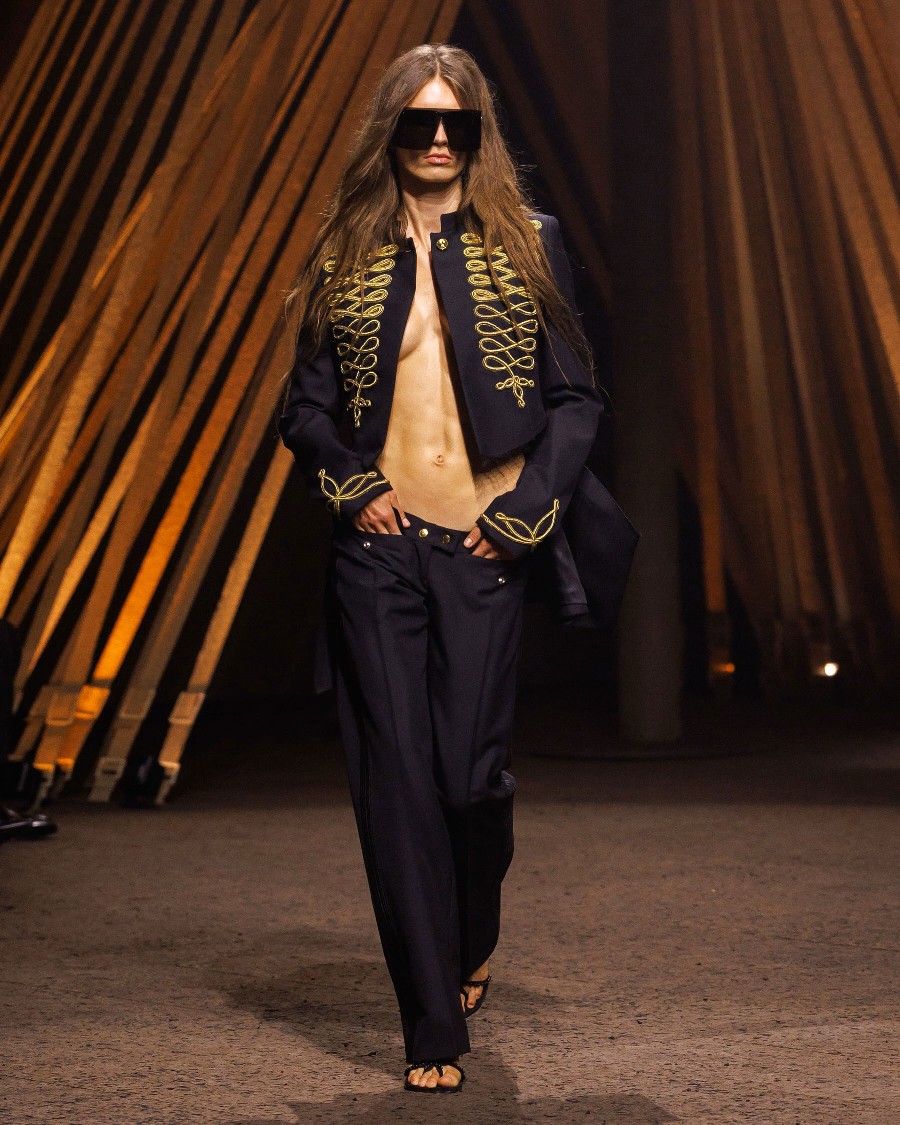
The conceptual anchor was The Wicker Man, directed by Robin Hardy, a film steeped in pagan ritual, repression, and release. That cinematic tension translated into garments that oscillated between authority and surrender. British military jackets were sharply cut yet subverted with displaced patch pockets and slashed constructions. Corsetry, historically restrictive, was liberated, applied to jacquards and boots without constraint.
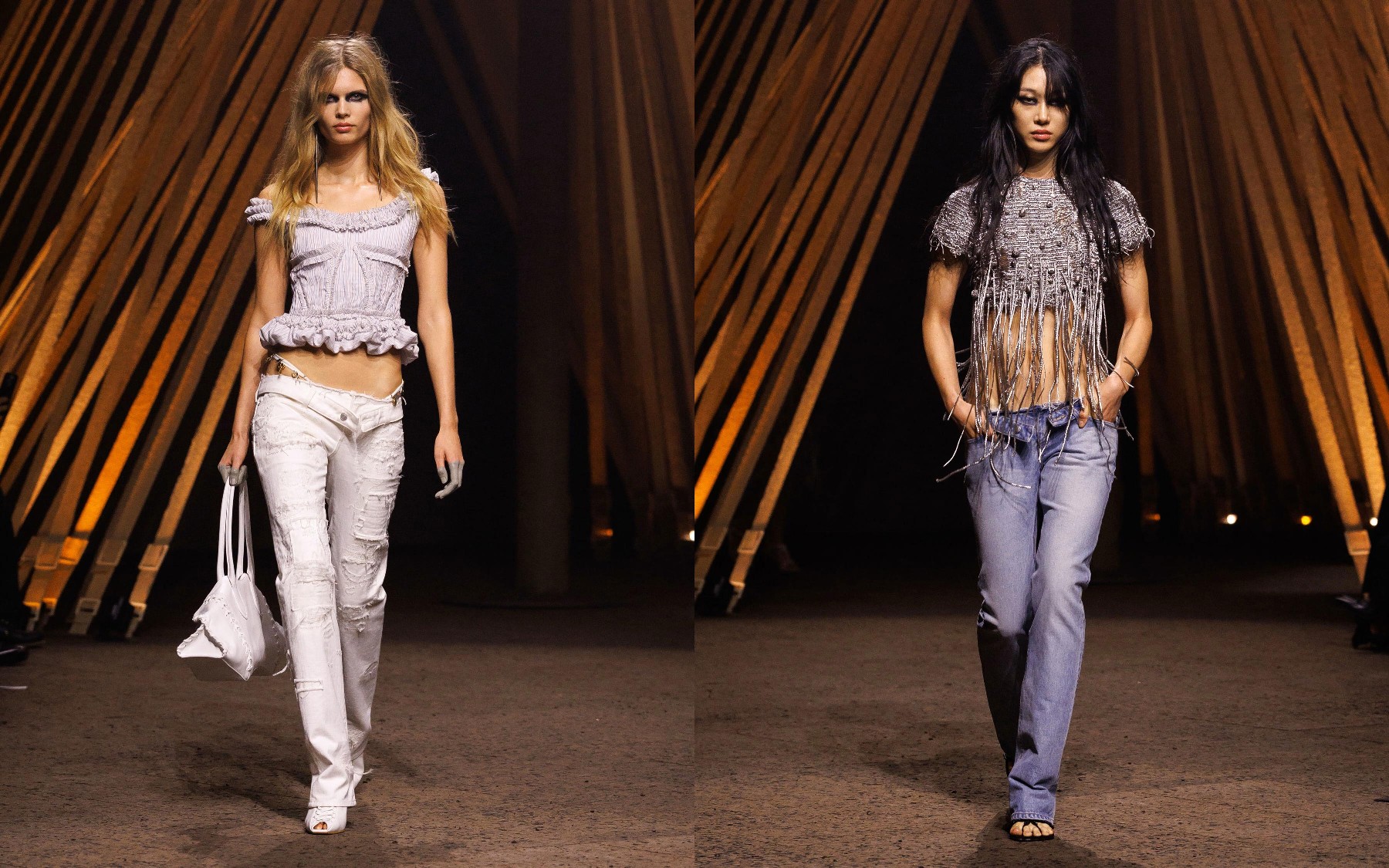
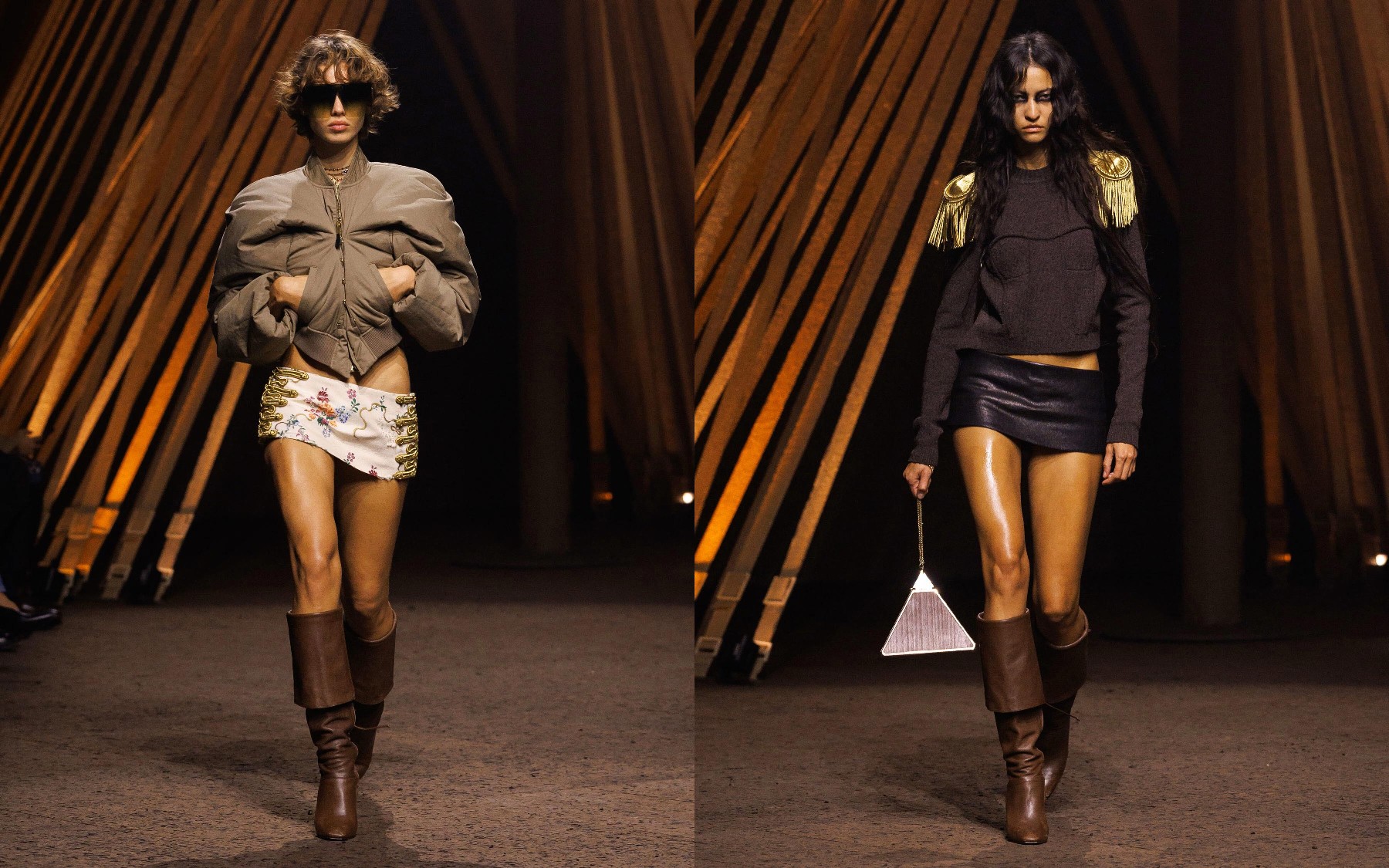
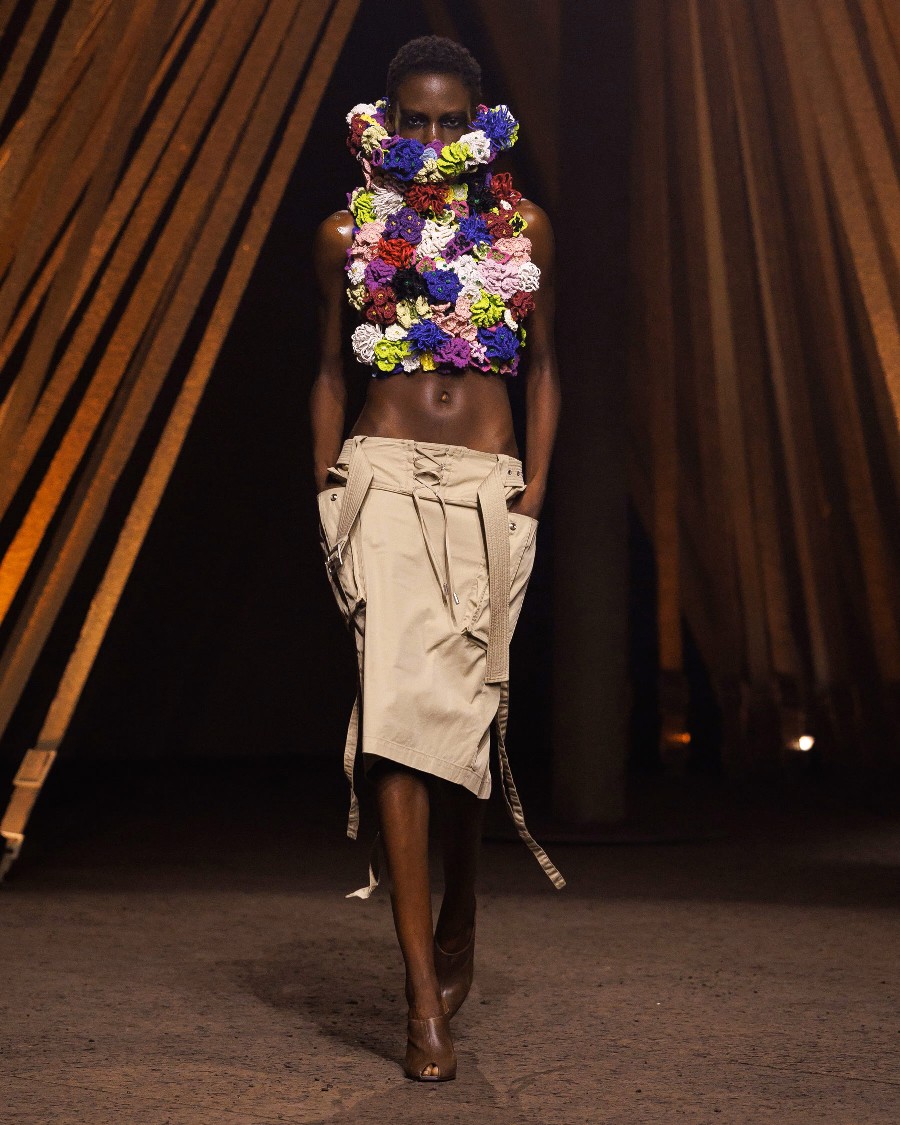
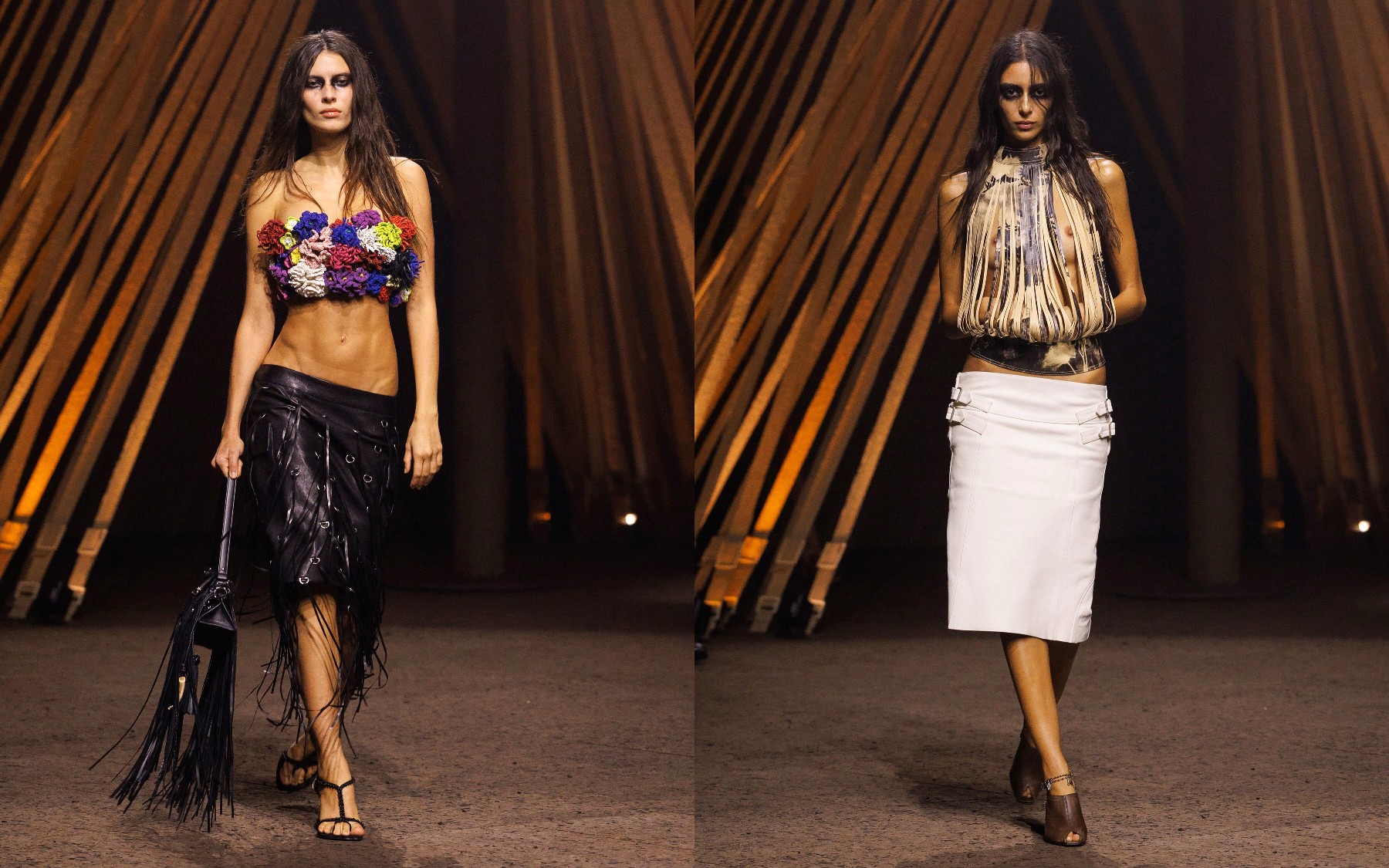
The house’s technical tailoring heritage remained intact, but it was reframed through a contemporary, streetwise energy. Low-slung skirts and trousers signaled a definitive return to low-rise silhouettes, including a reinterpretation of the iconic bumster, adjustable, hardware-polished, and unapologetically sensual. The body was not hidden; it was engineered into the garment itself.
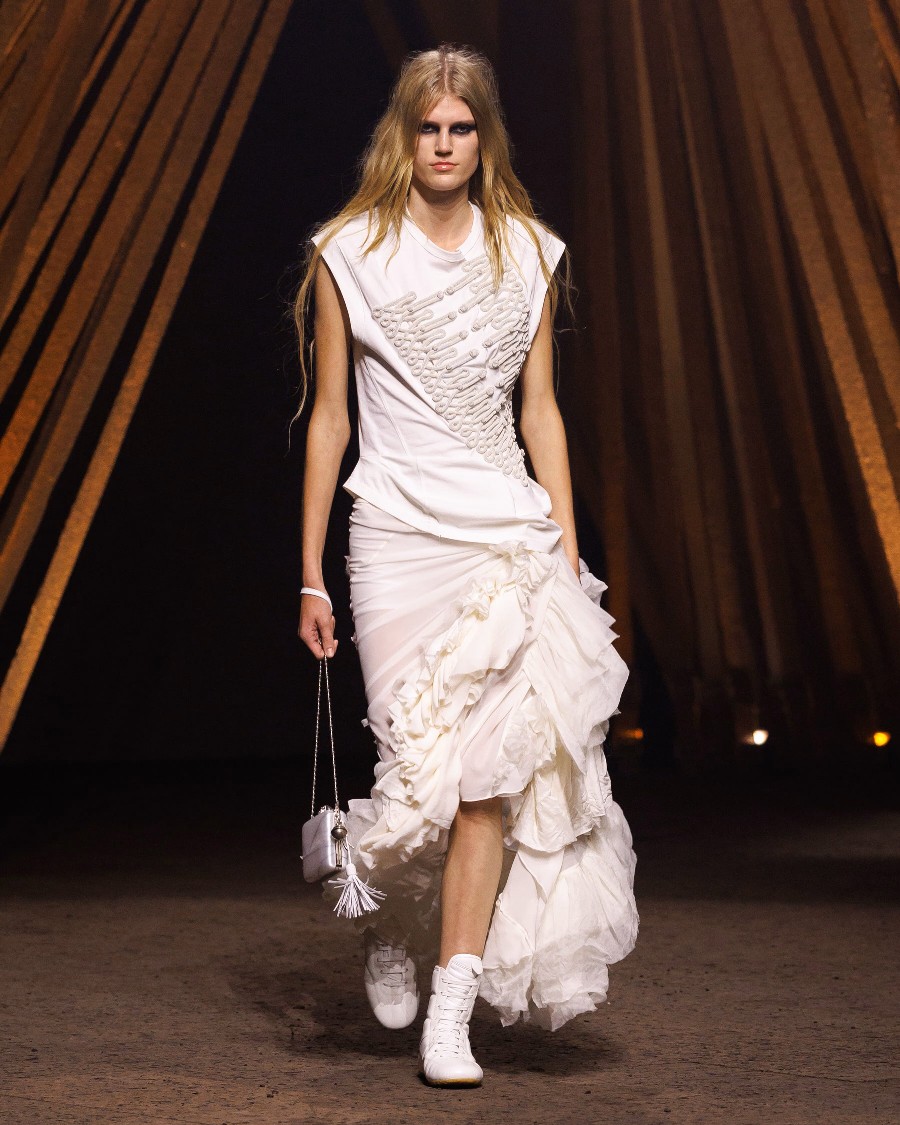
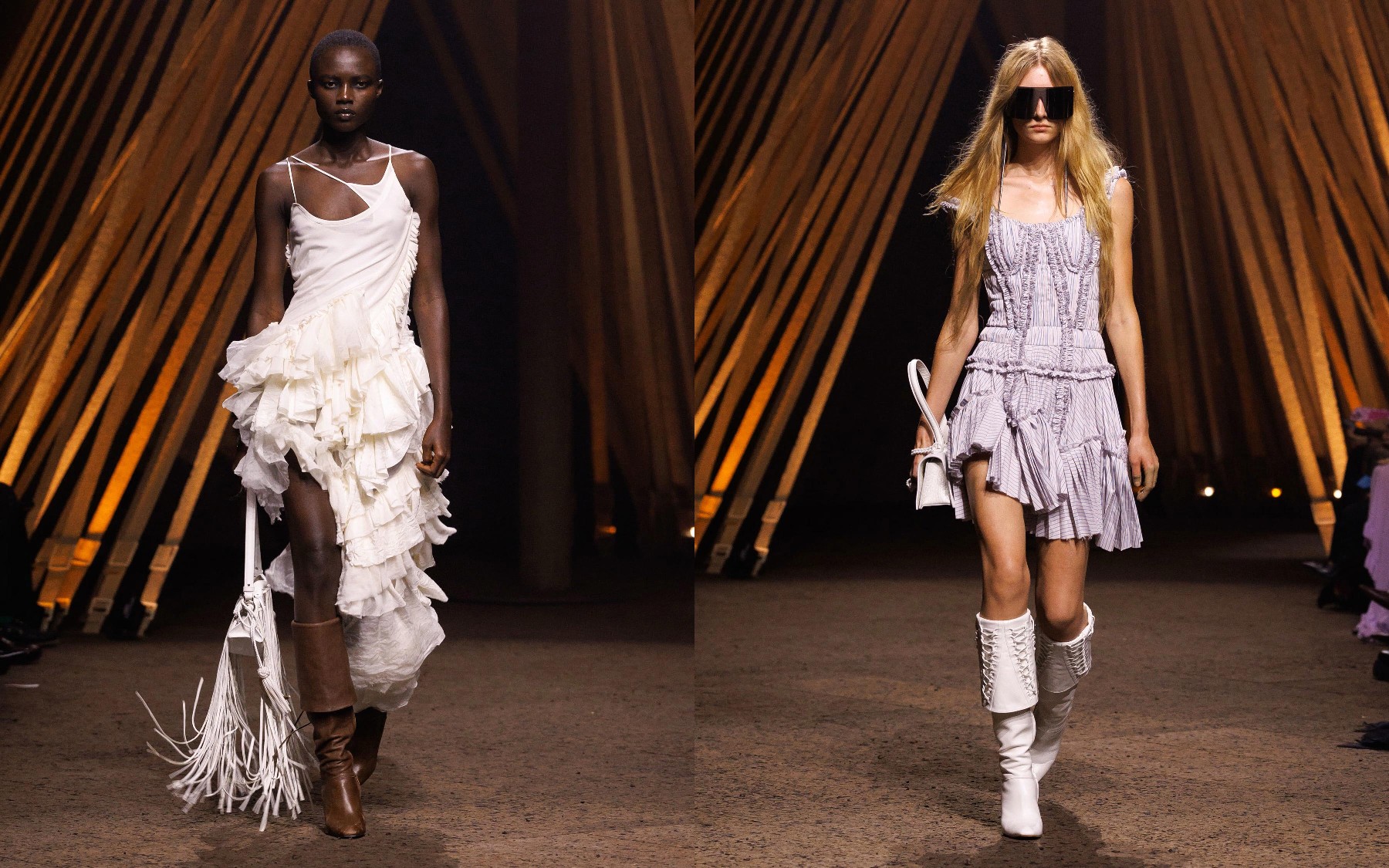
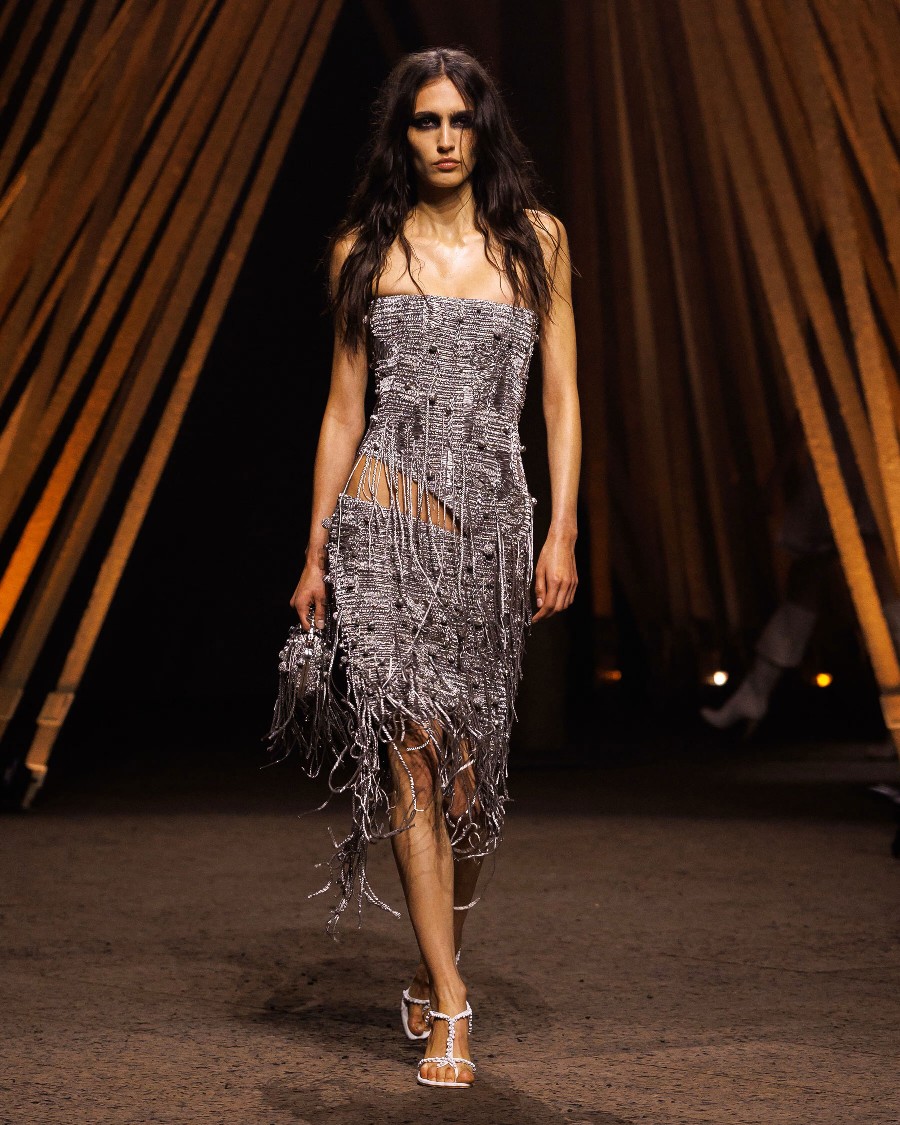
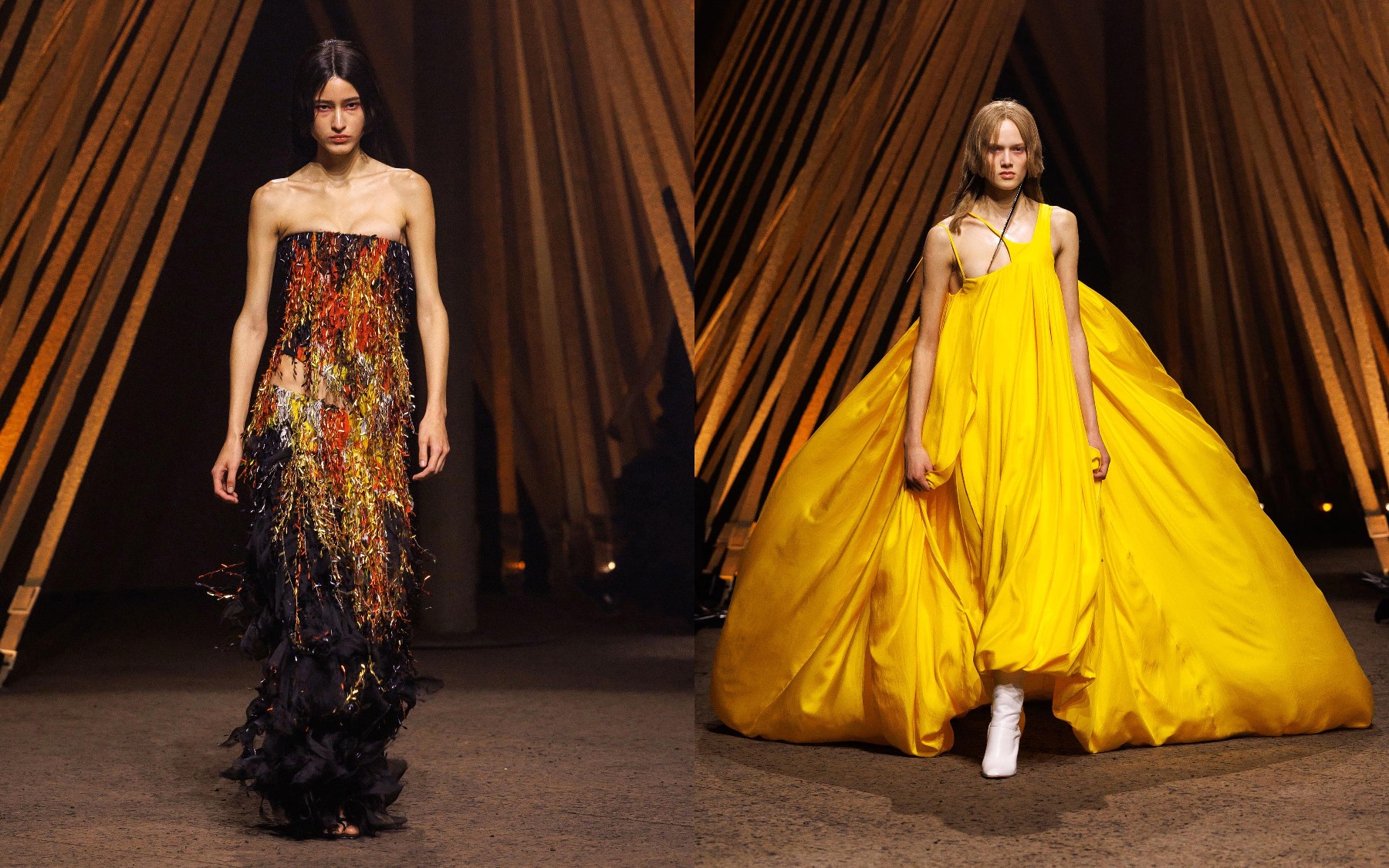
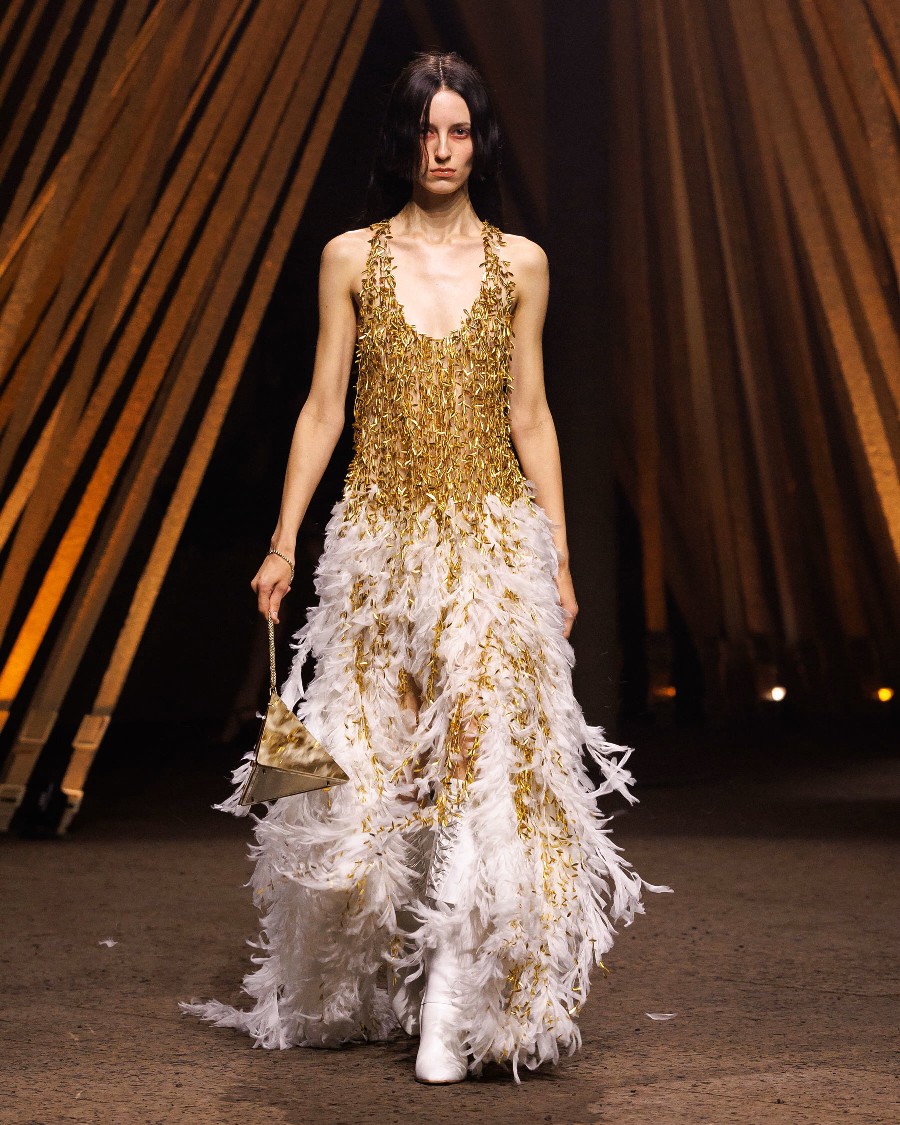
Fabric choices reinforced this friction. Wool mohair-hopsack and bullion embroidery met washed cotton twill and airy silk habotai. Abstract insect prints erupted into parachute silk gowns. Spray-painted dégradés appeared scorched, ignited, almost ritualistic. Silhouettes cascaded into flame-like tendrils, blurring the boundary between destruction and beauty.
Accessories deepened the narrative. The archival McQueen horn-shaped heel from Spring/Summer 2003 re-emerged across boots and mules, a sharp relic recontextualized for modern rebellion. The Manta bag, a reinterpretation of the De Manta, appeared adorned with corset lacing, fringe, flame embellishments, and elemental materials like mother of pearl and carved wood talismans.
The set, a maypole-like structure constructed from 8,000 meters of hessian ribbon, referenced communal rites of renewal. Sustainability underscored the spectacle: renewable HVO energy, low-impact materials, and collaboration with NGO ACT1.5 marked the 10-year anniversary of the Paris Climate Agreement.
Musically, A. G. Cook composed an original score balancing acoustic folklore with syncopated techno, unsettling yet euphoric, echoing the collection’s central conflict.
Ultimately, Spring/Summer 2026 does not simply reinterpret the uniform. It interrogates it. McGirr proposes that rebellion today is not explosive, it is precise. Instinct is not chaos, it is clarity. And McQueen, at its core, remains a house where control and surrender coexist in sharp equilibrium.
This article is an original editorial analysis produced by [DIBA magazine]
Research and references are used for contextual accuracy.