
|
EN
Subscribe to our Newsletter
Few literary figures have shaped modern Iranian consciousness as powerfully and controversially as Forugh Farrokhzad. A poet, filmmaker, and cultural revolutionary, she broke with patriarchal norms and poetic conventions of mid-20th-century Iran. Forugh Farrokhzad, Poet of Modern Iran, edited by Dominic Parviz Brookshaw and Nasrin Rahimieh, offers a definitive exploration of her life, work, and lasting legacy.
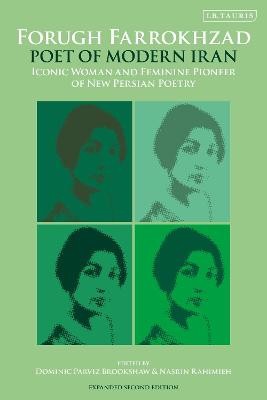
Few literary figures have shaped modern Iranian consciousness as powerfully, and as controversially, as Forugh Farrokhzad. Poet, filmmaker, and cultural revolutionary, Farrokhzad came to embody a radical break from patriarchal norms and poetic conventions in mid-20th-century Iran. Forugh Farrokhzad, Poet of Modern Iran, edited by Dominic Parviz Brookshaw and Nasrin Rahimieh, offers a definitive and nuanced exploration of her life, work, and enduring legacy.
A Groundbreaking Cultural Portrait
Published more than five decades after Farrokhzad’s untimely death at the age of thirty-two, this volume brings renewed focus to a figure whose influence has only intensified with time. Farrokhzad was not merely a poet of her era, she was a catalyst for transformation. Her writing articulated female desire, alienation, rebellion, and selfhood with a directness previously unseen in Persian poetry.
The book situates Farrokhzad at the intersection of tradition and modernity, revealing how she navigated a society caught between entrenched customs and rapidly changing social values. Through literary analysis and cultural context, the editors examine her position among modern Persian poets while foregrounding her unique role as an Iranian woman writer who challenged both aesthetic and social boundaries.
Literary and Cinematic Innovation
Beyond poetry, Forugh Farrokhzad, Poet of Modern Iran highlights Farrokhzad’s contributions to Iranian cinema, most notably her 1962 documentary The House Is Black, a haunting and human portrayal of life in a leper colony. The film, now considered a landmark of Iranian New Wave cinema, exemplifies her ability to merge poetic vision with social consciousness.
This second edition expands the scope of the book with two new chapters: one analyzing a travelogue Farrokhzad wrote during her time in Italy, and another examining her influence on the Afghan poet Laila Sarahat Rowshani. These additions reinforce Farrokhzad’s transnational relevance and her lasting impact on women’s writing beyond Iran’s borders.
Forugh Farrokhzad: A Brief Life, A Lasting Impact
Born in Tehran in 1935 to a military family, Forugh Farrokhzad was the third of seven children. Her formal education ended in her early teens, after which she studied painting and sewing, paths traditionally prescribed for women of her generation. At sixteen, she married satirist Parviz Shapour, a union that ended in divorce just two years later. Shapour retained custody of their son, a loss that profoundly shaped Farrokhzad’s emotional and poetic life.
Following her return to Tehran, she published her first poetry collection, The Captive (1955), soon followed by The Wall and The Rebellion. In 1958, a period of travel in Europe further expanded her artistic vision. Upon returning to Iran, she formed a pivotal creative partnership with writer and filmmaker Ebrahim Golestan, who encouraged her independence and artistic experimentation.
In 1964, Farrokhzad published Another Birth, a collection that marked a radical shift in modern Persian poetry, formally innovative, philosophically mature, and emotionally uncompromising. Three years later, she died in a car accident while attempting to avoid hitting a school bus. Her final poem, Let Us Believe in the Beginning of the Cold Season, published posthumously, is widely regarded as one of the most structurally accomplished poems in modern Persian literature.
Why This Book Matters
Forugh Farrokhzad, Poet of Modern Iran is not simply a tribute; it is an authoritative critical study that situates Farrokhzad within Iranian, feminist, and global literary histories. By examining her poetry, films, personal struggles, and international reception, including her presence in the Iranian diaspora and English translations, this volume introduces a new generation of readers to one of the most fearless voices of modern literature.
This article is an original editorial analysis produced by [DIBA magazine].
Research and references are used for contextual accuracy.