
|
EN
Subscribe to our Newsletter
Qashqai weddings are more than ceremonial unions, they are living expressions of ritual, identity, and collective belonging. Rooted in nomadic traditions and shaped by centuries of cultural continuity, these weddings weave together family, land, music, and symbolism to affirm communal ties. Every gesture and gathering reinforces the Qashqai understanding of marriage not as an individual milestone, but as a shared cultural responsibility.
By the Editorial Staff
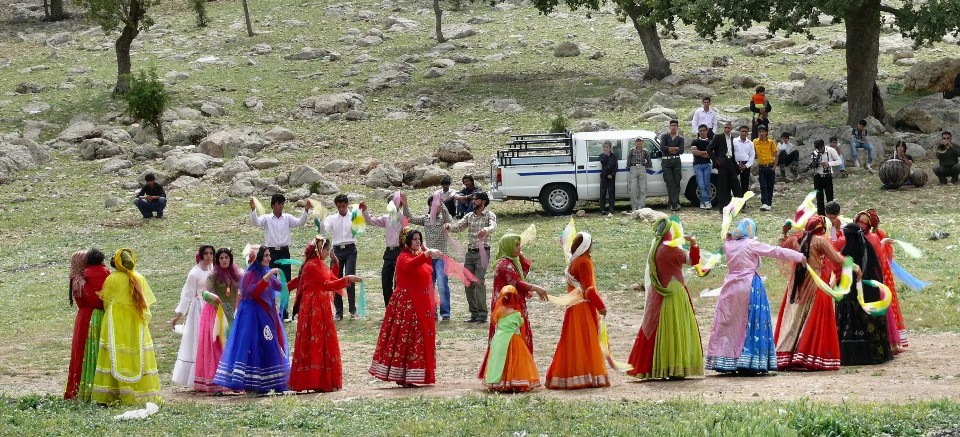
Photo: Diba Archive
High in the folds of Iran’s Zagros Mountains, where migration routes trace ancient rhythms and seasons dictate life itself, the Qashqai people have shaped a culture defined by movement, resilience, and collective memory. A confederation of Turkic-speaking clans, interwoven over time with Lur, Kurdish, and Arab lineages, the Qashqai are not bound by fixed borders, but by shared rituals, music, and a deeply communal worldview. To understand a Qashqai wedding, one must first understand this way of life: nomadic at its core, profoundly social, and rooted in continuity rather than spectacle.
Among the Qashqai, marriage is not a private affair nor a romantic performance. It is a social contract that binds families, clans, and generations, reaffirming belonging within the tribe. Weddings unfold at the intersection of migration, economy, belief, and landscape, often timed around seasonal movement, staged in open plains or mountain meadows, and carried out through rituals that balance symbolism with necessity. In Qashqai culture, a wedding is less about transformation than it is about integration: folding two lives into the enduring circle of the community.
The Qashqa’i are a tribal confederation primarily of Turkic origin, historically nomadic pastoralists who migrated twice yearly between summer highlands (yaylāq) and winter lowlands (qishlāq). Today, they are found mainly across the provinces of Fars, Khuzestan, Kohgiluyeh and Boyer-Ahmad, Chaharmahal and Bakhtiari, Bushehr, and southern Isfahan, particularly around Shiraz and Firuzabad.
While many Qashqai families have become partially or fully sedentary, the nomadic worldview remains central to their identity. Movement is not seen as instability, but as balance. Community outweighs individuality. Survival is collective. These principles shape every major life ritual, especially marriage.
Photo: Diba Archive
In Qashqai society, remaining unmarried is traditionally viewed as undesirable, even sinful, not because of moral judgment, but because marriage is considered essential to social continuity. Love, as understood in modern romantic terms, is not the foundation of marriage; rather, it is something expected to grow over time through shared labor, endurance, and mutual respect.
The Proposal
Marriage begins not with a private declaration, but with observation and negotiation. Typically, the groom’s mother or sister identifies a suitable bride. After the groom agrees, elders from his family approach the bride’s household. These elders, respected figures whose words carry social authority, present the groom’s family lineage, financial standing, and reputation.
If the proposal is accepted, symbolic gifts such as gold or fine clothing are offered to the bride’s mother and sisters. This exchange is less transactional than relational: it signals respect, intention, and readiness to join families rather than simply claim a bride.
The Bride: Veiling, Henna, and Anticipation
The day before the wedding marks the henna ceremony, which may continue for several days after. Henna is applied to the bride’s hands and feet, her eyes lined, her hair carefully combed. Once prepared, a large silk scarf is placed over her head and face.
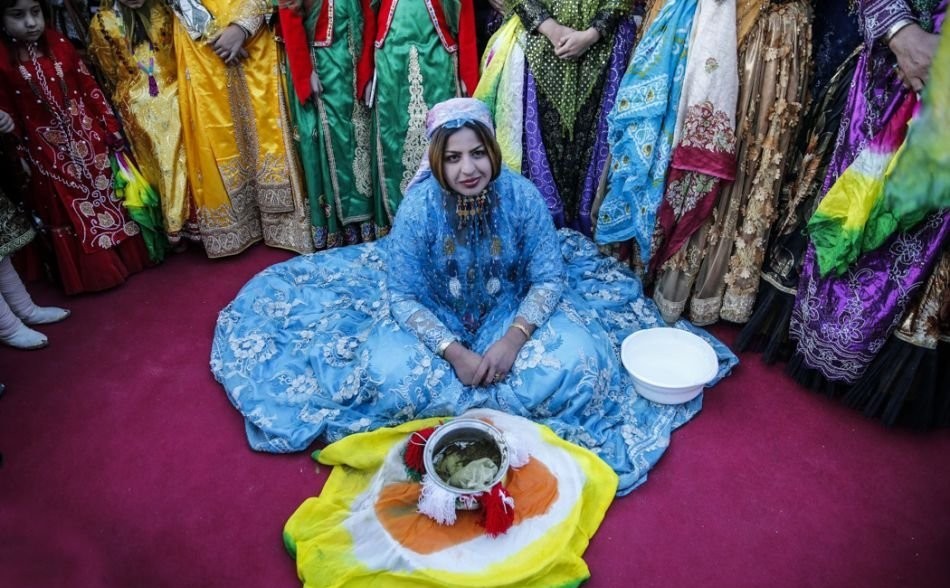
Photo: Diba Archive
This veil remains until the wedding night, removed through ritual gestures that signify modesty, transition, and transformation.
During this time, the bride is secluded in a tent, and the groom is forbidden from seeing her. Anticipation is not merely emotional, it is ceremonial, reinforcing patience and restraint as marital virtues.
The Procession: Bringing the Bride to the Groom
One of the most striking moments of a Qashqai wedding is the bridal procession. Accompanied by musicians, guests walk toward the bride’s tent. The bride, draped in white and mounted on a horse, is escorted toward the groom’s camp. Her dowry follows on camels and mules, a visible statement of continuity, labor, and preparedness.
A young boy is traditionally left behind the bride as she departs, symbolizing the hope that her first child will be male, a custom rooted in pastoral inheritance and lineage preservation.
Upon arrival, the groom helps the bride dismount. His mother showers the couple with coins, invoking prosperity. Music rises. Dance begins.
Dance, Music, and the Body in Motion
Qashqai weddings are inseparable from music. Drums and flutes carry melodies passed down through generations, songs of love, migration, honor, and endurance.
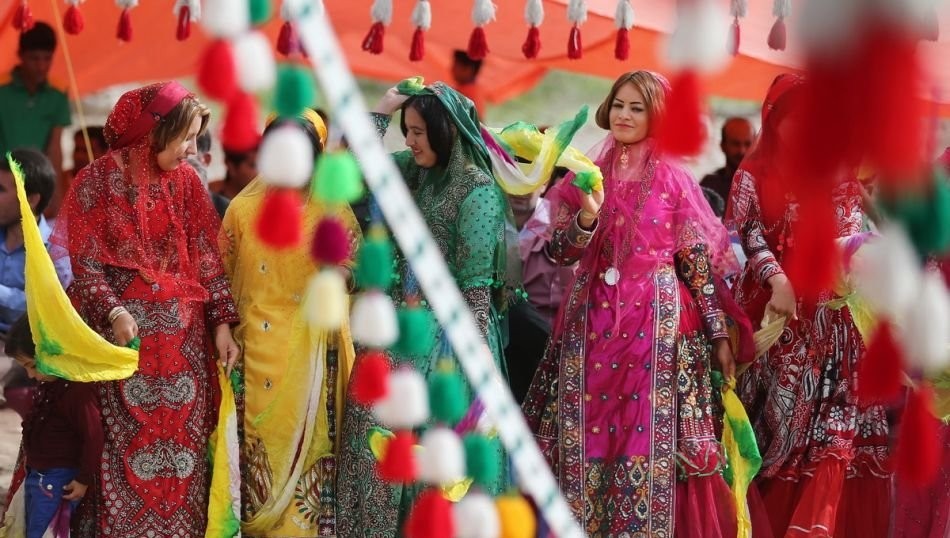
Dance is collective, not performative. One of the most iconic dances is the napkin dance, where men and women form a wide circle, each holding two handkerchiefs. As they move in rhythm, the scarves lift and fall like waves, color, motion, and sound merging into a single communal pulse. The circle itself is symbolic: unity without hierarchy.
Photo: Diba Archive
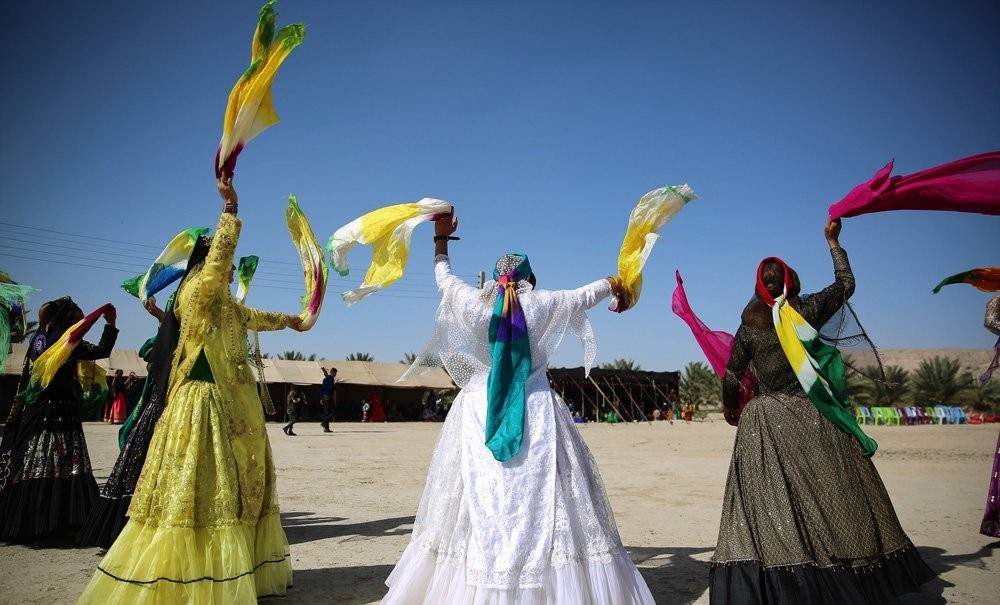
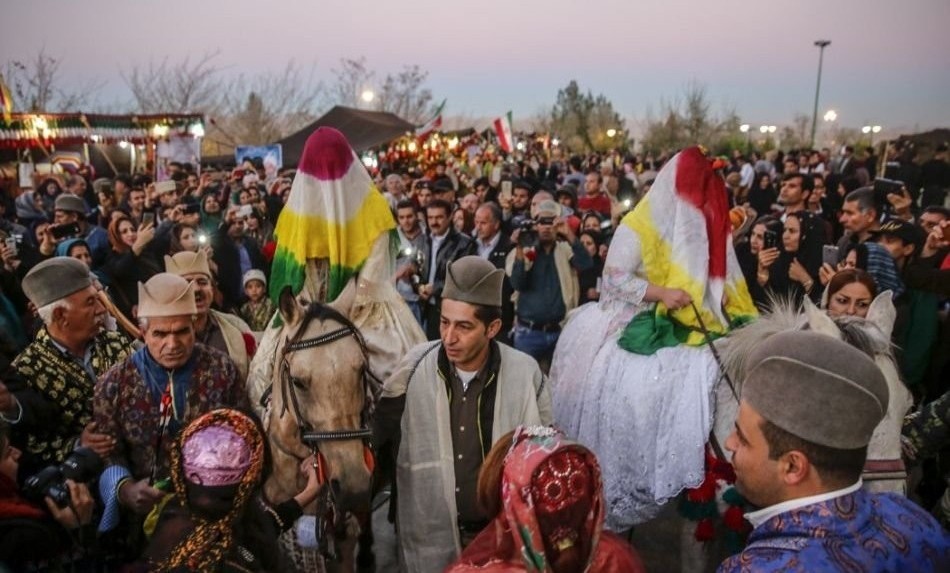
Photo: Pinterest
The Sufra: Food, Respect, and Abundance
The Sufra, the communal spread, is sacred. Stepping on it is considered a serious sin. Everyone contributes to its preparation, reinforcing equality and cooperation.
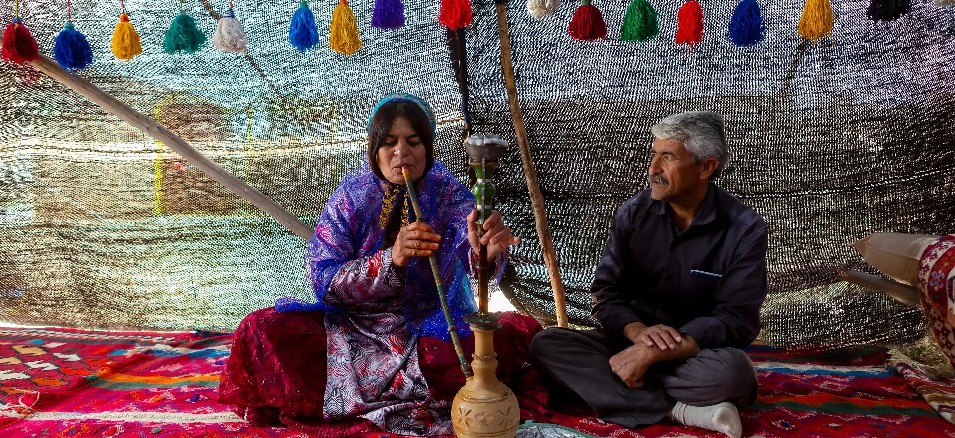
Meals are generous and simple: large trays of rice topped with cooked meat, accompanied by traditional bread, yogurt, yogurt-based drinks, and water. Afterward, tea and shisha are served. Eating together is not a pause in celebration, it is its continuation.
Farewell and Transition
As the first day ends, the bride bids farewell to her family. She presents small gifts to guests, a gesture of gratitude and humility. A close male relative, often an uncle, helps mount her onto the horse for the final journey to the bridal tent.
The couple’s chamber is adorned with myrtle, a symbol of birth and regeneration. A respected elder or the bride’s parents enter, place the couple’s hands together, and offer blessings. With this act, the marriage is sealed socially as well as spiritually.
The bride and groom do not attend the second day of celebration. Guests continue dancing, because the wedding, in essence, belongs to everyone.
This article is an original editorial analysis produced by [DIBA magazine]
Research and references are used for contextual accuracy.